
Why EV Home Charger Installation is the Smart Choice for Indianapolis Drivers
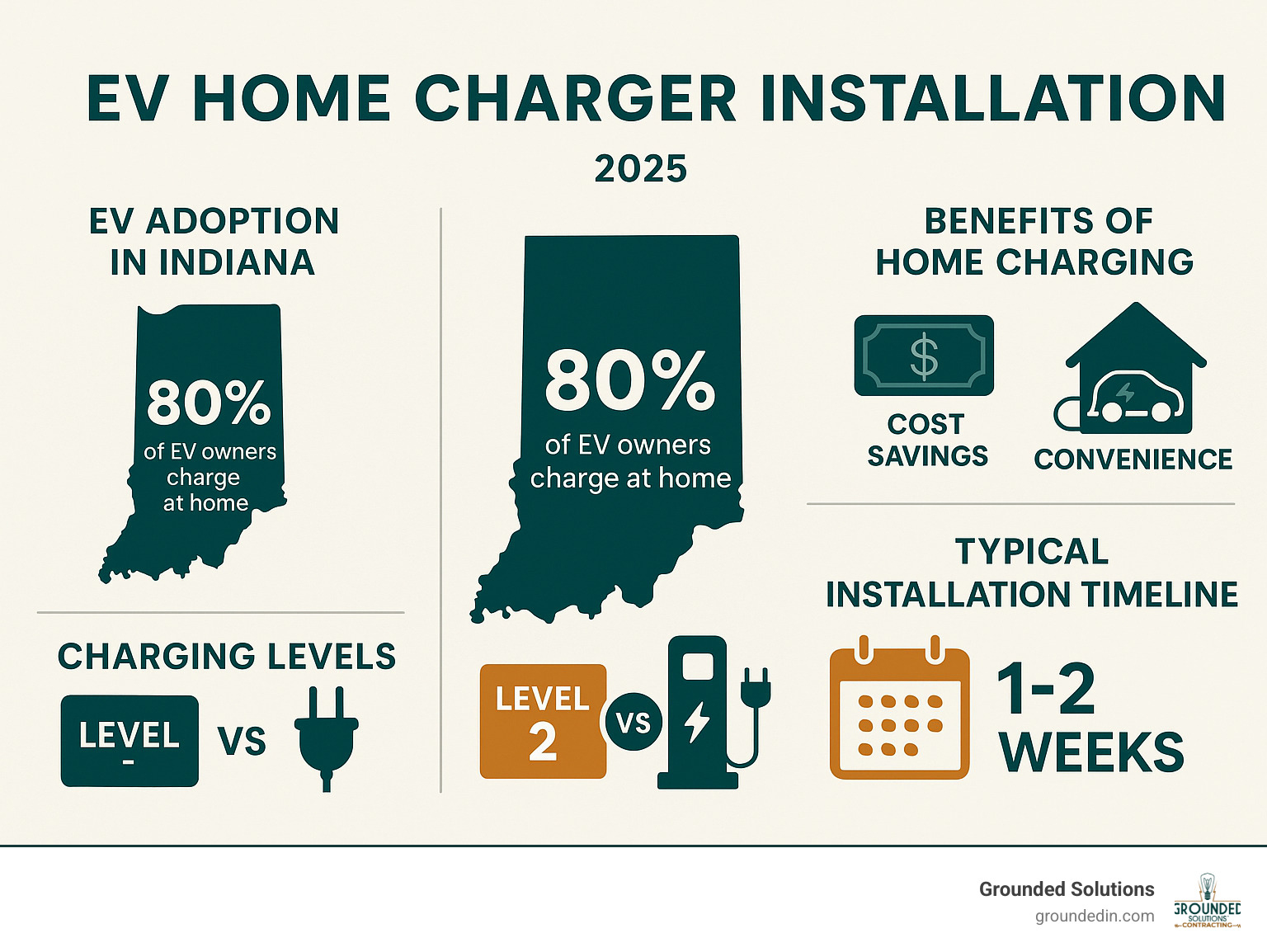
EV home charger installation is the preferred solution for electric vehicle owners in Central Indiana. Over 80% of EV drivers charge at home, eliminating range anxiety and ensuring a fully powered vehicle every morning. A professional installation involves assessing your home’s electrical capacity, choosing the right Level 2 charger, selecting an optimal location, and securing any necessary permits for a dedicated 240V circuit. This transforms your garage into a personal fueling station, removing the inconvenience of relying on public chargers.
As Clay Hamilton, President of Grounded Solutions, I’ve overseen countless EV home charger installation projects. My two decades of electrical expertise ensure every installation is safe, code-compliant, and custom to the homeowner’s needs.
Understanding Your Home Charging Options
Understanding your charging options is key to a successful EV home charger installation. While every EV comes with a Level 1 cord that plugs into a standard outlet, its slow “trickle” charge (2-5 miles of range per hour) is often impractical for daily drivers. This is why most EV owners upgrade to a Level 2 system.
| Charger Level | Charging Speed (Miles of Range per Hour) | Voltage | Best Use Case |
|---|---|---|---|
| Level 1 | 2-5 miles | 120V | Occasional use, plug-in hybrids. |
| Level 2 | 25-35 miles | 240V | Daily home charging, overnight full charge. |
| Level 3 | 160+ miles | 480V+ | Public/commercial rapid charging. Not for home use. |
Level 2 charging is the home standard. It uses a 240V circuit, like an electric dryer, to add 25-35 miles of range per hour. This allows for a full overnight charge, making it the most convenient and practical solution for daily use. A professionally installed Level 2 Home Charger can also improve your property’s value, as home charging is an increasingly sought-after feature.
Key Charger and Location Considerations
When planning your EV home charger installation, several factors come into play:
- Charger & Amperage: Level 2 chargers come in various amperages (e.g., 30A, 40A, 50A). The right choice depends on your vehicle’s capabilities and your home’s electrical system. We help you select a unit that provides efficient charging without overloading your system.
- Smart Features: Wi-Fi-enabled smart chargers allow you to schedule charging sessions from your phone, often to align with off-peak utility rates, and monitor energy usage.
- Installation Type: Chargers can be hardwired directly into your electrical system for a permanent, robust connection or plugged into a dedicated 240V NEMA outlet.
- Safety Certifications: We only install chargers that are UL or ETL listed, ensuring they have passed rigorous testing for safety and reliability.
- Location: The ideal spot for your charger balances convenience with installation requirements. Proximity to your electrical panel is a key factor. We assess whether a garage or a weatherproof outdoor unit is best for your property and ensure the cable length is sufficient to reach your vehicle’s charging port without creating a hazard.
Planning your installation correctly is key to a great experience. Learn how we can help you Open up the Future of Smart EV Charging in Indianapolis.

Preparing Your Home’s Electrical System
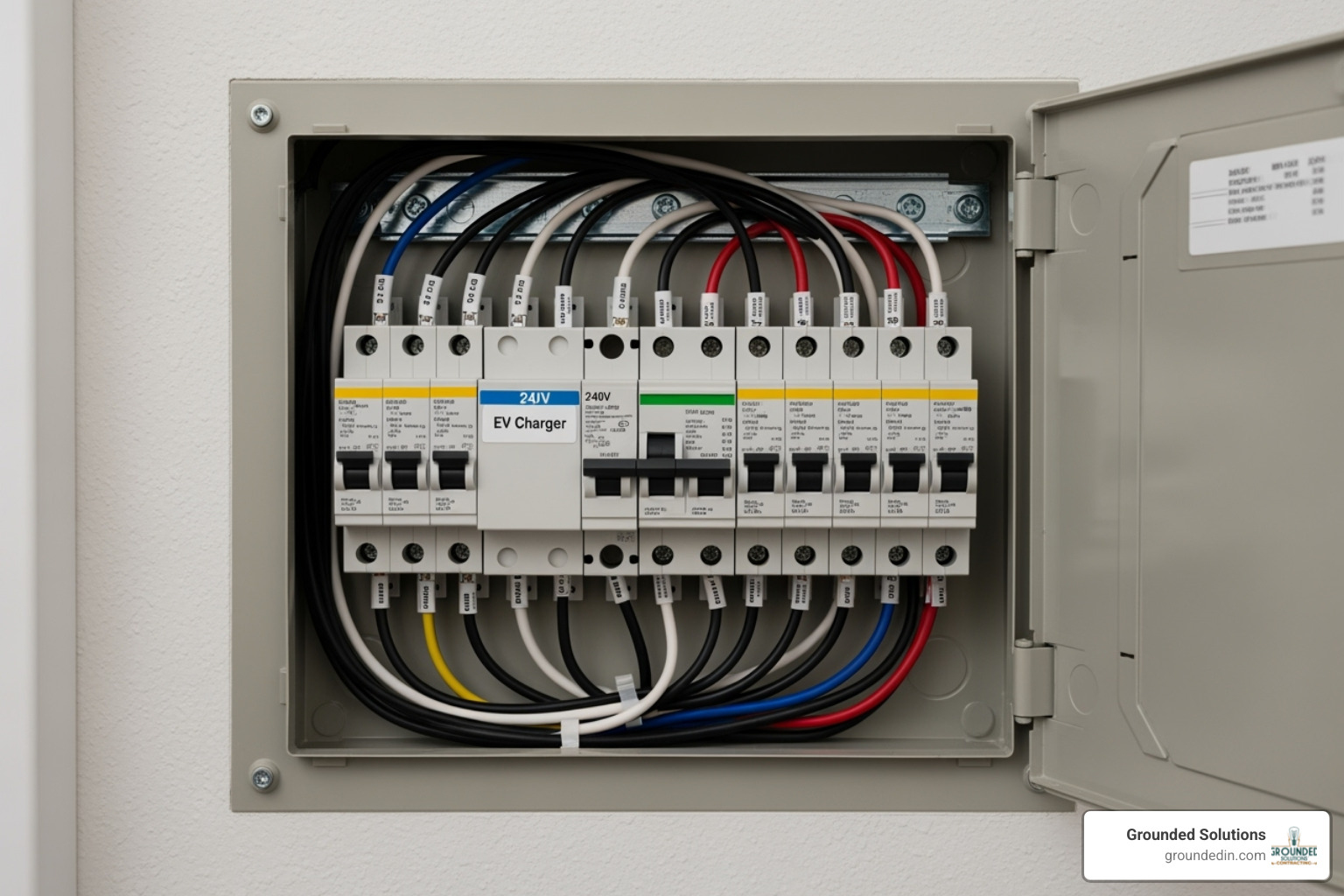
Before an EV home charger installation, we must ensure your home’s electrical system is prepared for the additional demand. This starts with a professional assessment of your main electrical service panel.
Most homes in the Indianapolis area have 100A, 150A, or 200A service. A Level 2 charger is a significant electrical load, so we perform a detailed load calculation to confirm your panel has sufficient capacity. This analysis considers your home’s total electrical usage—from HVAC to appliances—to ensure the new charger can operate safely without overloading the system. A 200-amp service is often recommended for modern homes with high electrical demands, including an EV charger.
What if My Electrical Panel is Insufficient?
If your panel lacks the necessary capacity, an upgrade may be required. Signs like flickering lights or frequently tripped breakers can indicate an overloaded system. A Home Electrical Panel Upgrade not only prepares your home for an EV charger but also improves overall safety and reliability. In some cases, installing a subpanel can be an effective alternative to a full panel replacement.
Every home is unique. Consulting a qualified Indianapolis Electrician is the only way to get an accurate assessment. Our team evaluates your specific system and provides clear, professional recommendations for a safe and reliable EV home charger installation.
The Professional EV Home Charger Installation Process: What to Expect
An EV home charger installation involves high-voltage electrical work that demands professional expertise. As licensed, bonded, and insured electricians specializing in EVSE (Electric Vehicle Supply Equipment), we ensure every installation in Central Indiana is safe and compliant.
Navigating local codes and permits is a critical part of our process. Municipalities from Indianapolis to Carmel and Fishers have specific requirements, and we manage the entire permitting process to ensure your installation is fully compliant and properly inspected. Safety is our top priority, from using the correct wire gauge to ensuring proper grounding and circuit protection.
Key Steps in a Professional Installation
Our process is designed for safety and quality:
- Site Assessment: We evaluate your electrical panel, perform a load calculation, and determine the optimal charger location.
- Permitting: We handle all necessary paperwork with your local building department.
- Dedicated Circuit Installation: We run a new, dedicated 240V circuit from your panel to the charger location.
- Mounting & Connection: The charging unit is securely mounted and connected to the new circuit.
- Final Inspection & Testing: We verify that the system operates correctly and coordinate the final inspection with local authorities.
For more on what professional work entails, see our Electrical Installation 101 guide.
DIY vs. Professional Installation: A Safety-First Approach
Attempting a DIY EV home charger installation is extremely risky. The high voltage can cause severe injury or fire hazards from improper wiring. Furthermore, DIY work can void your charger’s warranty and may not be covered by homeowner’s insurance in the event of an accident. Hiring a professional Electrician for Car Charger is essential to protect your home, your family, and your investment. We eliminate the risks, ensuring your installation is done right the first time.
Factors in Your Home EV Charger Installation
Every EV home charger installation is unique, with the project’s scope determined by your home’s specific layout and electrical system. Understanding these factors can help you prepare for the installation process.
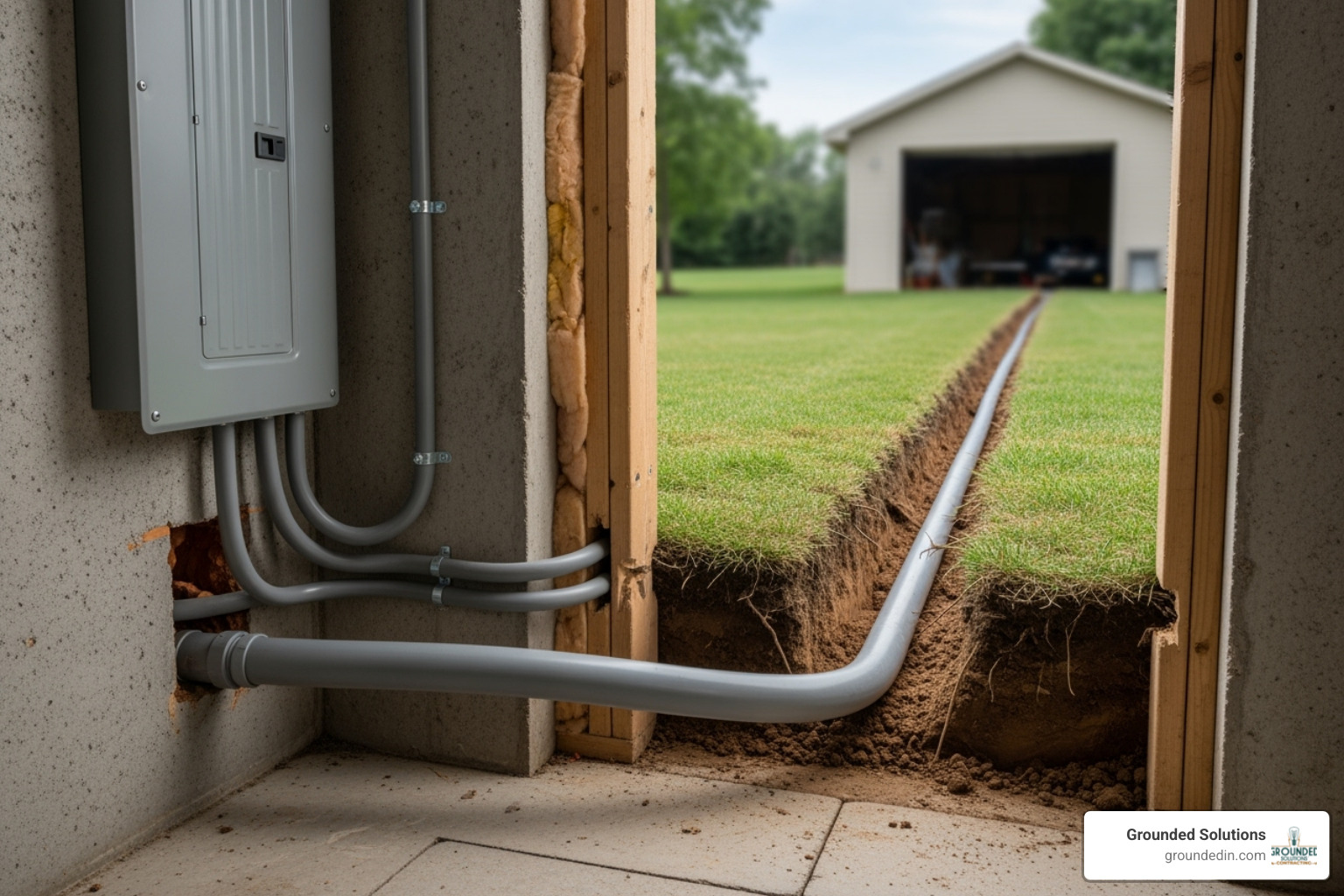
The primary consideration is the distance from the electrical panel to the charger location. A longer distance requires more materials and a more complex installation. If your panel is in the basement and the charger will be in a garage on the other side of the house, the project will be more involved than if the panel is already in the garage.
Other factors that shape the project include:
- Trenching for Detached Garages: Powering a detached garage requires a more robust approach. Our expertise in residential excavation allows us to expertly trench and lay the necessary underground conduit, ensuring a safe, durable, and code-compliant electrical connection to your main panel, fully integrated with your property’s landscape.
- Electrical Panel Condition: If your existing panel lacks the capacity for a Level 2 charger, an upgrade or subpanel installation will be part of the project.
- Installation Type: The choice between a hardwired installation and a 240V outlet can also affect the scope of work.
Available EV Charging Programs
To encourage the adoption of electric vehicles, various incentive programs may be available. Federal tax credits and local utility programs can help make an EV home charger installation more accessible. These programs change over time, but our team stays informed on current offerings and can help you identify programs you may qualify for. For official details, resources like the Alternative Fuels Data Center are a great place to start.
Frequently Asked Questions about Home EV Charger Installation
We’ve helped countless Indianapolis homeowners make their homes EV-ready. Here are answers to some of the most common questions we hear.
How do I find a qualified electrician for my EV charger?
Look for a contractor who is licensed, bonded, and insured—this is non-negotiable for safety and accountability. Crucially, verify they have specific experience with EVSE projects. An experienced installer understands the unique demands of these systems. Check local reviews and choose EV Charging Station Contractors with a proven track record in Central Indiana, as they will be familiar with local codes and inspection processes.
What maintenance does my home EV charger require?
Home EV chargers are very low-maintenance. We recommend periodic visual inspections of the unit, cable, and plug for any signs of wear or damage. Keep the equipment clean and ensure the charging plug and vehicle port are free of debris. While the charger itself requires little attention, a periodic Electrical Safety Inspection Indianapolis for your entire home is a good practice to ensure continued safety.
Can I install an EV charger if I live in an apartment or condo?
Yes, but it requires coordination. In Multi-Unit Residential Buildings (MURBs), you must work with your building management or HOA to get permission. The process often involves shared electrical infrastructure and common areas. Many buildings are now developing plans for shared charging solutions for residents. Early and clear communication with property management is the key to a successful installation in these settings. The Guide to Electric Vehicle Charging in Multi-Unit Residential Buildings is a helpful resource for these situations.
Your Partner for a Safe and Seamless EV Transition
Switching to an electric vehicle is an exciting step, and investing in a home charger is an investment in convenience and peace of mind. A professional, code-compliant EV home charger installation is essential to protect your home, family, and vehicle.
As a family-owned electrical contractor based in Indianapolis, Grounded Solutions brings over two decades of expertise to every project. We understand this is about more than just wiring; it’s about integrating modern technology into your life safely and seamlessly.
For homeowners across Central Indiana—from Avon to Zionsville—we provide expert installation services that ensure your system is reliable and ready for the road ahead. We are fully licensed, bonded, and insured, and our local expertise means we understand the specific requirements of homes in our community. We are your partners in this transition, committed to a transparent process and quality workmanship.
Trust our team for all your Full Service Electrical Contracting needs. Contact us today to discuss your EV home charger installation and let us help you power your drive from home.