
Why Exterior Electrical Boxes Are Essential for Safe Outdoor Power
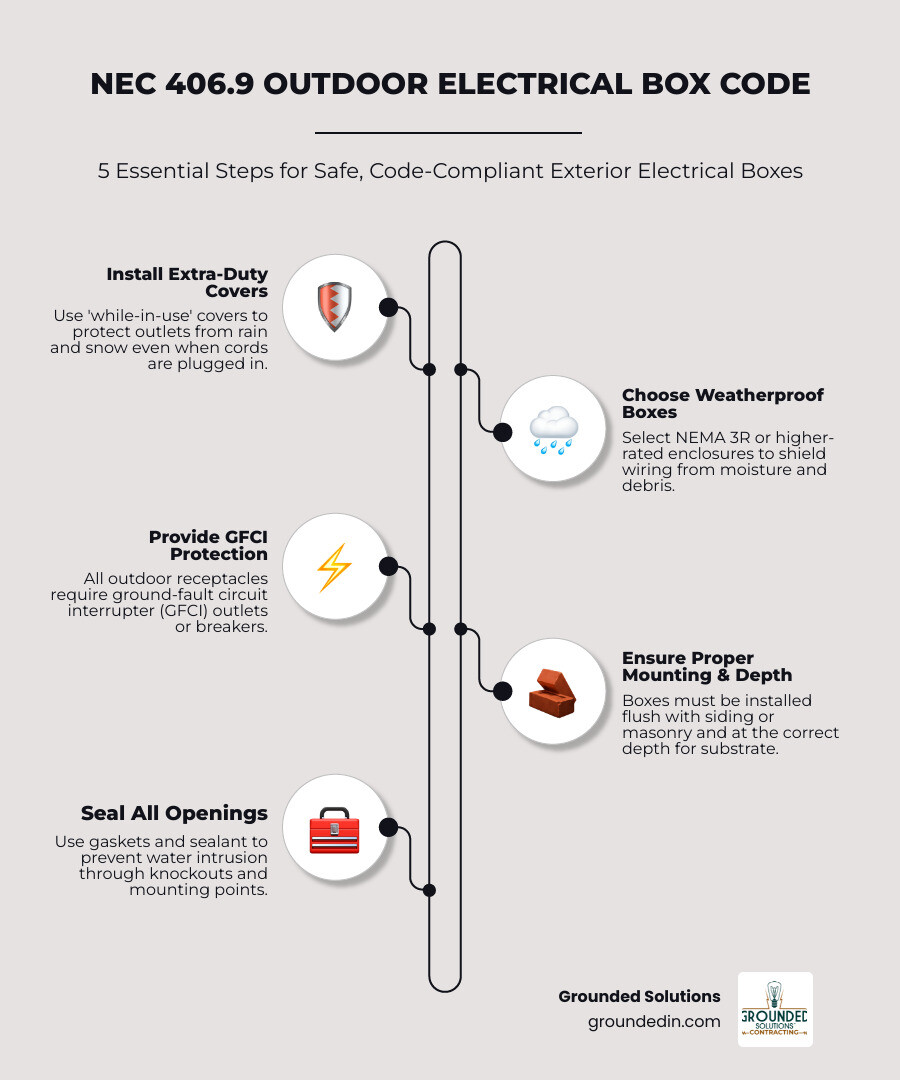
Exterior electrical boxes are weatherproof enclosures that protect outdoor electrical connections from moisture, dust, and impact damage. Here’s what you need to know:
Key Features to Look For:
- Weatherproof Rating: NEMA 3R minimum for wet locations
- Material Options: Non-metallic (PVC) for corrosion resistance, metallic for durability
- Gang Configuration: Single-gang for outlets, multi-gang for multiple devices
- Code Compliance: NEC 406.9 requires extra-duty “while-in-use” covers
- Capacity: Adequate cubic inches for wire connections
Top Applications:
- Outdoor GFCI outlets and switches
- Landscape lighting connections
- Pool and spa equipment
- Patio and deck power sources
Whether you’re adding a new outdoor outlet for holiday lights or upgrading an existing setup, choosing the right exterior electrical box makes the difference between a safe, code-compliant installation and potential safety hazards. Indiana’s harsh winters and humid summers demand boxes that can handle extreme weather while keeping your electrical connections secure.
As Clay Hamilton, President of Grounded Solutions with over 20 years of electrical expertise, I’ve seen countless exterior electrical boxes fail due to poor selection or improper installation throughout Central Indiana. My experience with both residential and commercial electrical systems has taught me which products truly stand up to our region’s demanding weather conditions.
What Makes a Great Exterior Electrical Box?
After two decades of installing exterior electrical boxes throughout Central Indiana, I’ve learned that not all outdoor electrical enclosures are created equal. The difference between a quality box and a bargain-bin alternative becomes crystal clear after one brutal Indiana winter – and trust me, you don’t want to find that difference the hard way.
Weatherproof rating serves as your first line of defense against Mother Nature’s worst moods. Here in Central Indiana, we experience everything from sub-zero temperatures to scorching summer heat, often with humidity that makes your clothes stick to your skin. A proper exterior electrical box needs to handle temperature swings from -20°F to 100°F while keeping moisture out of your electrical connections.
The metallic versus non-metallic debate comes up in nearly every conversation I have with homeowners. PVC boxes offer excellent corrosion resistance and won’t rust, making them perfect for most residential applications. Metallic boxes, particularly die-cast aluminum, provide superior impact resistance and durability for high-traffic areas or commercial settings.
Gang count determines how many devices you can fit in your box. While a single-gang box works fine for a basic GFCI outlet, you’ll need multi-gang configurations when combining outlets with switches for landscape lighting or when installing multiple receptacles in one location.
Here’s something most homeowners overlook: cubic-inch capacity. The National Electrical Code requires specific volume calculations based on wire size and quantity. Cramming too many wires into an undersized box creates heat buildup and connection problems – two things that spell trouble for outdoor installations.
NEMA and IP ratings provide standardized protection levels. NEMA 3R handles most residential outdoor applications, while NEMA 4X offers submersion protection for areas near pools or irrigation systems. UV resistance becomes crucial for boxes exposed to direct sunlight, preventing that brittle, cracked appearance that screams “cheap materials.”
Quality gasketed covers make all the difference in keeping water out. The best covers use multi-layer seals that maintain their integrity through countless freeze-thaw cycles. Bug plugs might seem like a small detail, but they prevent insects from building homes inside your electrical connections.
| Material | Durability | Corrosion Resistance | Cost | Best Applications |
|---|---|---|---|---|
| PVC | Good | Excellent | Lower | Standard residential outlets |
| Die-cast Aluminum | Excellent | Good | Higher | Heavy-duty commercial use |
| Steel (Powder-coated) | Very Good | Good | Moderate | General purpose outdoor |
Weatherproof vs Waterproof: Spot the Difference
Here’s where many DIY projects take a wrong turn: assuming weatherproof means the same as waterproof. Exterior electrical boxes with weatherproof ratings (typically NEMA 3R) protect against rain, sleet, and snow but aren’t designed for submersion. Waterproof boxes (NEMA 4X) can handle direct water contact and even temporary underwater conditions.
Gasket design separates the winners from the pretenders. Quality weatherproof boxes use engineered seals that compress evenly and maintain their shape through temperature extremes. Cheap gaskets become brittle in cold weather and lose their sealing ability after just a few seasons.
For most Central Indiana homes, weatherproof protection handles our typical rain and spray conditions perfectly. However, locations near pool equipment, sprinkler systems, or flood-prone areas demand waterproof protection. The difference in cost is minimal compared to the expense of replacing damaged electrical components.
Key Code Requirements for Outdoor Installations
NEC 406.9 changed the game for outdoor electrical safety by requiring extra-duty weatherproof covers for all 15 and 20-amp receptacles. These “while-in-use” covers protect your connections even when extension cords or equipment remain plugged in – a huge improvement over the old flip-up covers that left connections exposed.
GFCI protection remains mandatory for all outdoor receptacles, and tamper-resistant outlets are required in most residential applications. Indiana follows the National Electrical Code closely, with minimal local amendments affecting exterior electrical box installations.
Conductor fill calculations become more complex outdoors because longer wire runs often require larger gauge conductors, plus you need additional wires for GFCI protection. Conduit hubs must provide watertight connections, and all unused knockouts need proper sealing to maintain the weatherproof rating.
We always recommend oversizing your box capacity by at least 25% to accommodate future modifications. Nothing’s more frustrating than finding you can’t add that second outlet because your box is already at maximum capacity.
Best Exterior Electrical Boxes for Every Project
After installing thousands of exterior electrical boxes across Central Indiana, we’ve identified clear winners in each category. These selections reflect real-world performance in our climate, not just manufacturer specifications.
The key to successful outdoor electrical work lies in matching the right box to your specific application and installation surface. We’ve learned that one-size-fits-all approaches lead to compromised installations and callbacks.
Single-Gang Non-Metallic Weatherproof Box
For standard residential applications, our go-to choice features a PVC body with molded mounting ears and pre-installed 1/2-inch hubs. The 18 cubic-inch capacity handles standard GFCI installations with room for proper wire management.
These exterior electrical boxes excel in corrosive environments where metal boxes would eventually fail. The UV-stabilized PVC withstands Indiana’s intense summer sun without becoming brittle, while the integrated gasket system provides reliable weather protection.
We particularly appreciate the built-in cable clamps that eliminate the need for separate connectors – fewer components mean fewer potential failure points. The mounting ears are reinforced to prevent cracking during installation, a common problem with cheaper alternatives.
Heavy-Duty Metallic Two-Gang Box with Threaded Hubs
When you need maximum durability and EMI shielding, die-cast aluminum boxes deliver professional-grade performance. The powder-coated finish resists corrosion while providing excellent impact resistance for high-traffic areas.
Threaded hubs accept standard conduit fittings, making these exterior electrical boxes ideal for commercial applications or residential installations requiring metal conduit. The larger capacity accommodates complex wiring configurations with multiple circuits.
We’ve installed these boxes in environments ranging from industrial facilities to upscale residential patios. The consistent performance and longevity justify the higher initial investment, especially in applications where replacement would be difficult or expensive.
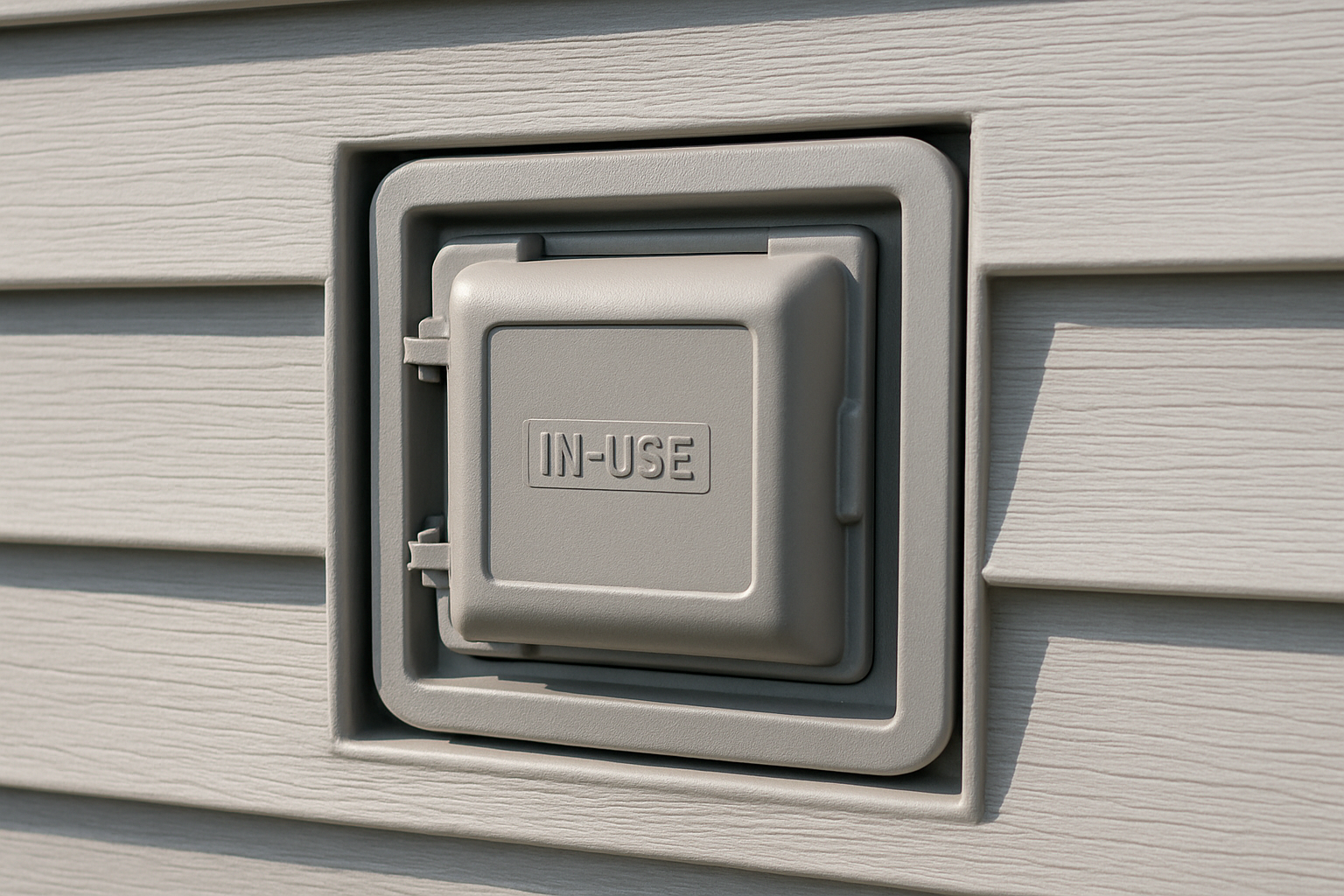
Low-Profile Recessed “In-Use” Assembly
Recessed box systems revolutionized siding installations by combining the electrical box, siding block, and weatherproof cover into one integrated unit. These exterior electrical boxes install flush with the wall surface, creating a clean, professional appearance.
The extra-duty clear cover meets NEC 406.9 requirements while allowing easy device identification. Built-in J-channel integration simplifies vinyl siding installations, while the recessed design minimizes wind loading and impact damage.
For retrofit applications, these boxes eliminate the need to coordinate multiple components from different manufacturers. Everything fits together perfectly because it was designed as a system, not assembled from separate parts.
Large-Capacity Polycarbonate Enclosure
When you need serious splice capacity, polycarbonate junction boxes deliver NEMA 4X protection with 60+ cubic inches of working space. These exterior electrical boxes handle complex wiring scenarios like landscape lighting transformers, pool equipment connections, and multi-circuit distributions.
The clear cover allows visual inspection without opening the enclosure, while multiple knockout options accommodate various conduit sizes and configurations. UV-resistant polycarbonate maintains clarity and strength through years of sun exposure.
We use these boxes extensively for outdoor kitchen installations and landscape lighting systems where multiple circuits converge. The generous capacity makes troubleshooting and modifications much easier than cramped standard boxes.
Round Ceiling/Wall Box for Lights & Fans
Outdoor lighting installations require boxes rated for fixture weight and weather exposure. Our preferred round boxes support up to 50 pounds while providing multiple hub options for flexible conduit routing.
These exterior electrical boxes work equally well for wall-mounted fixtures and overhead installations. The deep profile accommodates lamp cluster covers for multiple light configurations, making them versatile for various lighting designs.
For more complex outdoor lighting projects, check out our guide on Installing Outdoor Lighting in Your Central Indiana Home for detailed planning and installation tips.
How to Choose the Right Box for Your Surface
Getting the perfect installation starts with understanding what you’re mounting to. After twenty years of installing exterior electrical boxes across Central Indiana, I’ve learned that your mounting surface dictates everything from box selection to sealing techniques.
Vinyl siding is probably the most forgiving surface we work with, but it still has its quirks. The secret is achieving that perfect flush fit without putting pressure on the siding itself. When temperatures drop below freezing (which happens plenty here in Indiana), compressed vinyl becomes brittle and can crack. We always use boxes with built-in J-channel integration or add separate siding blocks to maintain the weather barrier.
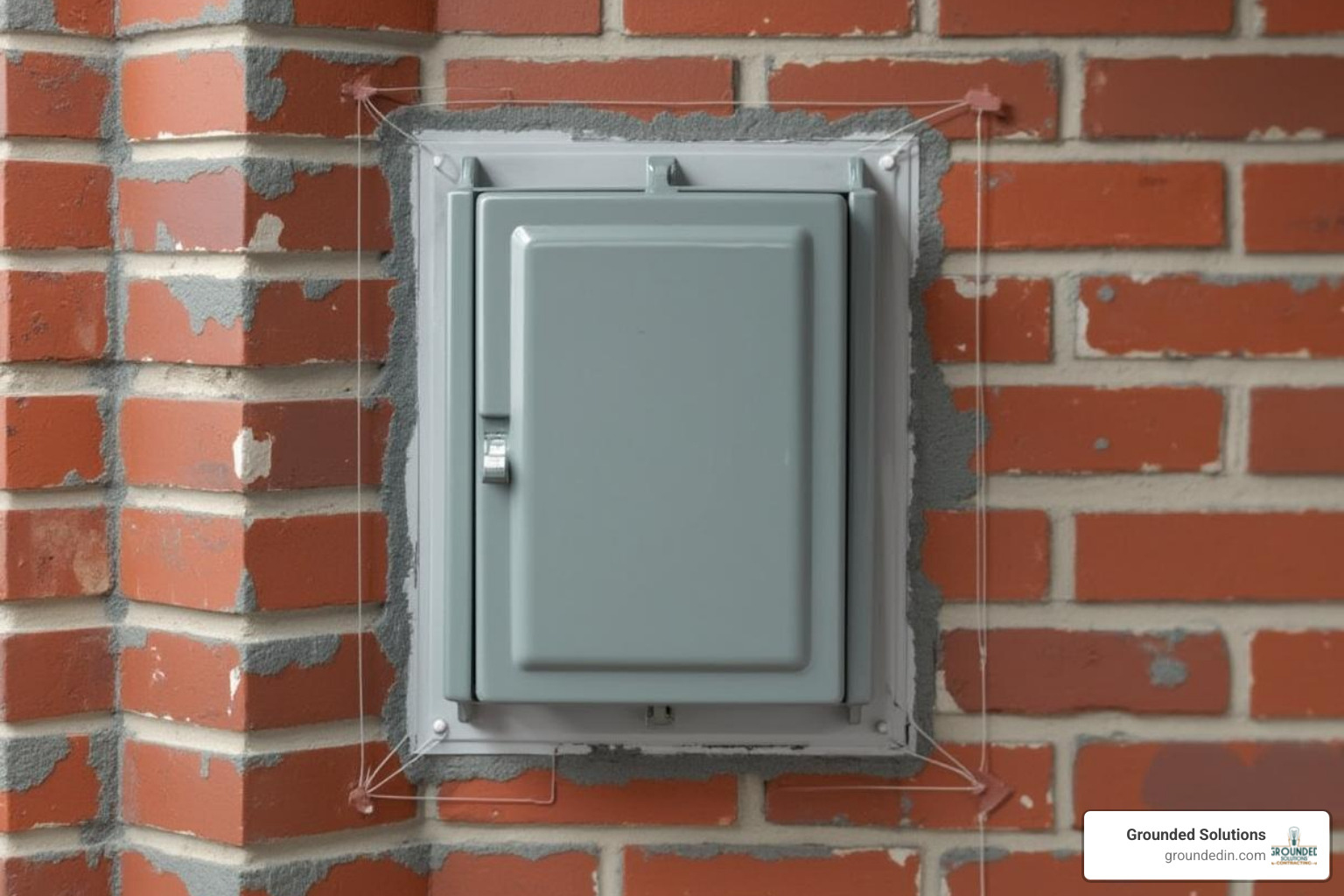
Brick and stone installations require a completely different approach. Here’s where our hammer drills earn their keep. We carefully select mortar joint locations to avoid compromising the structural integrity of the wall. The key is using the right expansion anchors and waterproof mastics – skip these steps and you’ll have water intrusion problems within the first heavy rain.
Stucco and EIFS systems make me extra cautious because any penetration can compromise the moisture barrier that protects the entire wall system. These installations often benefit from recessed box designs that minimize surface disruption while maintaining proper sealing.
Matching Box Depth to Siding Profiles
Here’s something that trips up even experienced DIYers: exterior electrical boxes must sit at exactly the right depth for the weatherproof covers to seal properly. Get this wrong, and you’ve basically created a funnel for water to enter your electrical system.
Vinyl siding installations typically need that box face sitting about 1/2-inch to 3/4-inch proud of the sheathing, depending on your siding profile. Stucco applications are trickier because the thickness can vary significantly across the same wall. We use adjustable sleeves and depth rings to fine-tune each installation.
The goal is getting the box face perfectly flush with the finished surface. Too deep and your covers won’t make proper contact with their gaskets. Too shallow and you can’t get proper fastener engagement. We’ve seen both scenarios lead to failed installations during Indiana’s notorious ice storms.
J-channel integration becomes absolutely critical with vinyl siding. Quality boxes include properly sized channels that accept standard siding profiles without any field modifications. When we have to start cutting and fitting channels, we know we’re working with a subpar product that’s going to cause problems down the road.
Drilling Through Masonry Safely
Masonry work requires patience and the right technique. Rush the job, and you’ll end up with cracked brick or compromised mortar joints. We always start with hammer drills and masonry bits sized specifically for our anchor type, and we pre-drill pilot holes to prevent cracking.
Exterior electrical boxes mounted in masonry need expansion anchors rated for both the expected loads and the freeze-thaw cycles we experience here in Central Indiana. But the anchors are only half the battle – proper waterproof sealants around all penetrations make the difference between a lasting installation and a callback next spring.
We pay special attention to expansion joints in masonry construction. These joints are there for a reason, and spanning them with electrical installations is asking for trouble when the building moves with temperature changes.
The secret is working with the masonry structure instead of fighting against it. When we select proper anchors and use proven sealing techniques, these installations last decades without any maintenance headaches.
For complex outdoor projects like kitchens that require multiple circuits and GFCI protection, our guide on Electrical Wiring for an Outdoor Kitchen covers the comprehensive planning these installations demand.
Protecting and Maintaining Exterior Electrical Boxes
Let’s be honest – most homeowners install exterior electrical boxes and then forget about them completely. That’s a mistake that can cost you dearly, especially here in Central Indiana where our weather loves to test every outdoor component to its limits.
After two decades of electrical work in this region, I’ve seen what happens when maintenance gets ignored. A $50 box replacement becomes a $500 rewiring job, or worse – a safety hazard that puts your family at risk.
The good news? Proper maintenance takes maybe an hour each year and prevents 95% of the problems we see. It’s not complicated, but it does need to be systematic.
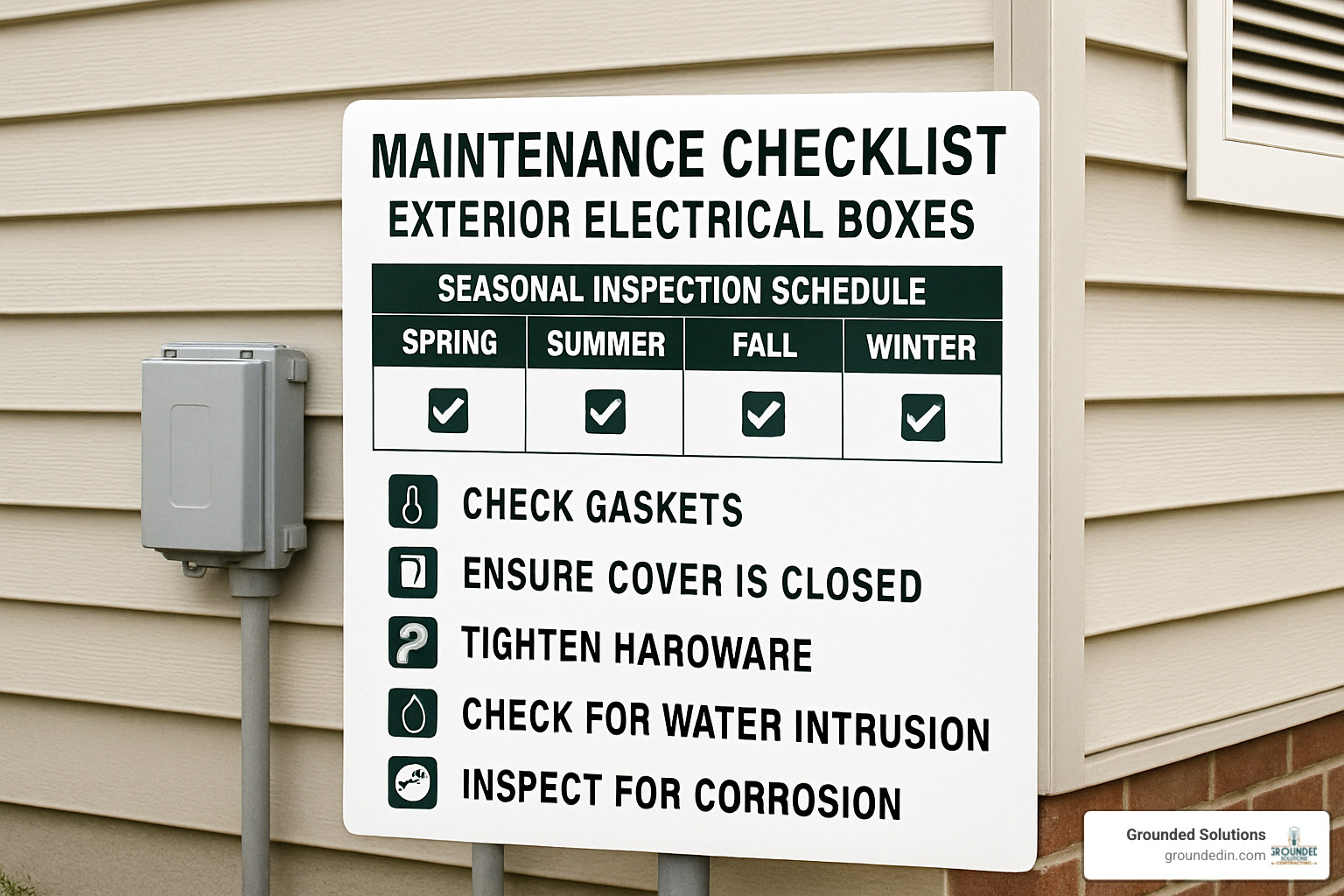
Your inspection routine should start with the basics – checking that covers close properly and gaskets still seal tight. Look for any signs of water getting where it shouldn’t be. Water stains, rust, or corrosion inside the box are red flags that need immediate attention.
Tightening terminations might sound technical, but it’s straightforward. Our freeze-thaw cycles cause metals to expand and contract, which gradually loosens electrical connections. Loose connections create heat, and heat destroys electrical components fast.
Replacing gaskets every few years keeps your weatherproof protection actually weatherproof. Even quality gaskets eventually get hard and crack. When they do, your exterior electrical boxes become water magnets instead of water barriers.
Cleaning debris from around and inside boxes prevents moisture buildup and gives you a clear view of potential problems. Leaves, spider webs, and dirt might seem harmless, but they trap moisture and create corrosion.
For comprehensive strategies on protecting your outdoor electrical systems during Indiana’s brutal winters, our guide on Winter-Proofing Electrical Outlets: Safeguarding Outdoor and Garage Outlets covers everything you need to know.
Common Mistakes to Avoid
I wish I had a dollar for every time we’ve been called to fix problems that could have been avoided with proper installation and maintenance. These mistakes happen so often, I sometimes wonder if they’re contagious.
Box-fill violations are probably the most dangerous mistake we see. Cramming too many wires into undersized exterior electrical boxes is like stuffing too many people into an elevator – eventually something’s going to give. The heat buildup from overcrowded connections can cause fires.
Missing covers should be obvious, but you’d be amazed how many “temporary” covers become permanent fixtures. Every outdoor electrical connection needs a proper weatherproof cover, period. No exceptions, no shortcuts.
Unsealed knockouts are sneaky troublemakers. You remove a knockout to run a cable, then forget to seal the unused ones. Those little holes become superhighways for water to enter your electrical system. One unsealed knockout can destroy an entire circuit.
Improper fasteners cause more callbacks than any other single issue. Regular screws rust away in months outdoors. You need corrosion-resistant fasteners that match your mounting surface. Stainless steel costs a few cents more but lasts decades longer.
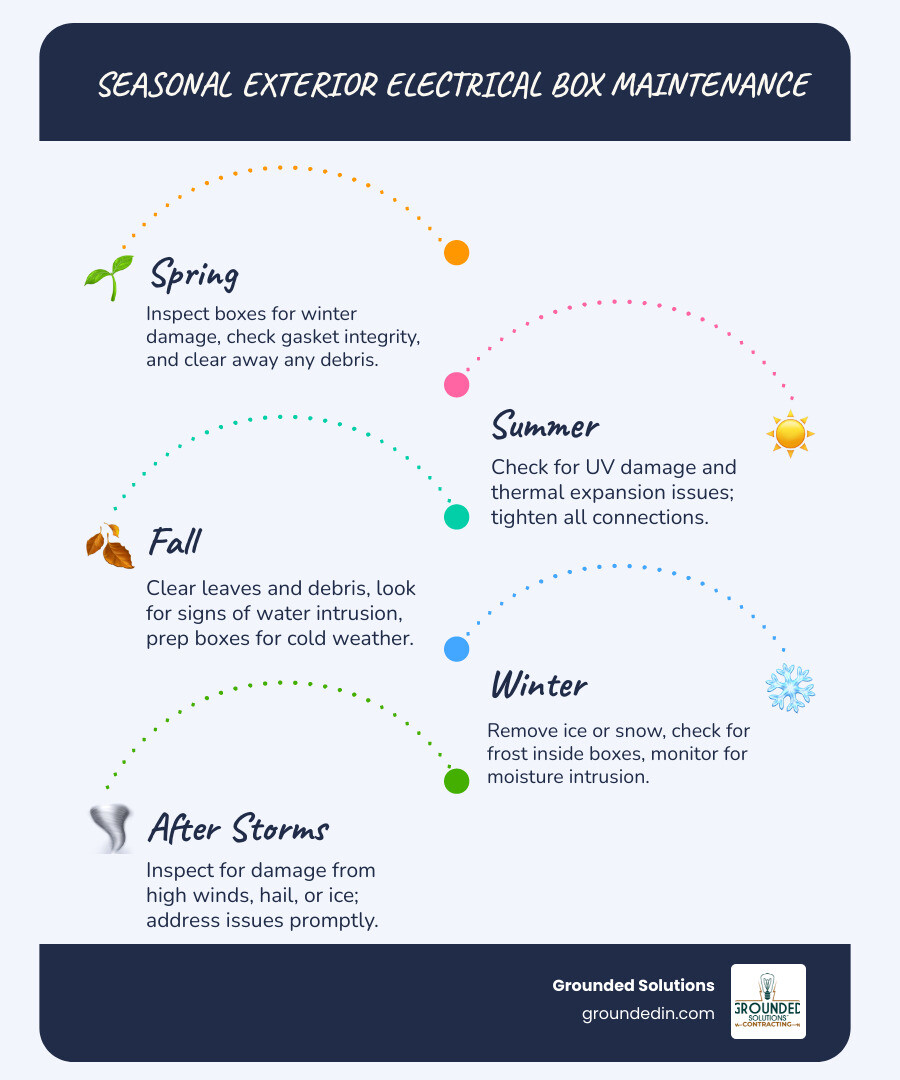
Quick Maintenance Checklist
Here’s how we keep exterior electrical boxes running smoothly through Indiana’s challenging seasons:
Spring brings inspection time after winter’s assault. Check covers and gaskets for freeze damage, test your GFCI outlets, and tighten any connections that worked loose. Clean out debris that accumulated over winter.
Summer heat tests UV resistance and thermal expansion. Verify covers still close properly after everything expands in the heat. Check mounting hardware for looseness and test outlets with a simple plug-in tester.
Fall preparation focuses on winter-proofing. Clear leaves and debris, apply dielectric grease to threaded connections, check caulk seals, and make sure everything’s buttoned up tight before the cold hits.
Winter monitoring means watching for ice buildup and frost penetration. Remove ice from covers carefully – don’t force anything when it’s frozen. Plan any repairs needed for spring.
Understanding why proper maintenance matters helps motivate the effort. Our article on Benefits of Outdoor Electrical Outlets explains how well-maintained outdoor electrical systems add value and functionality to your property.
The bottom line? A little attention now prevents big problems later. Your exterior electrical boxes work hard to protect your electrical connections – return the favor with regular maintenance.
Frequently Asked Questions about Exterior Electrical Boxes
After two decades of installing exterior electrical boxes throughout Central Indiana, I’ve heard just about every question homeowners can ask. These are the ones that come up most often – along with the answers that can save you time, money, and headaches.
What accessories do I need for a code-compliant outdoor outlet?
Getting a code-compliant outdoor outlet isn’t just about the exterior electrical box itself – it’s about assembling the right team of components that work together. Think of it like building a good defense: every piece has to do its job, or the whole system fails.
Your weather-resistant GFCI receptacle needs that “WR” marking – this isn’t optional marketing language, it’s a real specification that means the device can handle moisture without failing. The extra-duty weatherproof cover is equally critical, protecting your connections even when extension cords are plugged in permanently.
Don’t overlook the small stuff that makes the big difference. Bug plugs for unused knockouts might seem trivial until you’re dealing with a wasp nest inside your electrical box. Stainless steel mounting screws resist Indiana’s harsh winters, while standard screws turn into rust flakes within a season.
Quality weatherproof wire nuts and proper gasket sealing complete the protection system. We’ve learned that skipping any of these components leads to callbacks – and nobody wants to troubleshoot electrical problems in a January snowstorm.
Can the same box be used for both switches and receptacles?
Absolutely, but this is where proper planning separates successful installations from problematic ones. Exterior electrical boxes need adequate cubic-inch capacity for all the conductors you’re stuffing inside, and combination installations can get crowded quickly.
Switch circuits typically use fewer conductors than GFCI receptacles, but when you combine them, the math adds up fast. Multi-gang boxes solve this problem neatly, especially for landscape lighting setups where you want switch control right next to your power source.
The cover configuration becomes your next challenge – not every weatherproof cover accommodates every device combination. We always verify cover compatibility before finalizing box selection, because finding a mismatch during installation ruins your whole day.
For complex outdoor power needs, combination installations make perfect sense. Just remember that bigger boxes cost more upfront but save money long-term by avoiding overcrowding issues.
How often should I inspect exterior electrical boxes in Indiana’s climate?
Indiana weather doesn’t play nice with outdoor electrical equipment. Our temperature swings from below zero to over 100 degrees, plus we get everything from ice storms to severe thunderstorms. This means exterior electrical boxes need more attention than they would in gentler climates.
I recommend quarterly visual inspections – a quick walk around your property checking covers, looking for damage, and ensuring everything appears secure. Spring inspections catch winter damage before it gets worse, while summer checks monitor UV degradation on plastic components.
Fall preparation prevents debris accumulation that can trap moisture, and winter monitoring catches ice-related problems before they cause electrical failures. After severe weather events, always do a quick inspection – high winds and hail can damage even the best installations.
Annual detailed maintenance goes deeper: testing GFCI functionality, tightening connections, replacing worn gaskets, and cleaning debris from box interiors. This might seem like overkill, but I’ve seen too many expensive repairs that could have been prevented with simple maintenance.
The good news? Most inspection tasks take just minutes and require no special tools. A flashlight and your eyes catch 90% of potential problems before they become safety hazards.
Conclusion
Choosing the right exterior electrical boxes comes down to understanding your specific needs and Indiana’s unique weather challenges. After two decades of installing outdoor electrical systems across Central Indiana, I’ve learned that the boxes you select today determine whether you’ll be dealing with callbacks and repairs tomorrow.
Quality exterior electrical boxes represent one of those investments that truly pays for itself over time. When you factor in the avoided service calls, prevented water damage, and improved safety, the difference between good and great boxes becomes clear. Your family’s safety and your home’s electrical reliability deserve nothing less than proven performers.
Indiana’s climate doesn’t give electrical components any breaks. From sub-zero January nights to sweltering August afternoons, plus everything Mother Nature throws at us in between, your outdoor electrical boxes need to handle it all without missing a beat. The products we’ve discussed have earned their place in our installations through years of reliable performance in exactly these conditions.
Whether you’re adding a simple patio outlet for holiday decorating or planning a comprehensive outdoor entertainment system, the foundation of success starts with proper box selection. Don’t let inadequate boxes turn into expensive repairs or, worse yet, create safety hazards for your family.
Smart homeowners recognize that outdoor electrical work requires expertise that goes beyond basic DIY skills. Code requirements, weather protection, and long-term reliability all demand professional knowledge and quality materials. That’s where Grounded Solutions makes the difference.
Ready to upgrade your outdoor electrical systems with professional-grade exterior electrical boxes and expert installation? Our family-owned business has been helping Central Indiana homeowners create safe, reliable outdoor electrical systems that stand up to whatever our weather dishes out.
We understand that every property is unique, and we take the time to match the right boxes and installation techniques to your specific situation. From the initial planning conversation through final testing and cleanup, we’re committed to delivering installations that exceed your expectations.
Don’t let another season pass with inadequate outdoor electrical protection. Contact Grounded Solutions today to discuss your outdoor electrical needs and find how proper planning and quality components create outdoor electrical systems that serve you reliably for decades.
For more information about our comprehensive electrical services, visit our residential services page to see how Grounded Solutions can improve your home’s electrical systems with quality products and expert installation that Central Indiana homeowners trust.