
Why Ground Fault Protection Saves Lives and Equipment
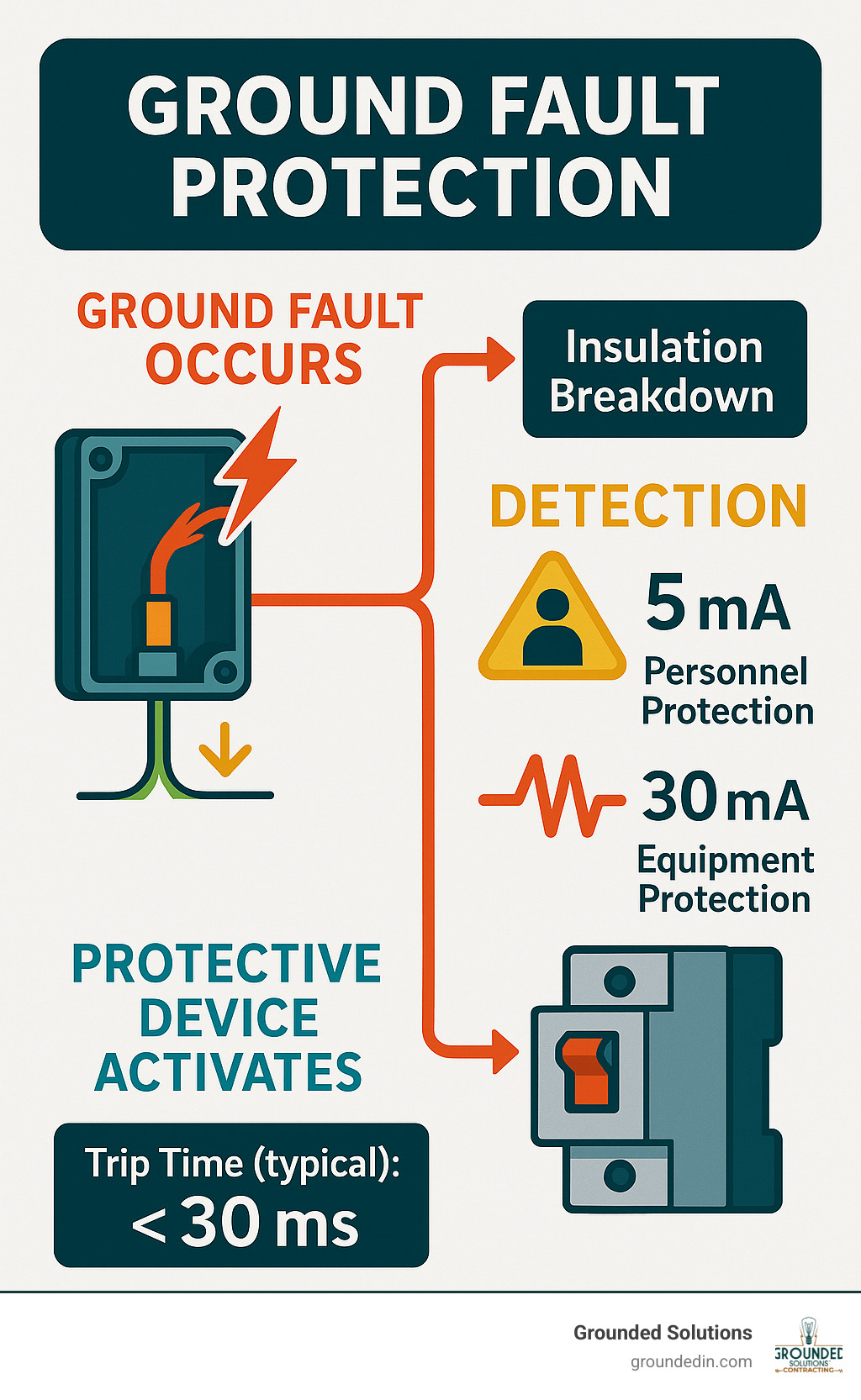
Ground fault protection is the silent guardian that keeps Indianapolis-area homes and businesses safe. It detects current leaking to ground—often caused by moisture, dust, or damaged insulation—and disconnects power before that current can pass through a person or ignite building materials.
Key points at a glance:
- 98% of electrical faults are ground faults.
- GFCI devices trip at 4–6 mA in 1/30 s to protect people.
- Equipment-level protection (GFEP) reacts at 30 mA or higher to stop fires and motor damage.
- The NEC requires protection anywhere electricity and moisture meet.
I’m Clay Hamilton, president of Grounded Solutions. After two decades serving central Indiana, I’ve seen these life-saving devices prevent shocks, downtime, and costly repairs—often without the property owner realizing how close they came to disaster.
Understanding Ground Faults & Safety Risks
When an energized conductor contacts ground unintentionally, electricity takes a dangerous shortcut spelled out in NEC Article 100 as a ground fault. Moisture exposure causes 22.5 % of those events here in humid central Indiana; dust adds another 14.5 %. Combine that with worn cords or rodent-chewed wiring and you have the recipe for shock and fire.
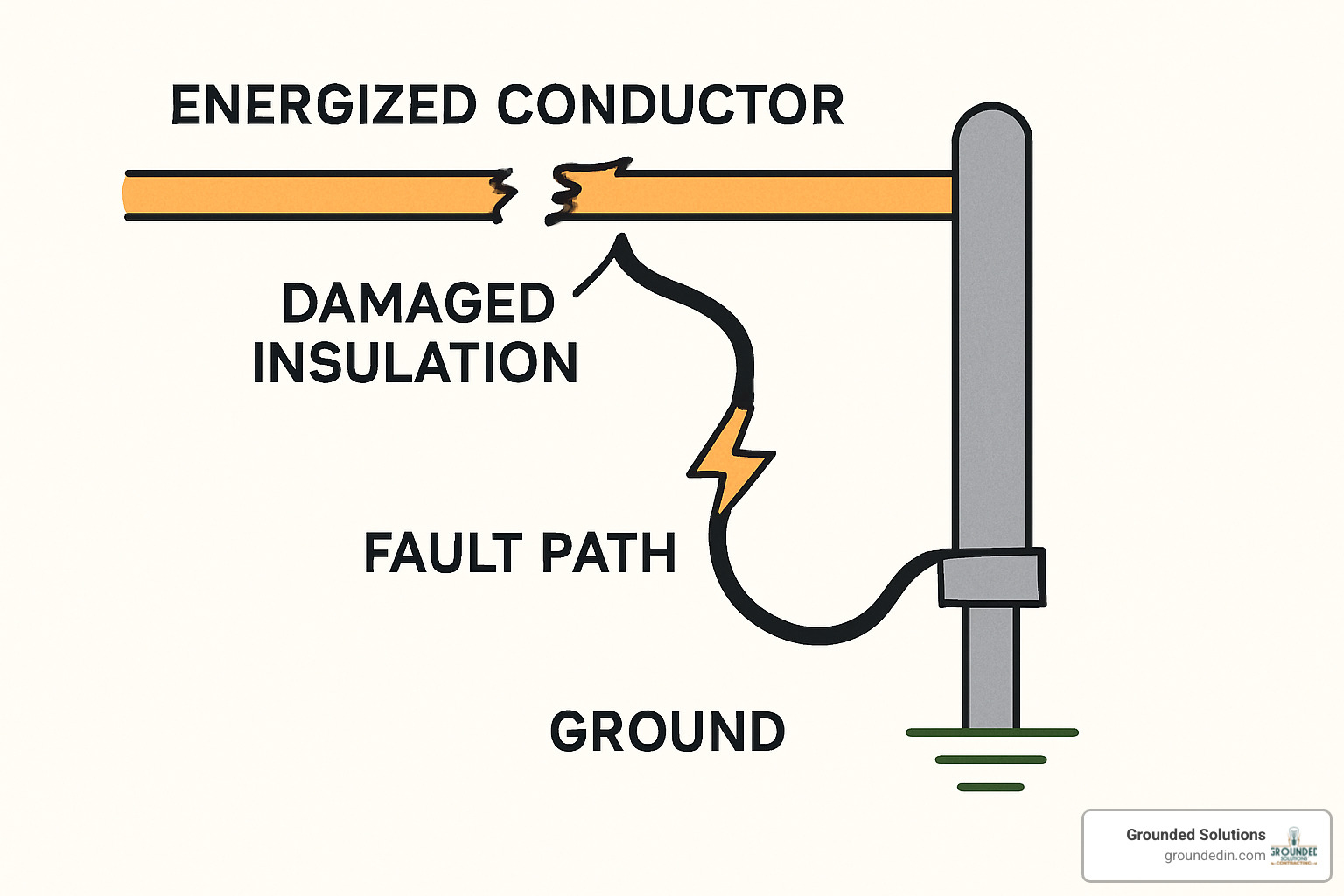
Most frightening are low-level faults that simmer for weeks inside walls or equipment cabinets. They erode insulation, overheat conductors, and can trigger an arc flash without warning. Detecting and clearing these small imbalances early keeps your family, employees, and property out of harm’s way.
How Ground Fault Protection Works
In a healthy circuit, the current on the “hot” matches the current returning on the neutral. A zero-sequence or core-balance current transformer surrounds all conductors and watches for any mismatch. When even a few milliamps go missing, the device opens the circuit in milliseconds.
| Protection Type | Trip Current | Typical Trip Time | Primary Use |
|---|---|---|---|
| GFCI receptacle/breaker | 4–6 mA | ≤30 ms | Personnel safety |
| GFEP | 30 mA+ | 0.1–1 s | Equipment safety |
| GFP Relay (services/feeders) | 30–1200 A | ≤1 s @ 3 kA | Fire & equipment protection |
Modern units include harmonic filtering so LED lighting, VFDs, and computer loads don’t create nuisance trips.
Devices & Technologies for Ground Fault Protection
Homeowners usually meet protection through GFCI receptacles—those familiar outlets with TEST/RESET buttons in kitchens, baths, garages, and outdoors. Whole-circuit GFCI breakers cover multiple receptacles from the panel when individual devices would be impractical.
Commercial sites move to 30 mA GFEP devices to protect motors, HVAC equipment, and branch circuits without constant false trips. Industrial plants lean on programmable ground-fault relays that coordinate with upstream breakers and withstand the electrical noise of large drives.
Portable GFCIs keep construction crews safe on job sites and are required by OSHA. For deep residential details, see The Essential Guide to GFCIs: Protect Your Home.
Picking the Right Option
- Residential: GFCI receptacles or breakers in all code-mandated wet or damp locations.
- Commercial: Mix of 5 mA personnel devices where workers plug in tools and 30 mA GFEP for hard-wired equipment.
- Industrial & EV charging: Relay-based systems with selective coordination and harmonic filtering.
Code Requirements & Best Practices in Central Indiana
Indiana adopts the National Electrical Code almost verbatim, so NEC rules drive local compliance:
- Article 230.95: Services ≥1000 A on solidly grounded systems need ground-fault protection.
- Article 215.10 & 240.13: Similar rules for feeders and major equipment.
- Article 210.8: Lists residential and commercial receptacle locations that must be GFCI-protected.
- OSHA 1910.304: Adds mandates for many workplaces.
Healthcare occupancies require selective coordination so only the device nearest the fault trips. We often employ zone-selective interlocking, letting downstream breakers send a “wait” signal upstream so life-support equipment stays energized.
For deeper technical guidance, pros reference the NFPA 70 NEC and Code Q&A: Ground-Fault Protection of Equipment.
Installation, Testing & Maintenance Tips
Correct bonding is step 1—without a solid equipment grounding conductor, even the best device can’t clear a fault. Line and load terminals must never be reversed, and outdoor devices need weather-resistant covers to survive Indiana’s humidity and winter sleet.
Use the TEST button monthly (first Saturday is easy to remember). In larger facilities, we verify actual trip current and time with calibrated meters, then log the results for inspectors and insurance auditors.

Replace any device that fails a test, shows physical damage, or trips erratically despite dry conditions. Industrial sites with dust, vibration, or chemicals should schedule annual calibrated testing and documentation.
Frequently Asked Questions about Ground Fault Protection
1. Why does my GFCI keep tripping?
Most nuisance trips stem from moisture, wiring errors, or electronic noise from LEDs and variable-speed drives. Modern devices with harmonic filtering—and correct weatherproof covers—solve the majority of problems. If you’re stumped, our guide What to Do When Your GFCI Keeps Tripping? walks through a quick checklist.
2. Where does the NEC require GFCIs?
Residential: bathrooms, kitchen countertops, laundry areas, garages, basements, crawl spaces, and all outdoor receptacles.
Commercial: kitchens, rooftop outlets, bathrooms, break rooms, and any receptacle within 6 ft of a sink or outdoors. Larger services and feeders over 1000 A also need equipment protection.
3. How sensitive should protection be?
- 4–6 mA (GFCI) saves people.
- 30 mA+ (GFEP) saves motors and wiring.
- 200 A+ (service-level relays) protects large gear while coordinating with downstream breakers.
Choosing the right threshold keeps everyone safe without needless downtime.
Conclusion
Whether you’re renovating a Zionsville ranch or running a production line in Plainfield, ground fault protection is your first line of defense against shock, fire, and expensive equipment loss. At Grounded Solutions, we specialize in designing, installing, and maintaining these critical safety systems throughout central Indiana, ensuring your family and business stay protected.
Don’t leave your safety to chance. Contact our licensed electricians at 317-834-1922 or visit https://groundedin.com/ to schedule your professional ground fault protection evaluation today.