
How to Fix a GFCI That Keeps Tripping
Is a GFCI Keeps Tripping Breaker a Sign of Something Serious?
If your GFCI keeps tripping breaker repeatedly, here are the most common reasons why — and what to do first:
- A ground fault in the wiring or a connected appliance — the most common cause
- Moisture or condensation inside the outlet or a downstream receptacle
- A faulty appliance leaking small amounts of current to ground
- Cumulative leakage current from multiple devices adding up past the 4–6 mA trip threshold
- An aging or defective GFCI device that needs to be replaced
- Wiring issues such as shared neutrals, damaged insulation, or reversed line/load connections
Quick fix to try first: Unplug everything from the circuit, then press the RESET button. If the GFCI holds, plug devices back in one at a time to find the culprit. If it trips with nothing plugged in, the problem is in the wiring — call a licensed electrician.
That sudden click from your kitchen or bathroom outlet is one of the most frustrating sounds a homeowner can hear — especially when it keeps happening. Your GFCI outlet is doing exactly what it was designed to do: protect you from dangerous electrical shock by cutting power the instant it detects even a tiny current imbalance. But when it trips over and over again, something in your home’s electrical system is sending a warning signal you shouldn’t ignore. With spring storms rolling through the Indianapolis area — bringing moisture, humidity, and power fluctuations to neighborhoods like Beech Grove and Franklin — GFCI tripping becomes an especially common call this time of year.
I’m Clay Hamilton, President of Grounded Solutions, and with over two decades of hands-on residential and commercial electrical experience — including diagnosing countless cases where a GFCI keeps tripping breaker — I’ve put together this guide to help you understand exactly what’s going on and when to take action. Let’s walk through the causes, the fixes, and when it’s time to call in a pro.
Understanding Why Your GFCI Keeps Tripping Breaker

To understand why your GFCI keeps tripping breaker, we first have to look at how these devices function as the “silent bodyguards” of your home. A Ground Fault Circuit Interrupter (GFCI) is a hyper-sensitive safety device that constantly monitors the flow of electricity between the “hot” and “neutral” wires.
Under normal conditions, the current flowing out on the hot wire should exactly match the current returning on the neutral wire. If the GFCI detects an imbalance as small as 4 to 6 milliamperes (mA), it assumes the electricity is “leaking” somewhere it shouldn’t be—like through water or, worse, through a person. It then snaps the circuit shut in as little as 1/40th of a second.
To put that sensitivity in perspective, it takes about 75 mA to cause ventricular fibrillation (a life-threatening heart rhythm). By tripping at just 6 mA, the GFCI stops the shock long before it becomes lethal. This is the primary difference in the GFCIs vs Circuit Breakers debate: a standard breaker protects your wires from catching fire due to an overload, while a GFCI protects you from electrocution.
When a GFCI keeps tripping breaker, it is often doing exactly what it was designed to do. However, identifying the source of that 5 mA leak is where things get tricky. As noted by Engineer Fix, a persistently tripping unit signals an underlying problem in the circuit, a connected appliance, or the device itself.
Why Your GFCI Keeps Tripping Breaker with Nothing Plugged In
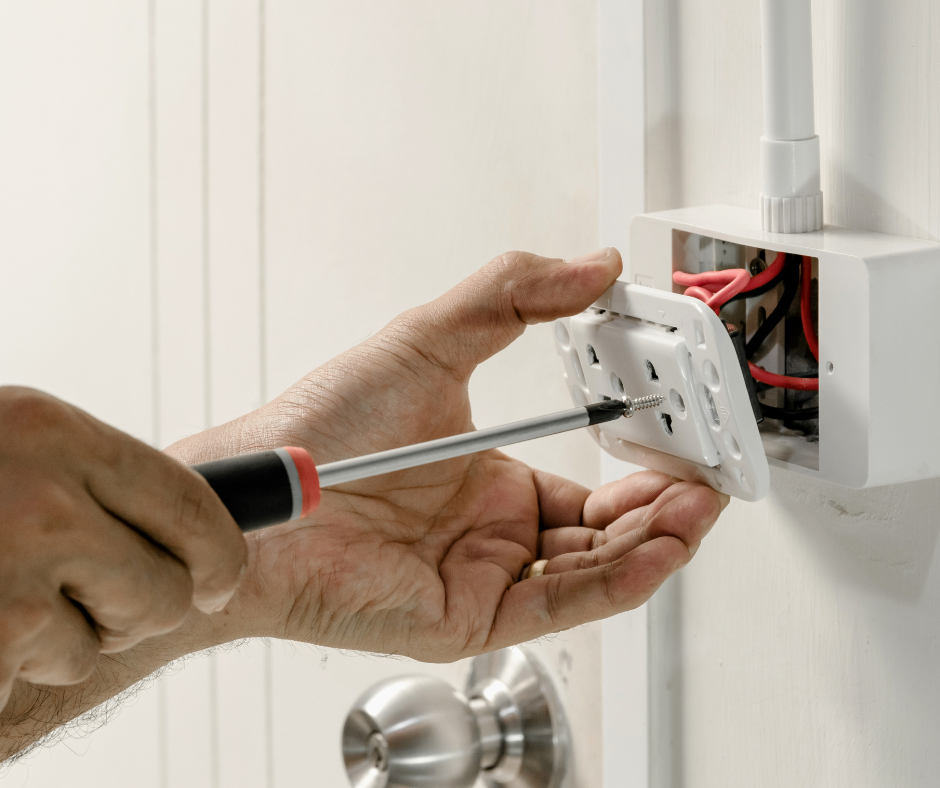
One of the most common questions we hear from homeowners in Southport and Beech Grove is: “Why does my outlet trip when nothing is plugged into it?”
It feels like a ghost in the machine, but there is a logical explanation. A single GFCI outlet is often wired to protect “downstream” outlets. For example, a GFCI in your garage might be protecting the outlets on your back porch or even a bathroom on the other side of the wall. If moisture gets into an outdoor outlet cover during an Indianapolis spring downpour, the garage GFCI will trip to protect the entire line.
Other common reasons for “ghost trips” include:
- Shared Neutrals: In older homes, electricians sometimes “borrowed” a neutral wire from a different circuit. Modern GFCIs see this as a current imbalance and will trip immediately.
- Insulation Deterioration: Ground faults account for more than 80% of equipment shorting issues, and in 90% of those cases, the cause is decaying insulation on wires hidden behind your walls.
- Moisture Infiltration: Even if nothing is plugged in, high humidity or a small leak behind a backsplash can create a conductive path that triggers the sensor.
If you are facing this issue, you can read more about specific steps in our guide on what to do when your GFCI keeps tripping.
Is Your GFCI Keeps Tripping Breaker Due to Aging Infrastructure?
By April 2026, many of the GFCI outlets installed during the housing booms of the early 2010s are reaching the end of their reliable lifespan. While a high-quality GFCI can last 15 to 25 years, the typical lifespan is often closer to 10 to 15 years, especially in high-moisture areas like kitchens or laundry rooms.
Internal wear and tear on the delicate sensing circuitry can lead to “mechanical failure.” If the internal spring or the electromagnetic switch weakens, the device may no longer hold the “RESET” position, or it may become overly sensitive to minor fluctuations in the power grid. If your home was built or last renovated around 2010-2015, your GFCI keeps tripping breaker simply because the hardware is worn out. Upgrading to modern, self-testing units is a critical part of the essential guide to GFCIs: protect your home.
Common Causes of Ground Faults in Central Indiana Homes
Living in Central Indiana means dealing with dramatic weather shifts. From the humid heat of July to the driving rain of April, our environment plays a massive role in electrical reliability. At Grounded Solutions, we see a spike in service calls for “nuisance tripping” every spring.
According to research from Lywood, moisture is the number one environmental culprit. In our service areas like Franklin and Whiteland, many homes have outdoor outlets that are older and may have cracked weatherproof covers. When rain hits these covers, even a few drops of water inside the junction box can create a bridge between the hot wire and the grounded metal box, causing an immediate trip.
Dust and debris accumulation is another “hidden” cause. In workshops or garages, conductive dust (like metal shavings or even heavy sawdust mixed with humidity) can build up inside the outlet. This creates a high-resistance path to ground that eventually draws enough current to trip the GFCI. If you find your GFCI outlet not working after a particularly dusty project, a gentle cleaning with a soft brush (after turning off the power!) might help, but replacement is usually the safer bet.
Cumulative Leakage Current and Nuisance Tripping
One of the most misunderstood concepts in home electricity is “cumulative leakage.” Every electronic device leaks a tiny amount of current to the ground. This is usually due to EMI filters or surge suppressors inside your appliances. While one device won’t trip a 6 mA GFCI, four or five devices on the same circuit can easily push the total leakage over the limit.
| Appliance Type | Typical Leakage Current (mA) |
|---|---|
| Refrigerator | 1.0 – 2.0 mA |
| Desktop Computer | 0.5 – 1.5 mA |
| Toaster / Coffee Maker | 0.5 – 1.0 mA |
| Power Strips with Surge Protection | 0.5 – 1.0 mA |
| Total Possible on One Circuit | 2.5 – 5.5 mA |
As you can see, if you have a refrigerator and a computer on the same GFCI-protected circuit, you are already dancing on the edge of a trip. This is why we often recommend GFCI and AFCI upgrades in Indianapolis to better distribute these loads across multiple circuits.
Advanced Solutions: SPAN Panels and Smart Home Reliability
If you are tired of the “guessing game” when your GFCI keeps tripping breaker, it might be time to move beyond 20th-century technology. In 2026, we are helping many homeowners in Carmel and Fishers transition to smart electrical infrastructure like the SPAN Panel.
A SPAN panel replaces your traditional grey breaker box with a smart system that monitors every single circuit in real-time. Instead of wondering which outlet is leaking current, you can look at an app on your phone and see exactly which circuit is experiencing a ground fault. This level of diagnostics is a game-changer for home reliability. It allows us to pinpoint failing insulation or a “leaky” appliance before it ruins your morning routine.
When you upgrade your home with GFCI receptacles today, pairing them with a smart panel ensures that your home is not just safe, but also intelligent and energy-efficient.
Selecting a Lutron Installer for Enhanced Safety
Smart home reliability isn’t just about the panel; it’s about how you control your environment. Many homeowners try to DIY their smart lighting, only to find that incompatible dimmers or poor wiring lead to—you guessed it—more GFCI and AFCI tripping.
At Grounded Solutions, we are Caséta and RadioRA 3 Certified Lutron installers. When selecting a Lutron installer, you aren’t just paying for someone to swap a switch; you are paying for an expert who understands how smart dimmers interact with your home’s unique electrical signature. Professional automation ensures that your lighting control system doesn’t introduce “electrical noise” into your circuits, which is a common cause of nuisance tripping. Understanding the difference between GFI and GFCI outlets is just the beginning; a truly modern home requires a holistic approach to wiring and control.
Professional Troubleshooting and NEC Compliance
When a GFCI keeps tripping breaker and the “unplug everything” trick doesn’t work, it’s time to bring in the professional tools. In our work across Mooresville and Greenwood, we use specialized equipment like a megohmmeter (or “megger”) to test the insulation resistance of your wires.
The industry standard for a healthy residential circuit is at least 1 megohm of resistance. If our tests show a lower number, it means the insulation on your wires is compromised—perhaps from a rogue nail during a renovation or a rodent in the attic. This is a fire hazard that no amount of resetting will fix.
The National Electrical Code (NEC) has also expanded GFCI requirements significantly in recent years. As of the latest updates, almost every outlet in a garage, basement, or kitchen—including those for large appliances like dishwashers—now requires GFCI protection. If your home hasn’t been inspected in the last five years, you may not be in compliance with these life-saving standards. This is one reason why you might need an electrician to replace or install a GFCI outlet rather than attempting a DIY swap.
When to Call an Expert for Persistent Tripping
While we encourage homeowners to do basic troubleshooting (like drying out an outlet or checking for a bad toaster), there are “Red Alert” signs that mean you should stop touching the outlet and call us immediately:
- Visible Burn Marks: Any brown or black discoloration on the outlet face or cover.
- Buzzing or Sizzling Sounds: This indicates a loose connection or “arcing,” which is a major fire risk.
- Warm to the Touch: If the outlet cover feels hot, the wires inside are likely overheating.
- The “No-Reset” Loop: If the GFCI trips the millisecond you press reset, even with nothing plugged in, there is a direct short or a severe ground fault that needs professional electrical repairs.
Frequently Asked Questions about GFCI Protection
Why does my GFCI trip when it rains?
This is almost always due to moisture ingress. Rainwater can seep into outdoor outlet boxes if the caulking has failed or if the weatherproof cover is damaged. High humidity can also cause condensation inside the box. We recommend installing “extra-duty” weatherproof covers and ensuring a proper silicone seal around the box to prevent this.
Can a faulty appliance damage my GFCI?
Yes. While a single trip won’t usually hurt the outlet, repeated “high fault” events (where a lot of current leaks at once) can wear out the internal sensing coil and the mechanical snap-action switch. If you have an old refrigerator that trips the GFCI every time the compressor kicks on, you are likely shortening the life of that outlet.
How often should I test my GFCI devices?
NEMA and most manufacturers recommend testing your GFCIs once a month. Simply press the “TEST” button—the “RESET” button should pop out and the power should cut off. Then press “RESET” to restore power. This ensures the mechanical parts haven’t seized up and the electronic sensor is still active.
Conclusion
A GFCI keeps tripping breaker for a reason: it’s a warning that electricity is escaping its intended path. Whether it’s the result of an Indianapolis spring storm, an aging outlet, or a faulty coffee maker, ignoring a tripping GFCI is a risk to your family’s safety.
At Grounded Solutions, we take that safety seriously. As a family-owned and operated contractor serving the entire Central Indiana region—from Zionsville down to Columbus—we provide the expertise needed to diagnose complex grounding issues. Whether you need a simple outlet replacement in Southport or a full smart-home SPAN panel upgrade in Mooresville, our licensed and insured team offers transparent pricing and high-quality work.
For professional installation and peace of mind, a standard diagnostic and replacement typically ranges from $150 to $450, depending on the complexity of the circuit and the number of devices involved. We always emphasize the value of a safe, code-compliant installation over the lowest possible bid.
Don’t let a “nuisance” trip turn into a major hazard. Contact us for Electrical Repairs today and let our experts ensure your home is grounded, safe, and ready for whatever the Indiana weather throws your way.