
The Four Essential Layers of Bathroom Lighting Renovations
Bathroom lighting renovations are one of the most impactful upgrades you can make to your home — affecting everything from how you look in the mirror to how safe and energy-efficient your space is.
Here is a quick overview of what a successful bathroom lighting renovation involves:
| Element | What to Know |
|---|---|
| Lighting layers | Use ambient, task, accent, and decorative lighting together |
| Color temperature | Choose 2700K-3500K for warm, flattering light |
| CRI rating | Aim for 90+ for accurate color rendering |
| Lumens at vanity | Target 1,500-2,500 lumens for grooming tasks |
| Safety ratings | Use damp-rated fixtures in general areas; wet-rated in showers |
| Fixture placement | Mount vanity sconces 60-65 inches from the floor |
| Dimmers | Highly recommended for flexibility and mood control |
Poor lighting is one of the most common mistakes homeowners make during bathroom lighting renovations.
A beautifully tiled bathroom with the wrong lighting can still leave you squinting at the mirror, missing shaving spots, or applying makeup that looks completely different in natural daylight. And yet, lighting is often one of the last things homeowners think about during a remodel.
It is easy to see why. Most homeowners hit decision fatigue during a remodel, and lighting often becomes an afterthought. By the time you have chosen your tile, vanity, and hardware finishes, decision fatigue is very real — and lighting often gets a rushed, afterthought choice.
Getting bathroom lighting renovations right takes more than picking a fixture you like online. It requires understanding how different light types work together, where to place them, what technical specs actually matter, and how to keep everything safe and code-compliant in a wet environment.
I’m Clay Hamilton, President of Grounded Solutions and an electrical professional with over two decades of hands-on experience in residential and commercial electrical systems — including countless bathroom lighting renovations across the Indianapolis area. In the sections below, I’ll walk you through everything you need to know to plan a bathroom lighting upgrade that looks great, works hard, and stands the test of time.
Simple guide to bathroom lighting renovations terms:

For bathroom lighting renovations that feel professional, we recommend a layered approach. Relying on a single overhead light is a relic of the past that creates harsh glares and deep shadows. Instead, think of your lighting as a system.
In most bathroom lighting renovations, task lighting is the first priority. This is the most critical layer for your daily routine. It focuses on the vanity area, where you need clear, even light for shaving, applying makeup, or inserting contact lenses. For the best results, this guide on professional lighting design suggests using wall sconces at eye level to eliminate “raccoon eyes” caused by overhead shadows.
Next, add ambient lighting to support the overall plan for bathroom lighting renovations. This provides the general illumination for the room. Think of this as the “base layer” that allows you to move around safely. In 2026, one of the most common bathroom lighting trends is clean, low-profile ambient lighting like recessed or flush-mount fixtures.
Then we have accent lighting. This is where you can get creative. Whether it’s highlighting a beautiful freestanding tub, a textured tile wall, or a piece of art, accent lighting adds depth and a “resort” feel to your home. Finally, decorative fixtures like a small chandelier or a unique pendant act as the jewelry of the room. These are great for adding personalization to a bathroom and making the space feel uniquely yours.
Benefits of Bathroom Lighting Renovations
Beyond just looking good, a professional lighting upgrade offers a significant return on investment. High-quality lighting makes a bathroom feel larger and cleaner, which is a major selling point for property value in Central Indiana. By switching to integrated LED fixtures, you get consistent performance, longer service life, and fewer maintenance headaches.
The Role of Natural Light and Ventilation
Natural light is the gold standard for color accuracy and mood. If your bathroom lacks windows, we often suggest installing skylights or sun tunnels. As seen in this update on bathroom plumbing and skylights, adding a sun tunnel can transform a dark, enclosed water closet into a bright space.
However, more glass means more privacy concerns. We recommend light-filtering Roman shades over heavy shutters to maximize light while maintaining privacy. Don’t forget the functional side of things: a high-quality bathroom fan-light combo is essential for moisture control, preventing the dampness that can damage your new fixtures over time.
Technical Specifications: Kelvin, CRI, and Safety Ratings
When you’re browsing the aisles in Indianapolis, the technical jargon on bulb boxes can be overwhelming. Here is the breakdown of what actually matters for your renovation.
| Specification | Recommendation | Why it Matters |
|---|---|---|
| Color Temp (Kelvin) | 2700K – 3500K | Balances warmth with clarity; avoids “hospital” blue light. |
| CRI | 90 or higher | Ensures skin tones and tile colors look accurate. |
| Lumens (Vanity) | 1,500 – 2,500 | Provides enough brightness for detailed tasks. |
| Lumens (Ambient) | 300 – 500 per pot light | Creates a soft, even glow for the whole room. |
For bathroom electrical wiring, safety is non-negotiable. Because bathrooms are “wet” environments, every fixture must have the correct rating. Damp-rated fixtures are suitable for areas with moisture (like over a vanity), while wet-rated fixtures are mandatory for inside showers or directly over tubs where water might splash. Additionally, all outlets must have GFCI (Ground Fault Circuit Interrupter) protection to prevent shocks. While this guide on bathroom light fixtures illustrates the technical requirements of an upgrade, complex wiring and safety compliance should always be handled by the licensed professionals at Grounded Solutions to ensure your home meets all local Central Indiana codes.
Smart Integration and Weather Resilience in 2026
In 2026, a bathroom renovation is about more than just aesthetics; it’s about home reliability. For Central Indiana homeowners planning bathroom lighting renovations, reliability matters—especially when seasonal storms can cause power interruptions. More homeowners are asking about smart electrical panels (including brands like SPAN) to improve monitoring and resilience.
As a Lutron Caséta and RadioRA 3 Certified installer, we help homeowners integrate automated dimming and smart scenes. Imagine walking into your bathroom at 2 AM and having the lights automatically turn on at a 5% “nightlight” glow so you aren’t blinded. This level of automation is best achieved through a professional Lutron installer who can ensure the system is properly programmed and resilient against power fluctuations. For those looking to upgrade, you can find more info about LED lighting services on our site, including how to pair energy-efficient LEDs with battery backup systems to keep your home safe during an outage.
The Role of Smart Systems in Bathroom Lighting Renovations
Smart systems also offer “scene-matching.” High-end smart lamps can now adjust their color temperature throughout the day to mimic natural sunlight, helping your circadian rhythm. Motion sensors are another favorite for families in areas like Southport and Mooresville, ensuring that kids don’t leave the bathroom lights blazing all day long.
Strategic Placement for Flawless Functionality
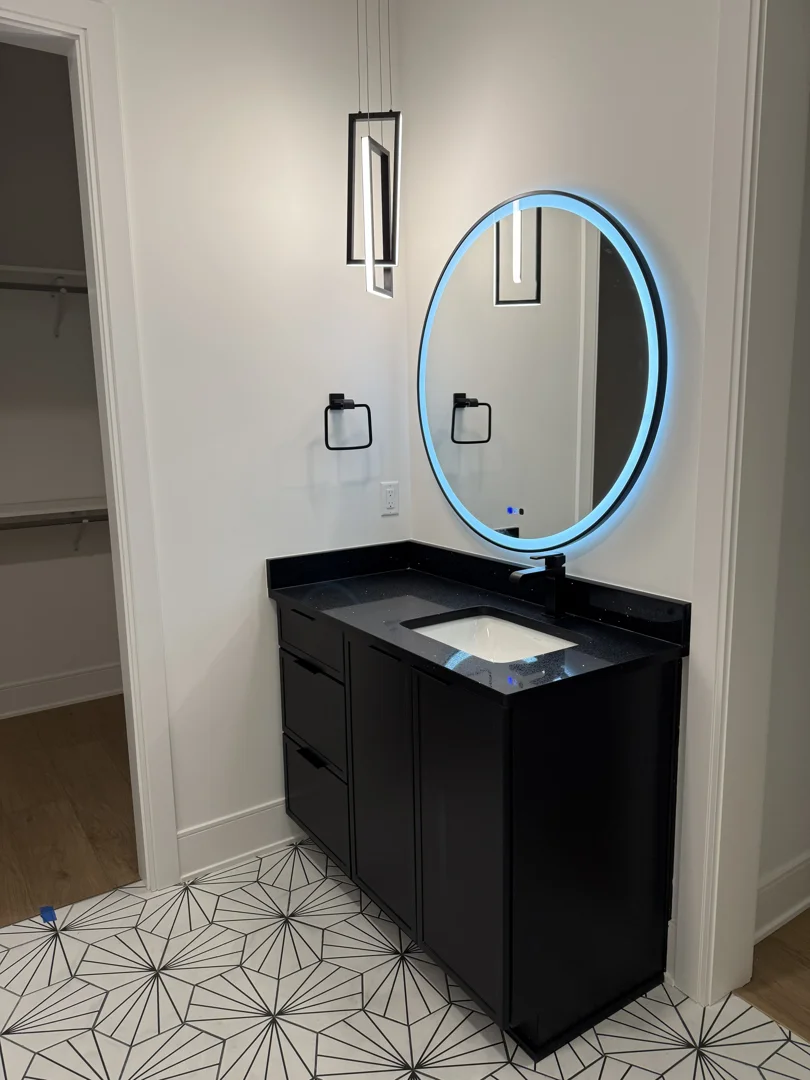
Placement is where many DIY bathroom lighting renovations go wrong. To avoid shadows on your face, vanity sconces should be mounted at eye level, roughly 60 to 65 inches from the floor. They should be spaced about 36 to 40 inches apart to frame the mirror. This creates a “cross-illumination” effect that is much more flattering than a single bar light above the mirror.
If you are looking for these modern vanity lighting options, consider vertical bars or slim sconces. We’ve shared 3 clever ways to install bathroom lighting in central indiana that focus on these exact spatial layouts. If you have a large mirror where side-mounting isn’t possible, a horizontal bar should be mounted 75 to 80 inches from the floor.
For those who prioritize grooming, this guide on vanity lighting for grooming emphasizes the importance of frontal fill light. This means the light should hit your face directly, not from behind or strictly from above. In showers, recessed exhaust lights are a streamlined way to provide both brightness and ventilation without cluttering the ceiling. For a flawless installation that avoids common spatial errors, contact Grounded Solutions for expert placement and design.
Avoiding Common Mistakes in Bathroom Lighting Renovations
Even with the best fixtures, certain mistakes can ruin the ambiance. The most common error is relying on a single light source. This almost always leads to a cave-like feel in the corners and harsh glares in the center. Another mistake is using bulbs with a low CRI (Color Rendering Index). If your foundation looks orange in the bathroom but fine in the car, your CRI is likely too low.
Other frequent pitfalls include:
- Ignoring moisture ratings: Using a beautiful indoor-only pendant in a steamy bathroom will lead to corrosion and electrical failure.
- Mismatched hardware: While you don’t have to match your faucet exactly, your lighting finishes should complement the overall palette.
- Improper sizing: A light fixture that is wider than the vanity cabinet can look top-heavy and awkward.
- Skipping dimmers: According to this professional lighting guide, dimmers are the single most important upgrade for creating a relaxing atmosphere for evening baths. To avoid these costly mistakes, trust the experienced team at Grounded Solutions for your renovation.
Frequently Asked Questions about Bathroom Lighting
What is the best color temperature for a bathroom?
For most residential bathrooms in Central Indiana, we recommend a “soft white” range between 2700K and 3000K. This provides a warm, inviting glow that makes the space feel cozy. If you prefer a crisper, more modern look, you can go up to 3500K, but avoid 5000K “daylight” bulbs, as they can feel clinical and cold in a small space.
How many light sources does a typical bathroom need?
At a minimum, we suggest three sources: a task light (vanity), an ambient light (ceiling), and a dedicated light for the shower or tub area. In larger master ensuites, a fourth “accent” layer — such as toe-kick lighting under the vanity — adds a high-end designer touch and serves as a great nightlight.
Are dimmers necessary for bathroom lighting?
While not “mandatory” by code, they are highly recommended. Dimmers allow you to transition the room from a high-energy “get ready” space in the morning to a low-light sanctuary for a relaxing bath at night. They also extend the life of your bulbs and save energy.
Conclusion
At Grounded Solutions, we believe that a bathroom renovation should be about more than just new tile — it should be about creating a safe, reliable, and beautiful environment for your family. Whether you are in Beech Grove, Franklin, Whiteland, Southport, or Mooresville, our team of licensed and insured electricians is here to help you navigate the complexities of bathroom lighting renovations.
From ensuring your home is resilient against Spring storms to installing the latest Lutron smart home systems, we pride ourselves on transparent pricing and high-quality craftsmanship. Don’t leave your lighting to chance or settle for a “good enough” DIY fix. Ensure your home’s safety and value by choosing professional installation.
Ready to brighten up your space? More info about LED lighting services is just a click away. Contact Grounded Solutions today to schedule your consultation and take the first step toward a perfectly lit bathroom.