Protecting Your Outdoor Electrical Connections
Selecting the right waterproof external junction box is critical for any outdoor electrical project, from landscape lighting in Franklin to pool equipment in Southport. These protective enclosures keep your electrical connections safe from Indiana’s challenging weather conditions while meeting local code requirements.
Key factors for choosing waterproof external junction boxes:
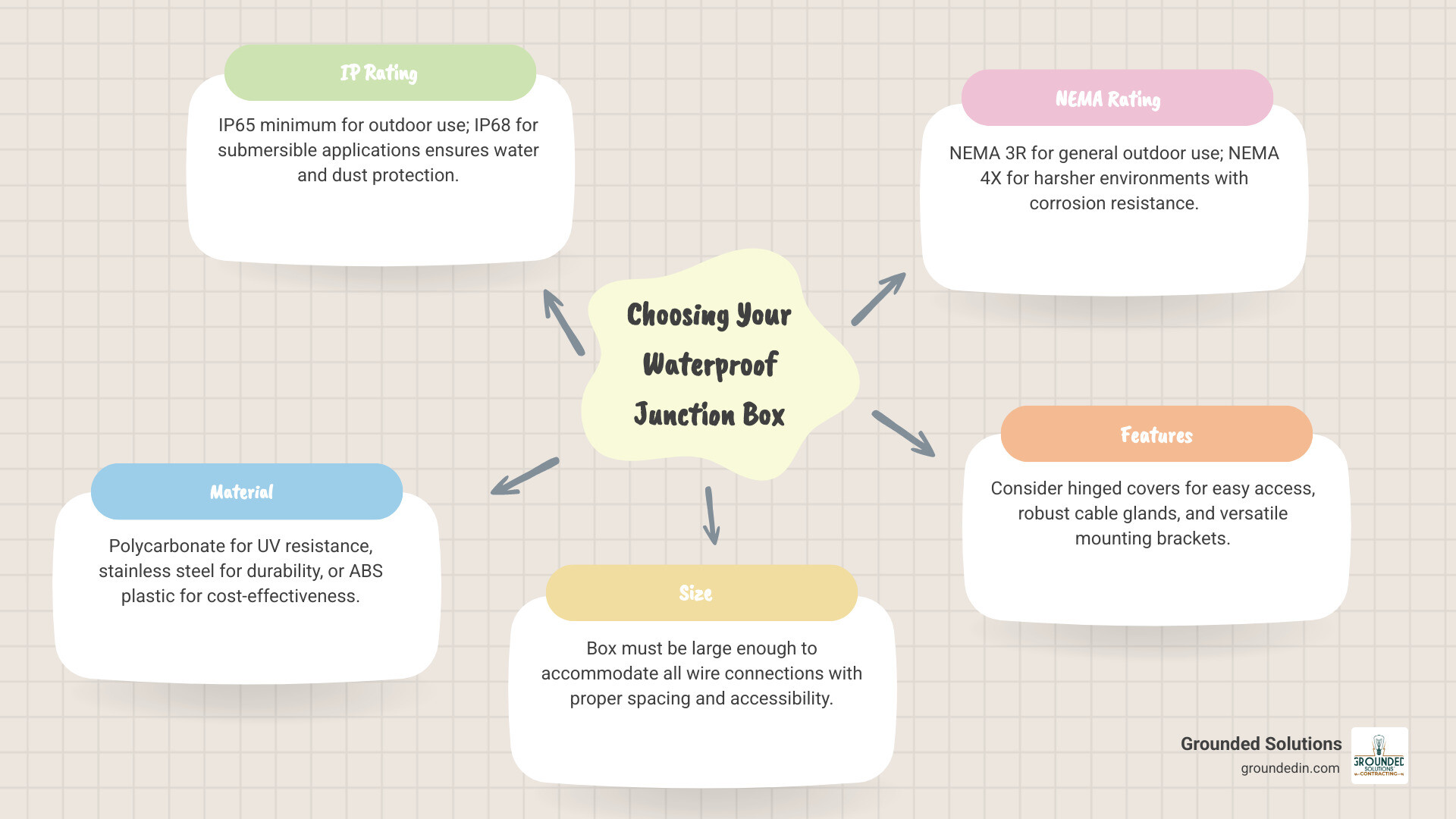
- IP Rating: IP65 minimum for outdoor use, IP68 for submersible applications
- Material: Polycarbonate for UV resistance, stainless steel for durability, ABS plastic for cost-effectiveness
- Size: Must accommodate all wire connections with proper spacing
- NEMA Rating: NEMA 3R for general outdoor use, NEMA 4X for harsh environments
- Features: Hinged covers, cable glands, and mounting brackets for secure installation
The waterproof junction box market has grown significantly, reaching $1.2 billion in 2022 and projected to hit $1.9 billion by 2030. This growth reflects increasing demand for outdoor electrical installations in residential and commercial properties throughout central Indiana communities like Beech Grove, Whiteland, and Mooresville.
However, even the highest-rated enclosure can fail without proper installation. As one industry expert notes, “You don’t ‘waterproof’ an electrical box yourself. The manufacturer ensures it meets its IP rating, and the electrician must install it correctly according to instructions.”
I’m Clay Hamilton, President of Grounded Solutions, with over two decades of experience in electrical systems throughout central Indiana. I’ve seen how proper selection and installation of a waterproof external junction box can prevent costly failures and safety hazards in outdoor electrical projects.
Choosing the Right Waterproof External Junction Box for Indiana Weather
Indiana weather doesn’t mess around. One day you’re dealing with 90-degree humidity that makes everything sticky, and the next week you’re chipping ice off your driveway. For outdoor electrical systems in communities like Mooresville and Whiteland, this constant weather rollercoaster means one thing: you need a waterproof external junction box that can handle whatever Mother Nature throws at it.
Think of these protective enclosures as the bodyguards for your electrical connections. They stand between your wiring and everything from summer thunderstorms to winter freeze-thaw cycles that can wreak havoc on exposed connections. Without proper protection, you’re looking at potential short circuits, electrical fires, or worse – serious safety hazards for your family.
The key is understanding that not all junction boxes are created equal. The material, rating, and features you choose can make the difference between a system that lasts decades and one that fails after the first harsh winter.
Understanding Material Differences: Plastic, Metal, and Fiberglass
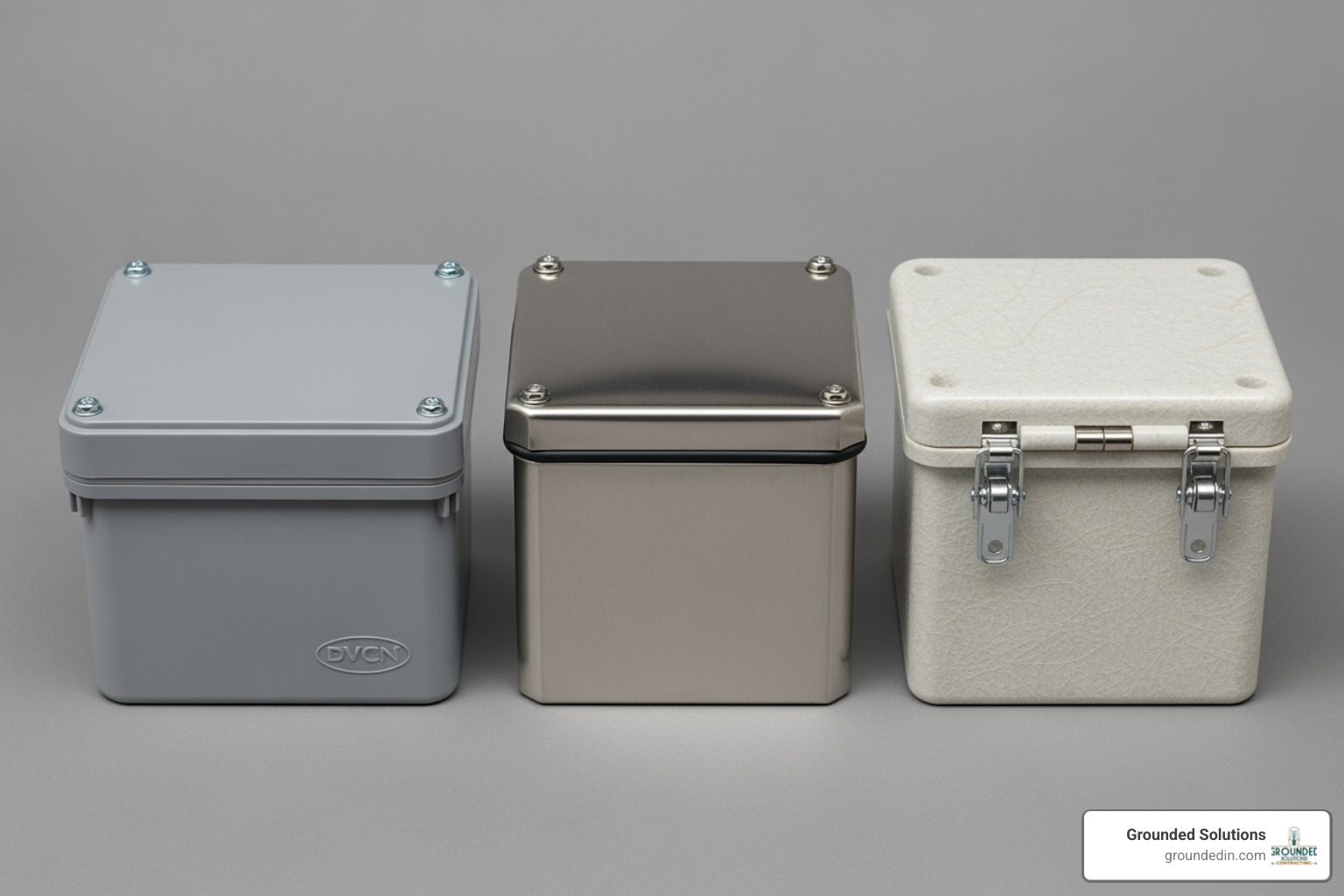
When I’m helping clients choose the right waterproof external junction box, the material conversation usually starts with their specific application and budget. Each material has its sweet spot, and understanding these differences can save you headaches down the road.
Plastic boxes are the workhorses of outdoor electrical enclosures. Made from materials like ABS, polycarbonate, or PVC, they offer excellent value for most residential applications. Polycarbonate stands out as my go-to recommendation for Indiana weather – it shrugs off UV rays like a champ and maintains its strength through temperature swings. These boxes are lightweight, cost-effective, and easy to work with during installation. The downside? While modern plastic formulations are incredibly durable, they can become brittle after years of sun exposure if they lack proper UV protection.
Metal boxes, particularly those made from stainless steel or aluminum, bring serious durability to the table. Stainless steel grades like 304 or 316 handle corrosion resistance beautifully, making them perfect for harsh environments or marine applications. They also provide natural grounding capabilities and excellent impact strength. The trade-offs are weight and cost – metal boxes are heavier and pricier than plastic alternatives.
Fiberglass enclosures offer the best of both worlds. These fiberglass reinforced polyester boxes combine the lightweight benefits of plastic with the durability approaching metal. They excel in UV resistance and corrosion resistance, making them ideal for exposed locations that face Indiana’s full weather spectrum.
For more detailed information about different enclosure types, check out our comprehensive guide on Exterior Electrical Boxes.
Decoding IP and NEMA Ratings for Your Waterproof External Junction Box
Here’s where things get technical, but stick with me – understanding IP ratings and NEMA ratings is like learning to read the weather forecast for your electrical box. These ratings tell you exactly what your enclosure can handle.
IP ratings use two numbers that spell out protection levels. The first digit covers dustproof protection (0-6), while the second covers water protection (0-8). For Indiana outdoor applications, IP65 is typically your starting point – it means complete dust protection and defense against water jets from any direction. Think heavy rain and snow runoff.
When you need more protection, IP67 handles temporary water immersion up to about three feet deep for 30 minutes. IP68 goes further, protecting against continuous submersion under manufacturer-specified conditions. This is essential for pond lighting or any underground applications.
NEMA ratings take a broader approach, considering factors like humidity, ice formation, and corrosion. NEMA 3R works well for general outdoor use, protecting against rain, sleet, and ice formation. NEMA 4X steps up the game with added corrosion resistance and protection against windblown dust – perfect for Indiana’s variable conditions.
The difference between water-resistant vs. waterproof matters here. Water-resistant means it can handle some moisture, while waterproof means it can completely exclude water under specified conditions. For our Indiana climate with its sudden storms and temperature swings, true waterproof ratings provide the reliability you need.
You can dive deeper into these ratings with this helpful guide to waterproof ratings.
Key Features and Common Applications
Beyond the basic protection, several features can make or break your outdoor electrical project. Box size and capacity need to accommodate all your connections with room to spare – cramped wiring creates heat buildup and connection failures. Modern boxes range from compact units perfect for simple splices to large enclosures handling complex multi-circuit installations.
Cable ports and knockouts determine how your wiring enters the box. Quality waterproof external junction boxes feature integrated cable glands that create watertight seals around incoming cables. Hinged covers with secure latches make maintenance easier, while various mounting options ensure solid attachment to walls, posts, or other surfaces.
These features shine in real-world applications throughout central Indiana. For Benefits of Landscape Lighting projects, junction boxes protect the connections that keep your outdoor spaces beautifully illuminated. Pool and spa installations require robust protection for pump and heater connections – learn more about Pool Hot Tub Electrical Safety Indianapolis.
Outdoor kitchens present unique challenges with their complex wiring needs for appliances, outlets, and lighting systems. Our guide on Electrical Wiring Outdoor Kitchen covers these requirements in detail. Even simple applications like providing Benefits Outdoor Electrical Outlets require proper junction box protection to ensure safe, reliable power.
Security systems and smart home devices increasingly depend on outdoor electrical connections. From surveillance cameras to smart irrigation controllers, these systems need weatherproof protection to function reliably year-round in Indiana’s challenging climate.
The growing demand for outdoor electrical installations reflects our increasing reliance on exterior power systems. Whether you’re planning landscape lighting in Franklin or installing pool equipment in Southport, choosing the right waterproof external junction box sets the foundation for a safe, reliable system that will serve you well for years to come.
Professional Installation: The Key to a Truly “Waterproof” System
Here’s something that might surprise you: buying a waterproof external junction box with the highest IP rating doesn’t automatically guarantee a waterproof installation. Think of it like buying the world’s best umbrella but leaving it at home during a thunderstorm. The protection is only as good as how it’s used.
After two decades of electrical work throughout central Indiana, I’ve seen perfectly good enclosures fail because of poor installation, while properly installed boxes with lower ratings perform flawlessly year after year. The truth is, an incorrectly installed IP68 box can let in more water than a carefully installed IP65 box. This is why professional installation isn’t just recommended—it’s absolutely essential for creating a truly sealed and safe outdoor electrical system.
Why Professional Installation of a Waterproof External Junction Box is Non-Negotiable
The difference between a waterproof external junction box that protects your electrical connections and one that becomes a safety hazard often comes down to installation details that might seem minor but are actually critical.
Cable glands are the unsung heroes of waterproof installations. These small components create the seal where cables enter your junction box, maintaining its IP rating. But here’s where things get tricky: they must be precisely sized for each cable and tightened to exact specifications. Too loose, and water finds its way in. Too tight, and you can damage the cable or compromise the seal. We always match IP-rated glands perfectly to cable diameter and follow manufacturer torque specifications to the letter.
Drip loops work with gravity instead of against it. Water always wants to flow downward, so we create a gentle loop in each cable before it enters the box. This ensures any water running along the cable surface drips harmlessly to the ground instead of following the cable into your enclosure. We also prioritize bottom or side cable entry whenever possible, avoiding the top entry that can create a direct water pathway.
The DIY approach to outdoor electrical work is where we see the most dangerous mistakes. I’ve encountered junction boxes “waterproofed” with layers of duct tape, others painted over without checking material compatibility, and some wrapped in plastic bags secured with zip ties. These makeshift solutions inevitably fail, often creating electrical shock hazards and fire risks that put families at serious risk.
Beyond safety concerns, improper installation creates code violations that can cause headaches during home inspections or insurance claims. The electrical codes enforced throughout Indianapolis and surrounding communities like Franklin and Beech Grove exist for good reasons, and non-compliance can have serious legal and financial consequences.
Professional installation through services like our Exterior Lighting Installation Services ensures every connection meets safety standards and performs reliably for years to come.
The Grounded Solutions Advantage for Your Outdoor Project
When you choose Grounded Solutions for your outdoor electrical needs in central Indiana, you’re partnering with licensed professionals who understand that details matter. We’ve built our reputation serving communities from Southport to Mooresville by getting installations right the first time.
Our material selection process starts with understanding your specific environment. A waterproof external junction box for a backyard garden in Whiteland might need different specifications than one for a commercial application in Franklin. We assess factors like exposure to weather, potential physical impact, and maintenance access to recommend the ideal enclosure for your situation.
Code compliance isn’t just about passing inspections—it’s about ensuring your family’s safety. Our electricians stay current with all local and national electrical codes, guaranteeing every installation meets or exceeds requirements. This knowledge protects you from safety hazards and potential legal issues down the road.
Our installation process follows manufacturer specifications precisely. We select proper cable glands, create effective drip loops, ensure correct cable entry points, and verify proper grounding for metal enclosures. These steps might seem routine, but they’re what separate a truly waterproof system from one that will fail when you need it most.
We focus on long-term reliability because we want your outdoor electrical systems to serve you well for decades. Proper installation maximizes the lifespan of your waterproof external junction box and minimizes the need for future repairs or replacements.
Maintaining Your Outdoor Electrical System
Even the best-installed waterproof external junction box benefits from occasional attention. Think of it like maintaining your car—regular checks help catch small issues before they become big problems.
Visual inspections should be part of your seasonal routine. Look for cracks in the enclosure, loose covers, or signs that seals might be compromising. Plastic boxes can show discoloration or warping from UV exposure, while metal boxes might develop rust spots if their protective coating is damaged.
Seal integrity deserves special attention around cover gaskets and cable entry points. These seals can degrade over time, especially after harsh Indiana winters. If you notice any wear or compromise, it’s time to call for professional assessment.
After severe weather or if you notice any damage, have the system inspected by qualified electricians. Even minor damage can compromise waterproof capabilities, and it’s better to address issues early than deal with water damage or safety hazards later.
Seasonal maintenance makes sense given our challenging Indiana weather. After particularly harsh winters or wet springs, a quick visual check helps ensure everything still looks good. This is also an excellent time to consider Winter Proofing Electrical Outlets: Safeguarding Outdoor and Garage Outlets as part of your comprehensive outdoor electrical maintenance.
Your outdoor electrical systems represent an investment in convenience, safety, and property value. Don’t leave their performance to chance with DIY installations or cut-rate work that compromises their effectiveness.
Contact us to ensure your outdoor electrical systems are safe and secure and properly protected with professionally installed waterproof external junction boxes throughout central Indiana.