
Recognizing Urgent Electrical Hazards in Carmel Homes
If you are facing an active electrical emergency in Carmel, Indiana, immediately shut off your home’s main circuit breaker, but only if you can reach the service panel safely without stepping in water or nearing active flames. If you observe smoking outlets, burning odors, or arcing sparks, evacuate all occupants and pets immediately, call 911 if a fire hazard is present, and contact a licensed Carmel emergency electrician service to isolate and repair the fault. Never attempt DIY electrical repairs on live systems. Prompt professional intervention ensures your home is stabilized and protected against devastating fires.
Spring storms, severe thunderstorms, and sudden grid fluctuations throughout Central Indiana can test your home’s electrical infrastructure. When excessive electrical currents surge through aging wiring, dangerous hazards arise that put your family and property at immediate risk. Understanding how bad wiring can cause a blaze is the first step toward recognizing when an issue has progressed from a minor inconvenience to a full-blown emergency.
Modern households demand substantial power to run high-draw appliances, HVAC systems, smart home automation setups, and EV chargers. When older wiring cannot support these heavy loads, components overheat behind drywall and inside switch boxes. Recognizing the initial signs of electrical failure prevents small faults from escalating into catastrophic property loss, extensive structural damage, or severe personal injury.
Warning Signs of an Overloaded Electrical Panel
Your main service panel distributes electricity throughout your home, using circuit breakers designed to shut off power when amperage exceeds safe thresholds. However, when multiple high-draw appliances run simultaneously, or when internal components degrade, the panel itself can become overloaded.
Key indicators that your electrical panel is operating past its safe capacity include:
- Frequent Breaker Trips: A breaker that trips repeatedly is actively preventing a fire, but persistent trips indicate that the circuit is severely overtaxed or failing. Learning how to tell if a breaker is bad can help you identify when mechanical failure has occurred inside the breaker box.
- Audible Buzzing or Humming: Electrical current should operate silently. Loud humming, buzzing, or clicking noises coming directly from the panel enclosure point to loose connections, arcing, or internal component breakdown.
- Physical Heat on Panel Surfaces: The metal cover or breaker switches should never feel hot to the touch. Noticeable warmth suggests high resistance and excessive current draw that could melt busbars.
- Discoloration and Scorch Marks: Dark marks, melting plastic around breaker switches, or peeling paint on the panel cover signal extreme internal temperatures that require immediate professional intervention.
- Flickering Overhead Lights: When lights throughout your Carmel home flicker or dim when the air conditioner, dryer, or microwave turns on, your panel is struggling to balance the load.
Power Outages, Arc Faults, and Burning Odors
Electrical emergencies do not always announce themselves with dramatic sparks. In many cases, subtle sensory cues reveal dangerous conditions developing inside your walls.
One of the most concerning warning signs is an acrid, pungent smell resembling burning plastic or rotting fish. This distinct odor occurs when the synthetic insulation surrounding electrical wires overheats and begins to vaporize. If you detect this scent near outlets, baseboards, or your breaker panel, the wiring is actively degrading and could ignite nearby building materials, framing lumber, or attic insulation.
Arc faults represent another critical hazard. An arc fault is an unintended electrical discharge that jumps between conductors, generating intense heat exceeding 10,000 degrees Fahrenheit. According to safety guidelines established by the National Fire Protection Association (NFPA), electrical arcing is a leading contributor to residential fires. Our arc fault protection guide highlights how modern safety devices detect these micro-arcs before fires ignite.
Furthermore, if your home experiences an isolated blackout while neighboring properties remain powered, the issue likely stems from a damaged service drop, a blown main disconnect, or severe internal panel failure. Flickering or dimming lights across multiple rooms, especially when large appliances like your heat pump kick on, also indicate voltage instability that demands prompt professional diagnostics from Grounded Solutions.
Immediate Safety Steps to Take Before Help Arrives

When an electrical crisis occurs, your immediate actions dictate whether the situation remains contained or escalates into structural damage or personal injury. Before reaching out to a professional emergency electrician service, executing key safety steps protects everyone in your home.
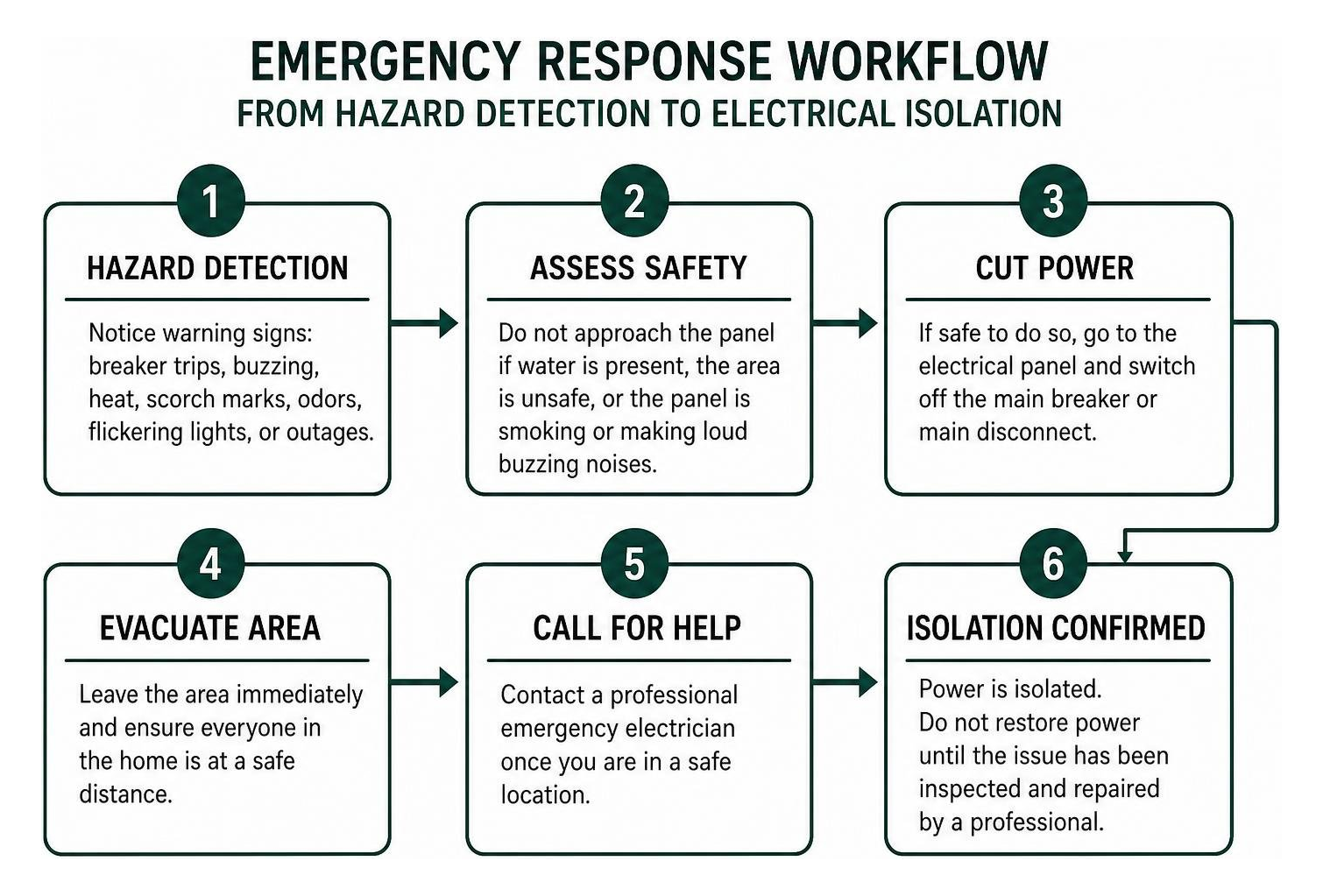
Safely Cutting Power and Evacuating the Area
If an outlet is sparking, an appliance is smoking, or you detect a strong electrical odor, cutting power at the source is the safest preventive measure, provided you can reach the panel safely.
- Assess the Environment: Never approach the electrical panel if you must stand in standing water, if the floor is damp, or if the panel itself is actively emitting smoke or loud buzzing. Spring flooding or basement seepage creates dangerous shock pathways.
- Use the One-Hand Rule: When operating the main breaker disconnect, stand to the side of the panel rather than directly in front of it. Ensure your hands are completely dry, look away as you flip the main switch, and use one hand only to keep an electrical path from crossing your chest.
- Evacuate the Room or Home: Once power is disconnected, or immediately if accessing the panel is unsafe, evacuate all family members and pets from the affected area to a safe exterior assembly point.
- Avoid DIY Repairs: Never attempt to dismantle outlets, pull out burned breakers, or splice wires during an emergency. Untrained handling of energized circuits carries severe electrocution risks.
- Maintain Clear Pathways: Ensure hallways, exterior gates, and access routes to the electrical service panel remain clear of clutter so emergency responders and technicians can access vital equipment without delay.
Electrical Shock and Fire Response Protocols
Electrical shocks and fires require specialized response measures. Standard home emergency procedures, such as throwing water on flames, can be fatal in an electrical crisis.
- Do Not Use Water: Water conducts electricity. Pouring water on an energized electrical fire will cause severe electrical shock and rapidly spread the flames across walls and floors.
- Deploy a Class C Fire Extinguisher: Only use a dry chemical fire extinguisher rated for Class C (electrical) fires if the flames are small, contained, and you have a clear evacuation route behind you.
- Respond to Electrical Shock Safely: If someone is in contact with an energized electrical source, do not touch them directly with bare hands. Shut off the main power immediately. If that is impossible, use a non-conductive wooden broom handle or plastic object to push the source away from the victim. Review our guide on electrical shock first aid procedures and dial 911 immediately for emergency medical personnel.
- Avoid Re-Energizing Damaged Circuits: Even if smoke clears or sparks subside, never attempt to flip a tripped breaker back on until a licensed electrician conducts a thorough electrical fault inspection.
When to Call a Carmel Emergency Electrician Service Immediately
Not every electrical issue requires an urgent middle-of-the-night dispatch, but distinguishing between non-urgent maintenance and immediate safety threats is critical for keeping your property secure.
| Issue | Severity Level | Immediate Action Required | Call Urgency |
|---|---|---|---|
| Active sparks or flames from outlet | Critical Emergency | Evacuate, shut off main breaker if safe, call 911 | Immediate (24/7 Dispatch) |
| Strong burning plastic or fishy odor | Critical Emergency | Turn off power to the zone/main, isolate area | Immediate (24/7 Dispatch) |
| Water leaking into electrical panel | Critical Emergency | Do not touch panel; evacuate wet areas | Immediate (24/7 Dispatch) |
| Hot breaker panel or humming noises | High Urgency | Shut off heavy loads, switch off main breaker | Immediate / Same-Day Service |
| Single GFCI outlet tripping | Moderate / Non-Urgent | Unplug appliances, test reset switch | Standard Business Hours |
| Flickering lamp when plugged in | Low / Non-Urgent | Test lamp in different outlet; inspect cord | Standard Business Hours |
Critical Signs Requiring a Carmel Emergency Electrician Service
Certain conditions represent an active, immediate fire or electrocution risk that cannot wait until morning. You should contact Grounded Solutions immediately if you encounter:
- Visible Sparks or Arcing: Outlets, light switches, or electrical panels throwing visible blue or yellow sparks when devices are plugged in or switched on.
- Smoking or Charred Outlets: Wall plates exhibiting scorch marks, warped plastic, discoloration, or drifting wisps of smoke.
- Persistent Breaker Lockout: A breaker that trips instantly every single time you attempt to reset it, indicating a hard short circuit or severe insulation breakdown.
- Storm and Water Intrusion: Spring flash floods, roof leaks, or severe windstorms that direct water into service panels, subpanels, meter bases, or weather-resistant outdoor receptacles.
- Sizzling or Crackling Sounds Inside Walls: Audio cues indicating active arcing behind drywall, often near hidden junction boxes or rodent-damaged wiring.
- Overheated Switch Plates: Light switches or outlet covers that radiate heat or feel noticeably warm to the palm during standard operation.
Risks of Delaying Urgent Electrical Repairs
Delaying emergency repairs creates severe, compounding hazards. What starts as a loose terminal screw or a minor short circuit can rapidly heat surrounding wooden framing, insulation, and drywall to ignition temperatures. Electrical fires inside wall cavities often spread undetected until flames break through structural boundaries.
Beyond fire dangers, unaddressed electrical faults can send catastrophic voltage spikes through your home’s wiring. These surges destroy expensive HVAC equipment, smart home automation hubs, refrigeration units, and sensitive electronics. Operating on degraded circuits also places your family at ongoing risk of severe electrocution and permanent electrical system failure.
What to Expect During an Emergency Electrician Visit

During an urgent service call, our priority is securing your home, isolating active hazards, and systematically diagnosing the underlying fault.
Information to Provide Over the Phone
When placing an emergency call, providing clear, concise details helps our dispatchers and master technicians prepare the right equipment before arriving on site:
- Exact Symptoms: Describe precisely what you saw, smelled, or heard (e.g., “sparks behind the refrigerator outlet” or “buzzing at the basement panel”).
- Current Power Status: State whether you have cut power to the entire house, shut off a specific breaker, or left power on due to safety concerns.
- Property Details: Mention the approximate age of your home, the location of your main panel, and whether you have an active standby generator or solar storage system.
- Recent Weather or Work: Inform the technician if the failure occurred following a severe storm, lightning strike, high wind event, or recent home renovation work.
- Special Accessibility Notes: Let the team know if there is standing water near the panel or if exterior meter equipment is blocked by storm debris.
Professional Diagnostics and On-Site Hazard Mitigation
Upon arrival, our licensed, bonded, and insured electrician team will execute a structured troubleshooting process following strict National Electrical Code safety protocols:
- Thermal Imaging and Load Testing: We use advanced infrared thermal cameras to detect hot spots, hidden arcing, and overloaded circuits behind walls and inside panel enclosures without causing unnecessary property damage.
- Circuit Tracing and Resistance Testing: Multimeters and digital circuit analyzers pinpoint the exact location of short circuits, ground faults, neutral imbalances, and damaged conductors.
- Hazard Isolation and Safe Remediation: The technician will disconnect damaged circuits, repair or replace compromised breakers, restore service panel stability, and ensure all grounding and bonding meet current standards before re-energizing your system safely.
Preventing Future Residential Electrical Crises
After resolving an urgent electrical emergency, taking proactive steps ensures your home remains resilient against future grid anomalies, seasonal storms, and appliance load spikes.
Upgrading Panels and Circuit Breakers
Many homes built decades ago operate on 100-amp service panels designed long before modern electric vehicles, heat pumps, and induction appliances became standard. Upgrading to a modern 200-amp service provides the headroom necessary to run high-demand equipment safely without straining your infrastructure.
Replacing obsolete equipment with a high-capacity breaker panel prevents nuisance tripping and severe panel overloads. Modern panels incorporate Arc-Fault Circuit Interrupter (AFCI) and Ground-Fault Circuit Interrupter (GFCI) breakers, providing automated shutoff protection at the microsecond level whenever an arcing fault or current leakage occurs. Homeowners planning for long-term safety should evaluate electrical panel replacement considerations to modernize their home’s infrastructure with our home electrical panel upgrade services.
For advanced energy control, installing a smart electrical panel such as the SPAN smart panel lets you monitor circuit loads in real time from your smartphone, automatically shedding non-essential loads during grid outages to protect your electrical backbone.
Standby Power, Surge Defense, and Smart Control
Central Indiana weather events frequently knock out utility power lines. Investing in dedicated backup generators in Carmel keeps essential medical devices, refrigeration, sump pumps, and climate control running smoothly during extended blackouts.
Complementing standby power with robust whole-house surge protection systems prevents dangerous transient voltage spikes from burning out appliances and delicate home automation processors. Furthermore, when enhancing your home with automated lighting and energy controls, selecting an experienced, certified installer is essential. Grounded Solutions is Caséta and RadioRA 3 Certified by Lutron, ensuring your smart switches, dimmers, and control systems are installed with precision, seamless integration, and strict adherence to electrical safety codes.
Frequently Asked Questions About Emergency Electrical Repairs
How quickly does a Carmel emergency electrician service respond to calls?
Emergency response teams prioritize urgent safety hazards, such as active sparks, burning odors, water intrusion into panels, and total power loss, dispatching licensed technicians promptly across Carmel and surrounding Central Indiana communities. Response windows vary based on active storm conditions, road accessibility, and regional call volume, but urgent calls are triaged immediately to protect life and property.
What should I do if an electrical outlet starts smoking?
If an outlet begins smoking, immediately shut off the circuit breaker controlling that room or flip the main service disconnect if you can do so safely. Evacuate everyone from the immediate area and call 911 if active flames or heavy smoke appear. Once emergency services have secured the area or if no fire is present, contact Grounded Solutions to inspect the circuit, remove damaged wiring, and install safe, code-compliant receptacles.
Can an overloaded circuit cause a house fire?
Yes. When a circuit carries more electrical current than the wire gauge is rated to handle, resistance causes the copper conductors to generate intense heat. If the breaker fails to trip due to age or mechanical defect, the wiring insulation melts, igniting surrounding timber, drywall paper, and attic insulation inside the wall cavity.
What makes a buzzing sound in my electrical panel dangerous?
A persistent buzzing sound inside your electrical panel usually signals a loose terminal connection, a failing circuit breaker mechanism, or an active electrical arc. Because arcing generates intense heat capable of melting metal components, any audible buzz should be inspected promptly by a professional electrician.
Conclusion
Electrical emergencies are high-stress situations that demand rapid, professional intervention to protect your family and home from fire, severe property destruction, and electrocution. Recognizing warning signs, such as burning smells, buzzing panels, and sparking receptacles, allows you to take immediate safety measures before damage escalates.
Grounded Solutions is a local, family-owned electrical contractor proudly serving Carmel, Indianapolis, and our southern neighbors in Beech Grove, Franklin, Whiteland, Southport, and Mooresville. Our fully licensed, bonded, and insured electricians bring decades of diagnostic expertise to resolve hazardous electrical failures safely, efficiently, and reliably.
For routine upgrades, emergency triage, whole-home surge defense, or full-service electrical contracting solutions, count on Grounded Solutions to keep your home powered safely. Contact our team today to schedule an inspection or resolve your urgent electrical needs.