
Why Every Indiana Hot Tub Owner Must Navigate Electrical Permits
Getting an electrical permit for hot tub installation isn’t just red tape—it’s your safety net. In Indiana, most hot tubs holding over 24 inches of water require both building and electrical permits. Here’s a quick overview:
Key Permit Requirements:
- Water Depth: Permits are needed for hot tubs deeper than 24 inches.
- Electrical Specs: A 240V/50-60 amp dedicated circuit with GFCI protection is standard.
- Installation: A licensed electrician is required to ensure code compliance.
- Documentation: You’ll need a site plan, manufacturer specs, and an electrical load calculation.
Shockingly, about half of all hot tubs installed in the U.S. have code violations, even when installed by professionals. This highlights the critical importance of proper permitting and expert installation for your family’s safety.
Hot tubs are power-intensive, typically requiring 240-volt circuits that draw 50-60 amps. The National Electrical Code (NEC) Article 680 outlines strict rules for these installations, covering GFCI protection, grounding, and placement of disconnects and outlets.
For homeowners in the Indianapolis area, from Greenwood to Franklin, navigating local permit rules can be complex. While specific processes may vary by municipality, the core electrical safety standards are consistent across Central Indiana. Grounded Solutions has decades of experience guiding homeowners through the electrical permit for hot tub process, ensuring every installation is safe, compliant, and free of costly errors.

Decoding the Electrical Permit for a Hot Tub
Before you can enjoy your new hot tub, you must navigate the electrical permit for hot tub requirements. This process isn’t just paperwork; it’s your first line of defense against electrical hazards, ensuring your installation meets local Indiana regulations and the National Electrical Code (NEC) Article 680.
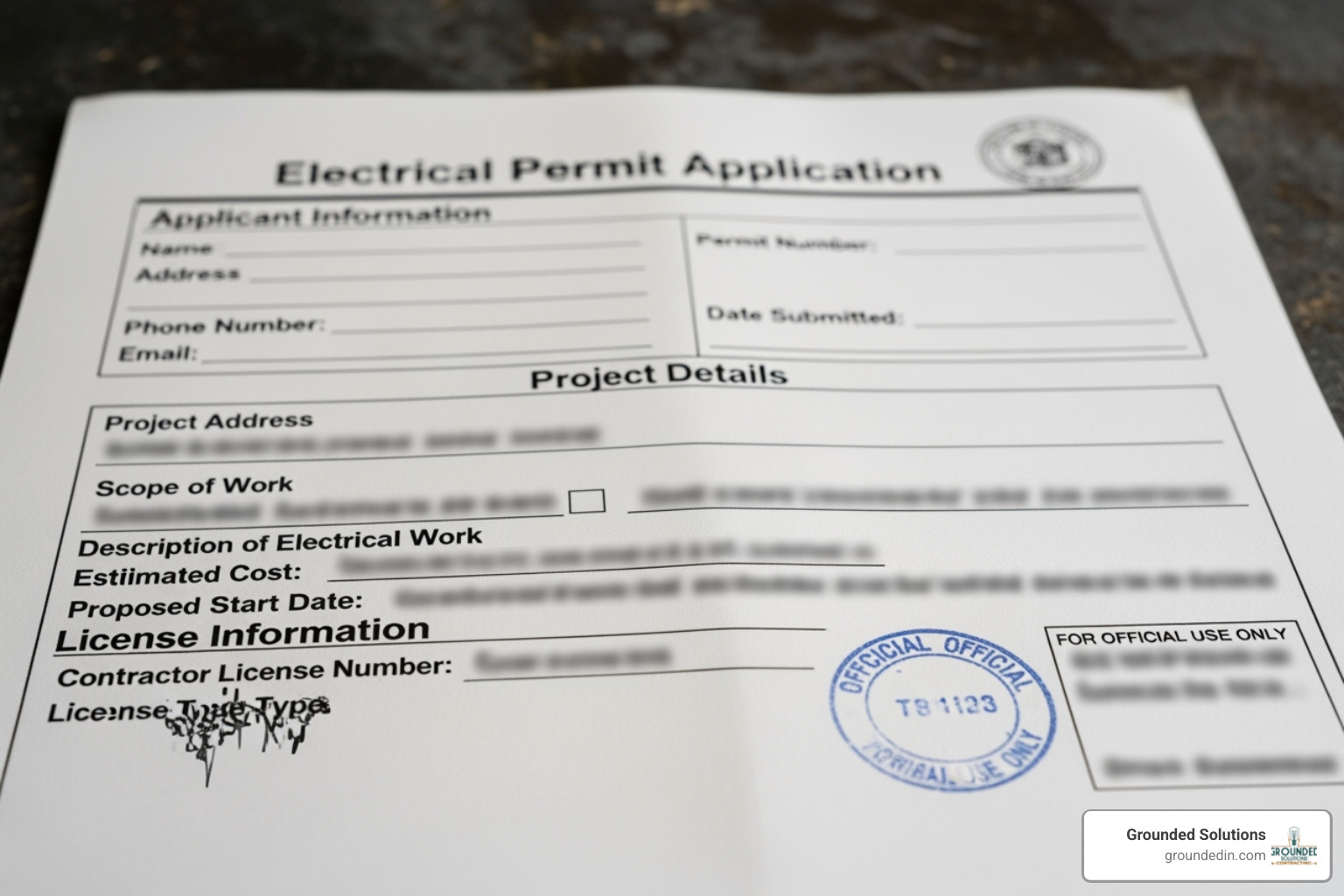
These safety standards are based on real-world incidents and are crucial for both hard-wired and “plug-and-play” models. Understanding them will prevent future complications. For comprehensive guidance on keeping your water features safe, review our detailed insights on Pool & Hot Tub Electrical Safety Indianapolis.
Do You Really Need a Permit? The Answer for Indiana Homeowners
The short answer for most Indiana homeowners is: yes. State regulations typically require both building and electrical permits for any hot tub that holds more than 24 inches of water. This rule applies to all types, from above-ground tubs in Greenwood to in-ground spas in Franklin.
The 24-inch threshold is a key safety benchmark. Deeper water increases electrical risks, so local building departments enforce strict standards. Even if a smaller tub falls below this depth, its electrical connection will almost certainly require an electrical permit for hot tub work due to the power demands and necessary safety equipment.
While specific rules may vary slightly between municipalities like Indianapolis and Carmel, the core electrical safety standards are consistent. You can check local rules in Carmel, IN for an example of municipal requirements. Planning for permits from the start is the best way to keep your project on track and your family safe.
The Anatomy of a Safe Hot Tub Circuit: GFCI, Disconnects, and More
A safe hot tub installation involves far more than plugging it in. Most models require a dedicated 240-volt circuit capable of handling 50 to 60 amps—a significant electrical load that demands professional assessment. The National Electrical Code (NEC) outlines a complex web of safety requirements that our licensed electricians are experts in navigating.
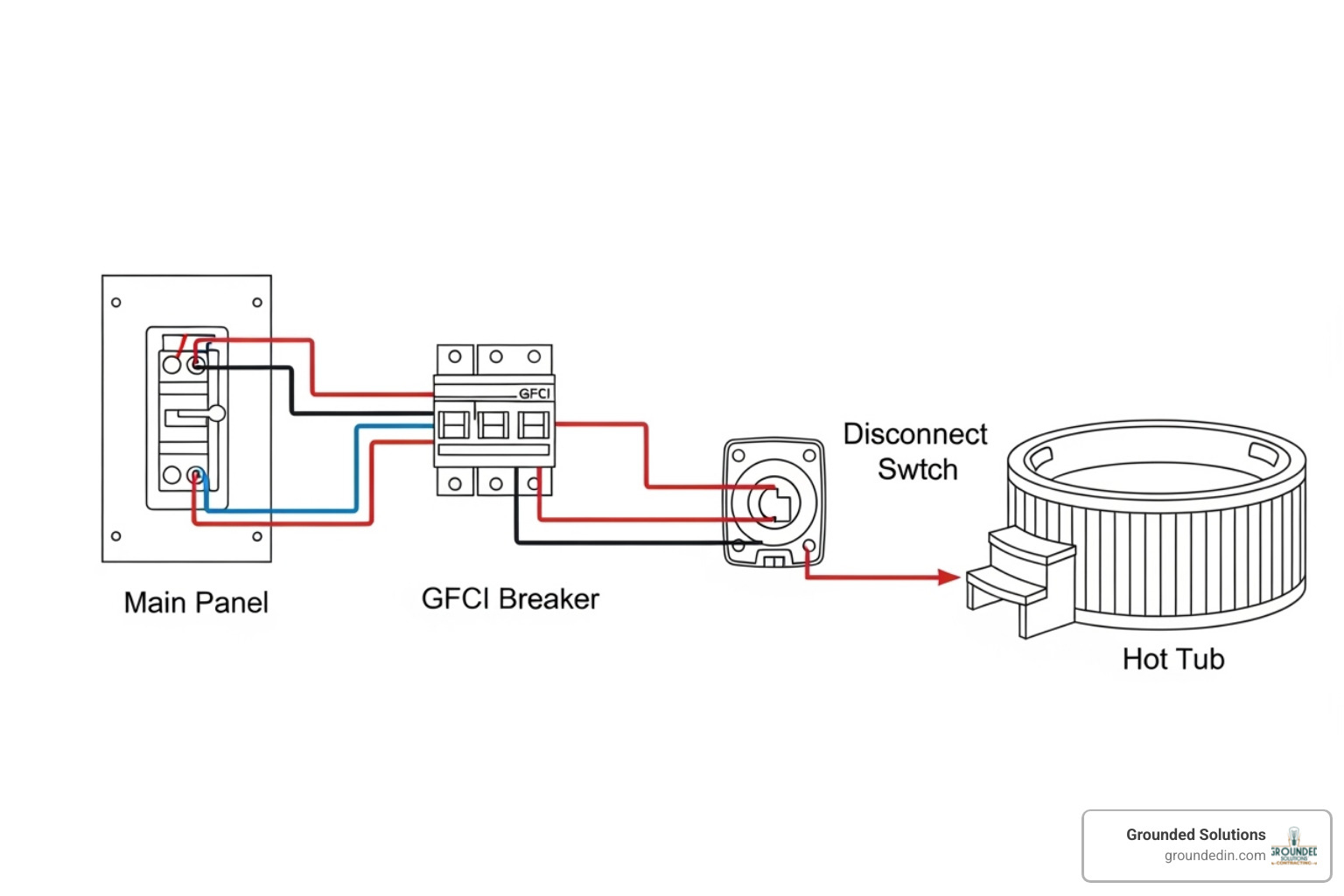
The cornerstone of this system is the GFCI (Ground Fault Circuit Interrupter), a life-saving device that must be installed correctly to prevent electric shock. Furthermore, the code mandates a specific manual disconnect switch, and its placement is critical—it must be visible from the tub but positioned at a precise, safe distance. Our experts also ensure strict adherence to clearance rules for outlets, switches, and overhead wiring, eliminating hazards that homeowners might easily overlook. These are not suggestions; they are non-negotiable safety layers that a professional electrician is trained to implement perfectly.
These are non-negotiable rules designed to prevent accidents. For more details, see our guide on Electrical Safety for Pools.
Critical Grounding and Bonding Requirements
Grounding and bonding are complex but vital safety measures that protect against electrocution. Grounding provides a safe path for stray electrical current, while bonding connects all metal components to ensure they are at the same electrical potential, eliminating dangerous voltage differences.
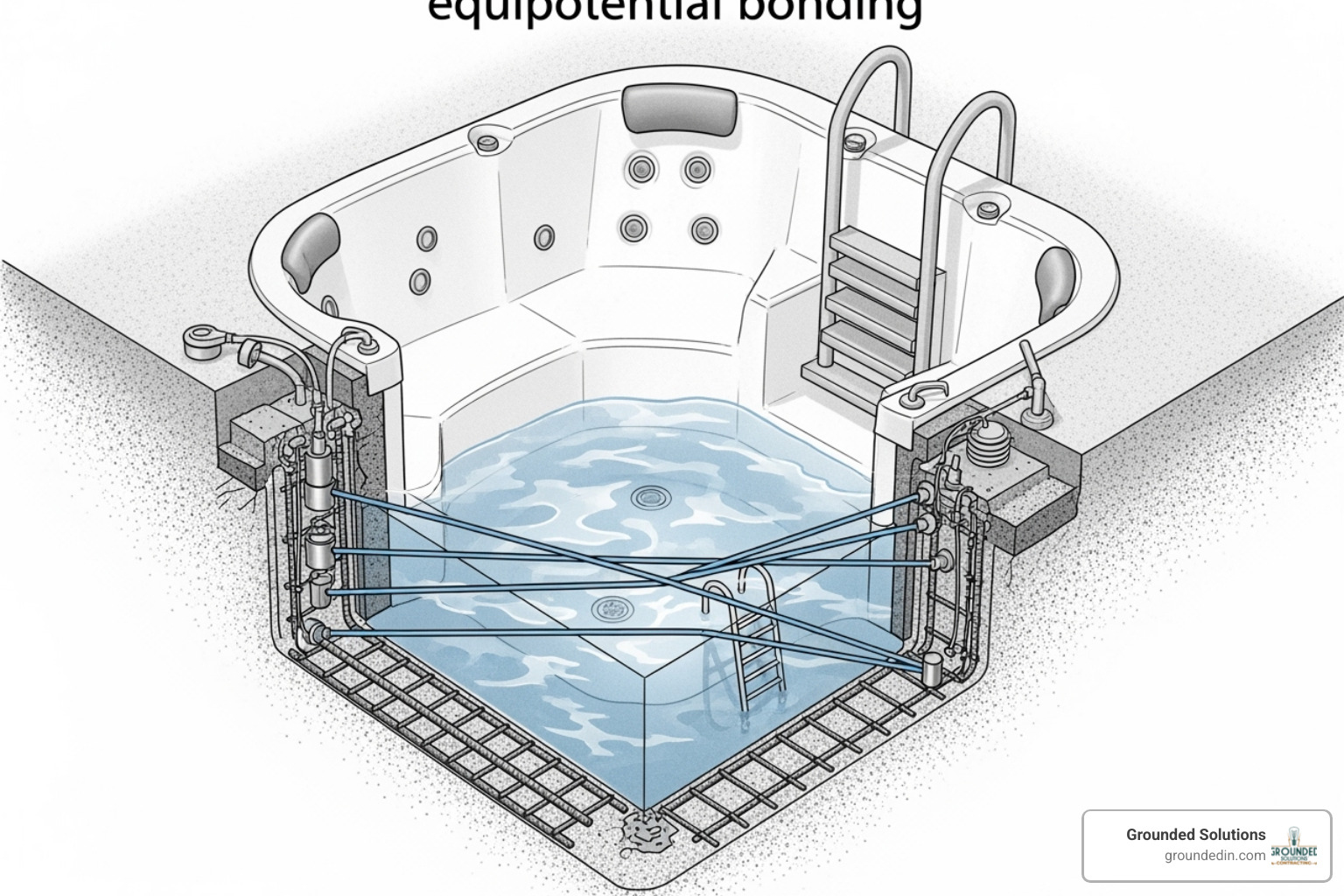
NEC Article 680 mandates an equipotential bonding grid. This involves connecting all metal parts (jets, handrails, ladders), the reinforcing steel in concrete slabs, and even the water itself to a common bonding conductor. Nearby conductive surfaces like metal fences or pipes may also need to be included.
This is highly technical work that is not a DIY project. A mistake in grounding or bonding can have fatal consequences, which is why the expertise of a licensed electrician is essential. For background on electrical basics, our Electrical Installation 101 guide is a useful resource.
From Permit to Perfection: Ensuring a Safe Installation
Once you understand the permit requirements, the next step is a safe, correct installation. This is where a professional, licensed electrician is invaluable. At Grounded Solutions, we provide expert residential electrical services across Central Indiana, including Indianapolis, Greenwood, Franklin, and Carmel, ensuring every hot tub installation meets the highest safety standards.
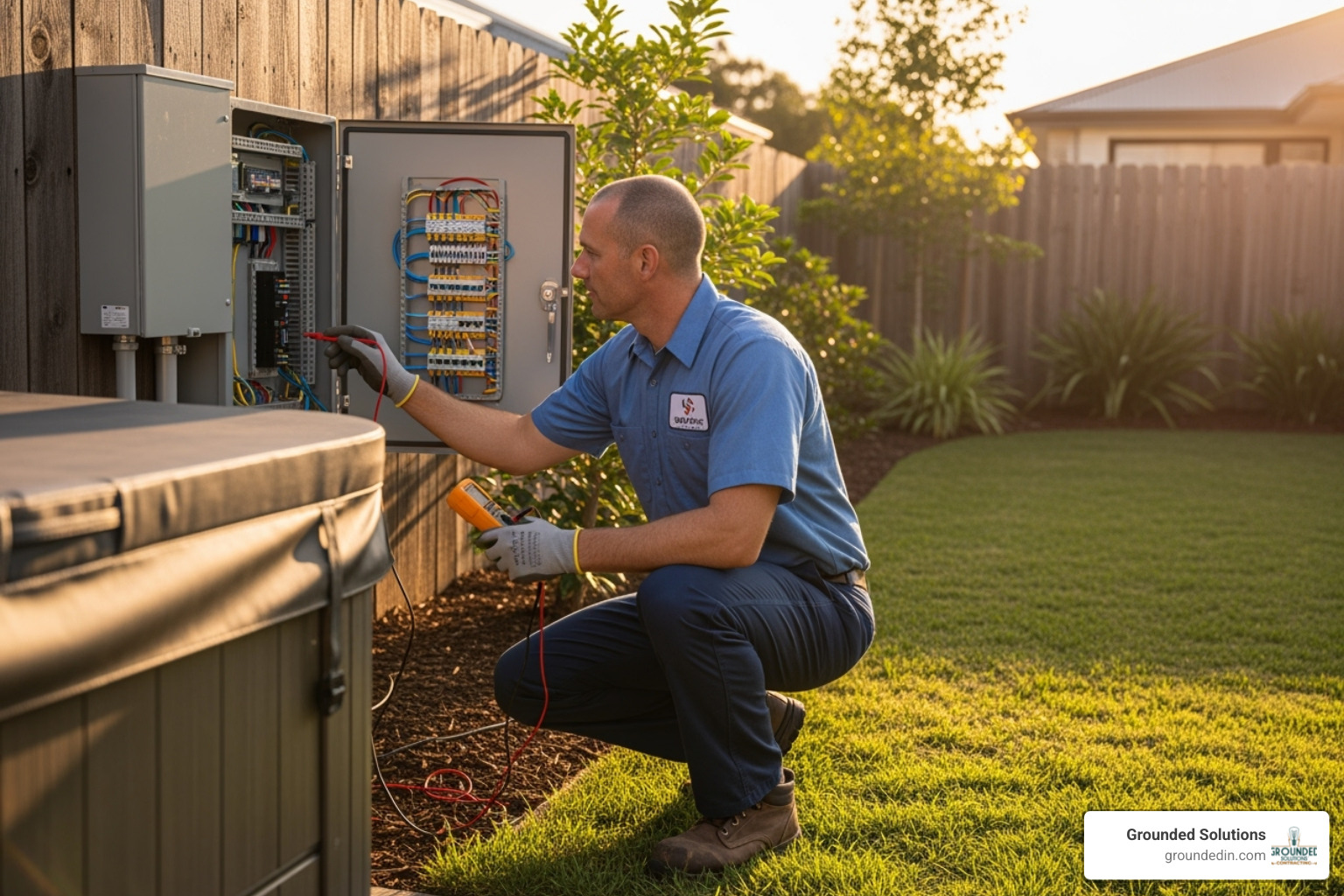
Our team handles the complexities of code compliance so you can enjoy your new backyard amenity with peace of mind. Learn more about our Residential Services.
Assembling Your Application for an Electrical Permit for a Hot Tub
Navigating the permit application process can be daunting, but it’s a critical step we manage for our clients. A successful application for an electrical permit for hot tub requires a comprehensive package of documents tailored to your local municipality. This typically includes a detailed site plan showing the hot tub’s location in compliance with setback rules, the manufacturer’s technical specifications, and your licensed contractor’s information. One of the most crucial components is the electrical load calculation. This analysis determines if your home’s current electrical system can safely support the hot tub’s heavy power demand without risking an overload. Our team at Grounded Solutions has extensive experience with the permitting process across Central Indiana. We handle the preparation and submission of these documents, ensuring your application is complete, accurate, and professionally presented to avoid delays and get your project started on the right foot.
Our team at Grounded Solutions is experienced with the permitting process in Central Indiana and can help ensure your application is complete and accurate. For more on our services, visit our Indianapolis Electrical Service and Repair page.
The High Cost of Unpermitted Work
Skipping the permit process can lead to severe consequences that far outweigh any initial savings:
- Fines and Penalties: Municipalities can issue large fines and stop-work orders, causing delays and increasing costs.
- Failed Inspections and Rework: If unpermitted work is discovered, you may be forced to tear out finished work for inspection and perform costly, code-compliant repairs.
- Insurance Claim Denial: In the event of a fire or injury from an unpermitted installation, your homeowner’s insurance may deny your claim, leaving you with devastating financial liability.
- Home Sale Complications: Unpermitted work is a major red flag for home buyers and can derail a sale or force expensive, last-minute repairs.
- Serious Safety Hazards: Most importantly, unpermitted work is often unsafe. Improper wiring, grounding, or lack of GFCI protection creates a significant risk of electrocution and fire. Learn more about these risks in our articles on Hot Tub Electrical Troubleshooting, Electrical Safety for Pool Parties, and Electrical Safety in the Pool.
Why a Professional is Essential for Your Electrical Permit for a Hot Tub
Given the technical complexity and safety risks, hiring a licensed electrical contractor is a necessity, not a choice. The specific requirements of NEC Article 680 and the dangers of mixing electricity and water demand professional expertise.
A licensed electrician from Grounded Solutions provides:
- Code Expertise: We know the NEC and local Indiana codes, ensuring your installation is safe and passes inspection.
- Safety Assurance: We properly implement grounding, bonding, and GFCI protection to mitigate the risk of fire and electrocution.
- Proper Tools and Materials: We use professional-grade equipment for a durable and safe installation.
- Efficiency: We complete the job correctly and on time, avoiding costly delays.
- Peace of Mind: Knowing your hot tub was installed by certified experts allows you to relax without worry.
As a family-owned Indianapolis-based contractor, Grounded Solutions serves communities across Central Indiana, including Greenwood, Bargersville, Franklin, and Mooresville. Our licensed, bonded, and insured team delivers safe, high-quality work. We don’t just install electrical systems; we build trust.
Don’t risk turning your dream hot tub into a nightmare. Let our experts handle the electrical permit for hot tub and installation process. Contact Us today to ensure your backyard oasis is both relaxing and completely safe.