
Powering Your Drive from Home
EV charger install projects are becoming essential for homeowners throughout Franklin, Beech Grove, and central Indiana as electric vehicle adoption continues to surge. Installing a home charging station eliminates trips to public charging stations and ensures your electric vehicle is ready to go every morning.
Quick EV Charger Install Overview:
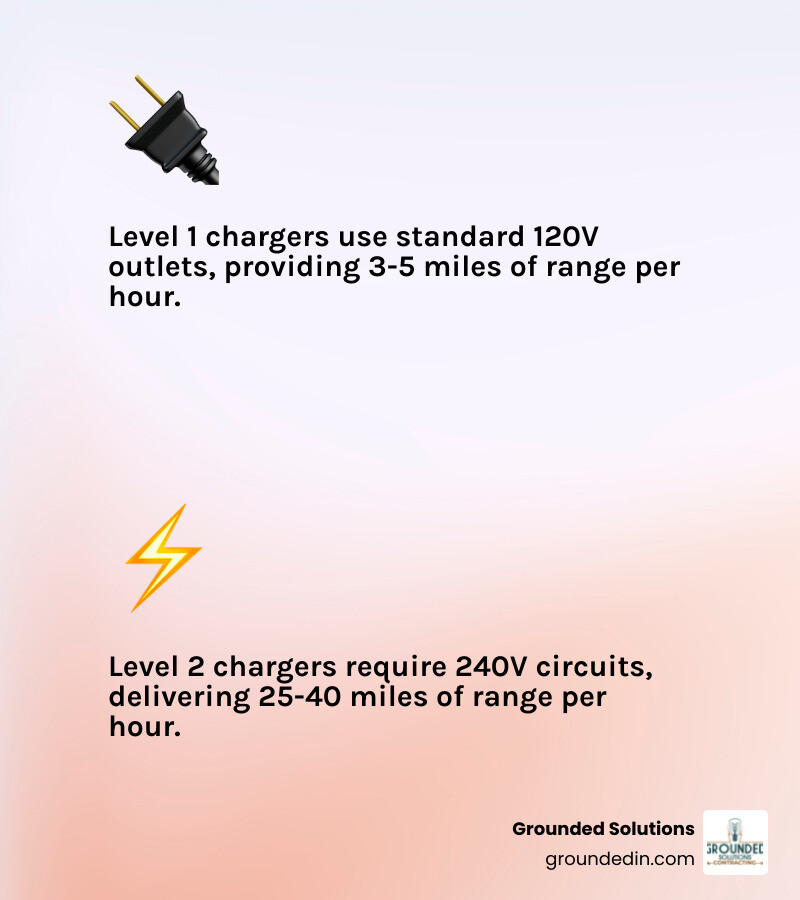
- Level 1 chargers use standard 120V outlets (3-5 miles range per hour)
- Level 2 chargers require 240V circuits (25-40 miles range per hour)
- Professional installation ensures safety and code compliance
- Permits are typically required for EV charger installations; local requirements vary. We handle permitting with your authority having jurisdiction (AHJ)
- Most projects are completed within a few weeks, depending on permitting, equipment availability, and inspection scheduling.
Most homeowners choose Level 2 chargers because they’re five to ten times faster than Level 1 options. However, installing a Level 2 system requires a dedicated 240-volt circuit and professional electrical work to meet National Electrical Code (NEC) standards standards and local requirements.
The installation process involves more than just mounting a charging unit on your garage wall. Your home’s electrical system needs proper assessment, potential upgrades, and careful planning to handle the continuous high-power draw safely. Without professional installation, you risk electrical fires, code violations, and voided warranties.
I’m Clay Hamilton, President of Grounded Solutions, and I’ve been leading electrical installations throughout central Indiana for over two decades, including numerous EV charger install projects for homeowners in Southport, Mooresville, and surrounding communities. My experience with residential electrical systems ensures your charging station installation meets all safety standards while providing reliable performance for years to come.
Understanding Your EV Charging Needs and Options
Choosing the right home charging solution is one of the most important decisions you’ll make as a new EV owner. The good news? Once you understand your options, the choice becomes much clearer. Let me walk you through everything you need to know for a successful EV charger install at your central Indiana home.
Level 1 vs. Level 2 Chargers: What’s Right for Your Home?
Think of EV charging like filling up a bathtub. You can use a garden hose or open up the fire hydrant – both will fill it, but one takes all day while the other gets the job done in time for dinner.
Level 1 charging is your garden hose approach. It plugs into any standard 120V outlet in your garage – the same outlet you’d use for a power drill or shop vacuum. This simple setup adds about 3 to 5 miles of range per hour to your EV. If you drive a plug-in hybrid or have a short daily commute around Franklin or Beech Grove, Level 1 might work just fine. The downside? A completely drained battery could take over 20 hours to fully charge.
Level 2 charging is where things get interesting. This system uses a 240V circuit – the same type that powers your clothes dryer or electric range. The difference in speed is dramatic: 25 to 40 miles of range per hour. Most EV owners can fully charge overnight, even after longer drives around central Indiana.
Here’s how they stack up side by side:
| Feature | Level 1 Charger | Level 2 Charger |
|---|---|---|
| Voltage | 120V (standard household outlet) | 240V (dedicated circuit, similar to dryer outlet) |
| Charging Speed | 3-5 miles of range per hour | 25-40 miles of range per hour |
| Full Charge Time | 20+ hours (for larger EV batteries) | 3-8 hours (for most EVs) |
| Installation | Plug-and-play (uses existing outlet) | Professional electrical installation required |
| Typical Use | PHEVs, short commutes, occasional charging | BEVs, daily drivers, faster charging needs |
The reality is that most homeowners in Whiteland, Mooresville, and surrounding areas choose Level 2 chargers. They offer the convenience and speed that makes EV ownership truly practical. However, Level 2 systems require professional installation and a dedicated electrical circuit – which is where Grounded Solutions comes in.
Want to dive deeper into Level 2 benefits? Check out our detailed guide: More on Level 2 Home Chargers.
Key Factors in Choosing Your Home EV Charger for a Smooth Install
Once you’ve settled on Level 2 charging, several other factors will shape your EV charger install experience. Getting these details right from the start saves headaches down the road.
Connector compatibility is your first consideration. Most EVs use the J1772 connector, which has been the North American standard for years. However, newer vehicles are adopting the NACS connector (also called J3400). Many chargers or vehicles include adapters for cross-compatibility; we’ll verify connector needs during assessment. Many modern chargers work with both types or include adapters. During our consultation, we’ll verify your specific vehicle’s requirements.
Cable length matters more than you might think. Measure the distance from where you want the charger mounted to where your EV will typically park. Standard cables range from 12 to 25 feet. If you need something longer, the National Electrical Code requires special cable management systems for safety. We help homeowners in Southport and Franklin determine the perfect length for their garage or driveway setup.
The choice between hardwired and plug-in units often surprises people. While plug-in chargers using NEMA 14-50 outlets seem convenient, they can be problematic for high-amperage charging. High-amperage, continuous loads can stress receptacles if underspecified or improperly installed. We often recommend hardwired units for reliability and code alignment.
Smart features can transform your charging experience. Modern chargers offer Wi-Fi connectivity for smartphone control, scheduling to charge during off-peak hours, usage tracking, and even load balancing for homes with multiple EVs. These features help you manage your home’s energy consumption intelligently. Find how these technologies benefit central Indiana homeowners: Open up the Future of Smart EV Charging in Indianapolis.
Weather protection becomes crucial for outdoor installations. Indiana’s climate demands chargers with proper NEMA 4 weatherproof ratings or better to handle rain, snow, and temperature extremes. We ensure your charger can withstand whatever Mother Nature throws at it.
Safety certifications are non-negotiable. Always choose chargers certified by recognized testing laboratories that meet strict safety and efficiency standards. Your family’s safety is worth the extra attention to these details.
Navigating Local Programs and Requirements
Here’s some welcome news: your EV charger install may be eligible for various local and utility programs. These programs are designed to support the growing EV infrastructure throughout central Indiana.
Many municipalities in Johnson County and Marion County, along with local utility companies, offer programs for EV owners. Navigating the requirements for these programs requires staying current with all available options – and that’s where our experience helps.
We keep track of the programs available to homeowners in Beech Grove, Mooresville, and surrounding communities. During your consultation, we’ll identify every program you may qualify for and ensure your installation meets all requirements, handling the necessary paperwork to streamline the process.
The Professional EV Charger Install Process
Getting a home EV charger isn’t just about picking one out and plugging it in. It’s a comprehensive electrical project that demands careful planning, proper permits, and expert installation. At Grounded Solutions, we’ve perfected a three-step process that makes your EV charger install smooth and stress-free for homeowners throughout central Indiana.
Step 1: Electrical Assessment and Site Planning
Every successful EV charger install begins with understanding what your home can handle electrically. Think of it like checking if your kitchen can support a new high-powered appliance – except this appliance will be drawing significant power for hours at a time.
During our initial consultation, we sit down with you to understand your specific needs. What kind of EV do you drive? How many miles do you typically cover each day? Do you have plans for a second electric vehicle? These details help us design the perfect charging solution for your lifestyle.
The real detective work begins with our load calculation. Our licensed electricians examine your home’s electrical panel and calculate exactly how much power your home currently uses versus what’s available. This isn’t guesswork – it’s precise electrical engineering that ensures your new charger won’t overload your system.

Many homes in areas like Beech Grove and Mooresville have older 100-amp electrical panels, while newer construction typically features 200-amp service. Here’s the good news: even homes with 100-amp service can often support a Level 2 charger, depending on your overall electrical usage. Our load calculation reveals exactly what’s possible.
Sometimes we find that your electrical panel needs an upgrade or would benefit from a subpanel installation. A subpanel can be a smart solution that adds dedicated circuits for your EV charger while preparing your home for future electrical needs. We handle these upgrades regularly and ensure they’re done safely and to code.
Choosing the optimal location for your charger involves more than convenience. We consider the distance from your electrical panel (shorter runs can simplify the installation), accessibility for daily use, and protection from the elements. For homes with detached garages, the project becomes more involved, requiring underground conduit and trenching work. We’ve completed countless installations throughout central Indiana where trenching was necessary, and we minimize disruption to your landscaping while ensuring a clean, professional finish.
Every detail matters in this planning phase because it sets the foundation for a successful installation. For more information about how we customize our approach for your specific home, visit our page on Residential EV Charger Installation in Indianapolis.
Step 2: Permitting and the EV Charger Install
Once we’ve mapped out your electrical needs, the real work begins. This phase is where having a professional electrical contractor truly pays off – both in safety and peace of mind.
Local permitting is typically required across Johnson, Marion, and surrounding counties; we coordinate with your AHJ and utility. These aren’t bureaucratic problems – they’re essential safety measures that ensure your installation meets National Electrical Code standards and local building requirements. Skipping permits can lead to serious consequences, including fines, insurance issues, or dangerous electrical hazards.
As a licensed electrical contractor, Grounded Solutions handles all the permitting paperwork for you. We know exactly what each local building department requires, from Franklin to Mooresville, and we submit everything correctly the first time. This eliminates delays and ensures your project stays on track.
The actual installation involves installing a dedicated 240-volt circuit with appropriately sized wiring directly from your electrical panel to your charger location. This isn’t a job for weekend warriors – it requires precise knowledge of electrical codes, proper wire sizing, and safe installation practices. We use code-compliant conduit to protect all wiring, especially for outdoor runs, ensuring your installation will withstand Indiana’s weather for years to come.

Safety protocols guide every aspect of our work. We de-energize circuits before beginning work, use proper safety equipment, and conduct thorough checks at each stage. The complexity of high-voltage wiring, load calculations, and code compliance makes professional installation essential. DIY attempts on EV charger install projects often result in serious safety hazards, from electrical fires to personal injury.
When you work with Grounded Solutions, you’re not just getting an installation – you’re getting decades of electrical expertise and a commitment to your family’s safety. To understand more about why professional installation matters, read our guide: Find an Electrician for Your Car Charger.
Step 3: Final Inspection and Your First Charge
The final phase of your EV charger install brings everything together, ensuring your new charging station is safe, compliant, and ready for daily use.
After our electricians complete the installation, a local municipal inspector conducts a final review of all work. This inspection verifies that everything meets approved permit specifications and complies with electrical codes. We coordinate directly with inspectors to make this process seamless, so you don’t have to worry about scheduling or technical details.
Before the inspector even arrives, our team performs comprehensive system testing. We power up your charger, verify proper voltage and current flow, test all safety features, and ensure everything operates correctly. For smart chargers, we also verify Wi-Fi connectivity and app functionality. Nothing gets our approval until we’re completely satisfied with its performance.
Your homeowner orientation is where we make sure you’re comfortable with your new charging station. We’ll walk you through all features, demonstrate proper usage, and explain any maintenance recommendations. You’ll also receive complete warranty information for both the charger unit and our installation work. Our goal is making sure you feel confident from your very first charge.
The typical timeline from initial consultation to your first charge spans about three to six weeks. This includes time for assessment, permit processing, equipment delivery, installation, and final inspection. While we work efficiently, we never rush safety or quality for speed.

Grounded Solutions brings over two decades of electrical expertise to every project. As a family-owned, fully licensed, bonded, and insured electrical contractor, we’ve earned the trust of homeowners throughout central Indiana. We serve communities from Whiteland and Franklin to Southport and Beech Grove, delivering safe, high-quality electrical work with transparent processes and reliable results.
While this guide focuses on residential installations, we also provide comprehensive commercial EV charging solutions for businesses looking to attract customers and employees with this valuable amenity.
Ready to enjoy the convenience of home charging? Let Grounded Solutions handle your EV charger install with the expertise and care your family deserves.