
Essential Residential Electrical Services for a Safer, More Capable Home
Residential Electrical Services for a Safer, More Capable Home
Residential Electrical Services cover the repairs, safety upgrades, and new installations that keep a home powered safely and ready for modern demands. For Indianapolis-area homeowners, the most common needs include diagnosing tripped breakers and flickering lights, upgrading old panels or wiring, adding dedicated circuits, installing surge protection, and preparing for EV charging. As modern households adopt sophisticated electronics, high-draw climate equipment, and clean transportation, an outdated electrical infrastructure can quickly become an unseen safety hazard and an operational bottleneck.
A professional electrical assessment can find overloaded circuits, aging connections, or outdated equipment before they become larger safety problems. This matters as homes add high-draw equipment such as HVAC systems, freezers, workshop tools, home-office gear, and electric vehicles. When spring thunderstorms sweep through central Indiana, bringing heavy winds and lightning strikes, a resilient electrical system protects your sensitive technology and ensures your family remains safe and powered throughout severe weather events.
In this comprehensive guide, we review 10 essential services that can improve safety, convenience, and long-term energy performance in homes across Indianapolis, Beech Grove, Franklin, Whiteland, Southport, and Mooresville.
I am Clay Hamilton, President of Grounded Solutions, with more than two decades of hands-on experience in electrical and mechanical wiring, maintenance, and repair. My work with Residential Electrical Services focuses on safe, dependable systems and clear solutions for homeowners.
Residential Electrical Services terms to remember:
10 Essential Residential Electrical Services for Modern Homeowners

Modern households place higher demands on their electrical systems than ever before. With central air conditioning running constantly during hot Midwest summers, severe spring storms rolling across Marion and Johnson counties, and families adopting electric mobility, having a robust electrical infrastructure is essential. Investing in comprehensive electrical upgrades allows you to optimize power delivery and save money on electricity bill expenses through superior efficiency.
Core Infrastructure Residential Electrical Services
The backbone of any home’s power distribution starts with its heavy-duty infrastructure. If your electrical backbone is outdated or undersized, modern electronics simply cannot perform safely or reliably.
1. Main Service Panel Upgrades (100A to 200A+)
Older homes throughout Beech Grove, Southport, and Franklin were originally built with 60-amp or 100-amp service panels. In 2026, these panels struggle under the weight of heat pumps, induction cooktops, modern appliances, and home automation systems. When you upgrade electrical panel capacity to 200 amps or higher, you eliminate hazardous overloads, stop breaker tripping, and future-proof your property. For homeowners curious about the investment, the electrical panel replacement cost typically provides broad price ranges for professional installation to help homeowners budget, emphasizing value, certified workmanship, and longevity over the lowest bid. Installing modern smart panels, like SPAN smart electrical panels, gives homeowners real-time circuit control and storm resilience, especially when spring severe weather strikes central Indiana. Smart panels allow you to dynamically shed non-essential loads during an outage or when operating on a backup battery, prioritizing essential circuits like refrigeration, medical equipment, and sump pumps.
2. Whole-Home Rewiring & Aluminum Wiring Mitigation
Homes constructed before the mid-1970s often feature outdated cloth wiring, ungrounded circuits, or dangerous aluminum branch wiring. Aluminum expands and contracts at higher rates than copper, loosening terminal screws over time and creating serious arc fault and fire risks. Our comprehensive home rewiring services replace brittle, deteriorated wiring with modern, code-compliant copper conductors to ensure stable power delivery across every room. A full rewiring project eliminates hidden junction box splices, updates grounding paths, and gives homeowners in historic and vintage neighborhoods complete peace of mind.
3. Whole-Home Surge Protection Installation
Did you know that 80% of residential surges are caused by devices used every day inside the home? While spring lightning storms cause dramatic, catastrophic spikes, daily mini-surges generated by cycling air conditioning compressors, refrigerators, garage door openers, and hair dryers slowly fry sensitive microprocessors in modern appliances. Scheduling a whole-home surge protector installation indianapolis protects your entire electrical panel at the service entrance. Investing in comprehensive whole house surge protection safeguards expensive HVAC circuit boards, smart televisions, and connected appliances from cumulative degradation, dissipating thousands of excess volts directly to ground before they enter your interior living spaces.
4. Dedicated Appliance Circuits and Subpanels
Heavy-draw equipment should never share a general branch circuit with standard lighting or electronics. Dedicated circuits deliver clean, unshared power directly from the main panel to high-wattage equipment such as workshop power tools, basement sub-pumps, deep freezers, hot tubs, and dedicated home office workstation setups. Adding a secondary subpanel provides the extra breaker space required for finished basements, room additions, or detached garages, ensuring that each space operates within safe ampacity thresholds without overloading existing branch lines.
5. Level 2 EV Charger and High-Amp RV Hookups
As more drivers transition to electric transportation, Level 1 trickle charging from a standard 120-volt wall outlet is no longer practical. A dedicated 240-volt Level 2 charging station provides rapid overnight charging by pulling 32 to 50 amps of continuous power. Professional installation ensures proper wire gauge selection, dedicated circuit breaker sizing, and comprehensive main panel load calculations. Similarly, dedicated 30-amp and 50-amp heavy-duty receptacles provide reliable power for visiting recreational vehicles and travel trailers, preventing voltage drops and melted outlet terminals during extended plug-in periods.
Modernization and Safety Residential Electrical Services
Beyond heavy power infrastructure, the fixtures, switches, and safety devices installed inside your living areas directly impact convenience, aesthetics, and everyday safety.

6. Arc-Fault (AFCI) and Ground-Fault (GFCI) Safety Upgrades
Modern electrical codes require specialized protection to prevent shocks and fires. GFCIs prevent electrocution near moisture (kitchens, bathrooms, garages, and exteriors), while AFCIs detect dangerous electrical arcing behind walls before it sparks a structural fire. Implementing gfci and afci upgrades indianapolis brings vintage properties into full compliance with modern safety standards. Installing weather-resistant (WR) GFCI receptacles outdoors and tamper-resistant devices indoors provides an unbroken safety barrier for every member of your family.
7. Aesthetic Outlets, USB Outlets, and Under-Cabinet Power
Updating older switches and receptacles transforms room aesthetics while improving utility. When remodeling kitchens, many homeowners choose to install hidden outlets directly beneath upper cabinetry to preserve uninterrupted tile backsplash patterns. Upgrading standard drop zones, kitchen islands, and bedside receptacles to integrated USB-A and USB-C outlets eliminates bulky wall adapters, while tamper-resistant safety shutters prevent accidental foreign object insertion by children. These modern receptacles also incorporate smart power management chips that prevent overcharging and overheating your portable electronics.
8. Architectural Lighting, Dimming, and Certified Smart Automation
Upgrading older recessed incandescent ceiling cans to airtight LED retrofit fixtures delivers dramatic energy savings, eliminates drafty ceiling heat loss, and gives you total control over color temperature. When installing smart lighting and automation, proper contractor selection is critical. Rather than attempting complex configurations alone, homeowners should always select an authorized, factory-trained installer. Grounded Solutions is proudly Lutron Caséta and RadioRA 3 Certified, ensuring flawless integration of smart dimmers, keypad scenes, and occupancy sensors that automatically illuminate spaces like garages, utility rooms, and hallways. Working with a factory-certified technician guarantees proper neutral wiring, load matching, and seamless app configuration for effortless lighting control.
9. 24/7 Rapid-Response Emergency Repairs
Electrical emergencies do not wait for business hours. When severe storms knock tree limbs into service drops, spring flooding threatens basement wiring, or a main breaker fails completely, our emergency electrician service provides fast diagnostic troubleshooting and safe containment to restore your home’s power promptly. Our experienced technicians arrive with fully stocked service vehicles to isolate dangerous faults, replace damaged conductors, and re-establish safe power without unnecessary delays.
10. Comprehensive Electrical Safety Inspections
Preventative maintenance identifies loose connections, corroded meter bases, rodent-chewed cables, and overloaded neutrals before they cause property loss. Following a structured affordable electrical safety inspection guide, our technicians check terminal torque specifications, verify grounding electrode systems, test weather-resistant outdoor receptacles, and service hardwired smoke and carbon monoxide detector networks. Regular safety audits ensure your home remains compliant with evolving safety codes while catching small component wear long before it escalates into costly repairs.
Critical Signs Your Home Needs Immediate Electrical Upgrades
How can a homeowner know when an electrical system is approaching critical failure? Electrical components rarely fail without issuing clear warning signs. Recognizing the difference between a failing circuit breaker and widespread wiring deterioration allows you to act before an emergency occurs. Many older properties throughout Marion and Johnson counties still operate on outdated wiring topologies that were never engineered to carry the electrical demands of modern computers, induction ranges, or high-capacity HVAC systems.
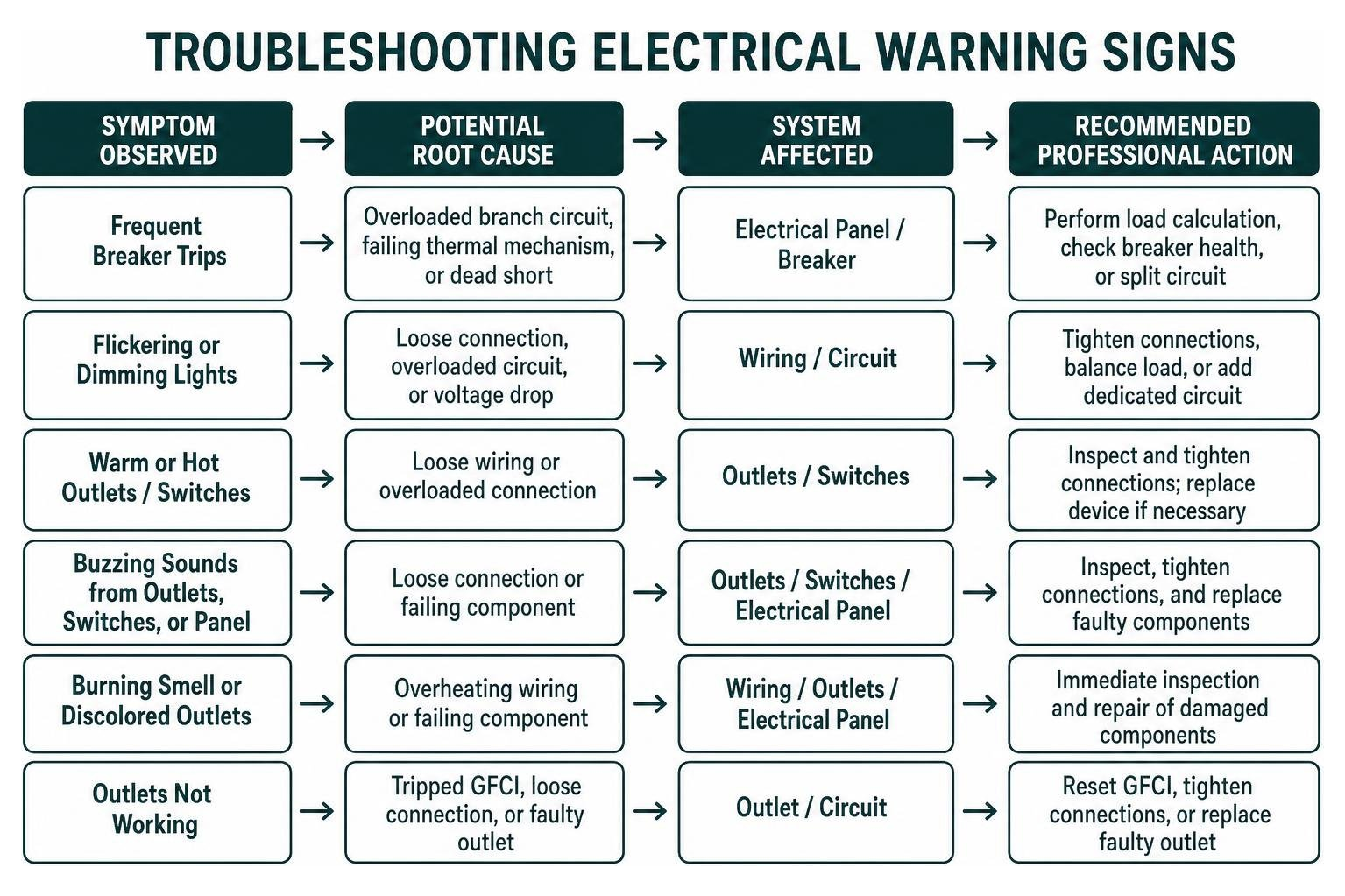
When warning signs are ignored, the risks escalate from minor nuisance tripping to dangerous overheating behind walls. The following table details the most common symptoms found in residential systems, their probable root causes, and the required professional corrective action:
| Symptom Observed | Potential Root Cause | System Affected | Recommended Professional Action |
|---|---|---|---|
| Frequent Breaker Trips | Overloaded branch circuit, failing thermal mechanism, or dead short | Electrical Panel / Breaker | Perform load calculation, check breaker health, or split circuit |
| Flickering or Dimming Lights | Loose neutral wire, voltage drops from major appliance start-up | Service Drop or Branch Wiring | Inspect meter base, panel bus bars, and balance branch circuit loads |
| Warm or Discolored Wall Plates | High-resistance electrical arcing, loose terminal screws, overload | Outlets / Receptacles | Shut off breaker immediately and replace receptacle with copper-rated device |
| Buzzing or Crackling Noises | Loose breaker bus connection, internal arcing, failing contacts | Breaker Panel / Switches | Replace defective breaker and inspect panel bus bar for pitting/arcing damage |
| Burning Plastic / Fishy Odors | Overheated wire insulation, melting breaker casing, arcing wire nuts | Wiring / Main Panel | Emergency disconnection and immediate professional circuit replacement |
| Two-Prong Outlets Throughout Home | Absence of equipment grounding conductor (pre-1965 wiring) | Household Branch Wiring | Full home copper rewiring or targeted GFCI retrofits per NEC code |
| Sparks When Plugging In Devices | Short circuit, worn outlet contact blades, excessive load | Wall Outlets | Replace worn receptacle with new tamper-resistant, commercial-grade outlet |
If you are experiencing random power cutouts or tripping switches, learning how to tell if a breaker is bad can help you pinpoint the issue, but diagnosing breaker internal wear and checking panel bus bar integrity requires specialized testing equipment and protective gear. Attempting to force a tripped breaker back into position or replacing fuses with higher-rated alternatives creates extreme fire hazards that require immediate intervention by a licensed professional electrician.
Why Work With a Licensed, Bonded, and Insured Electrician
Electrical work carries significant risk to personal safety and property value. Working with electricity demands precision, formal training, and deep knowledge of the National Electrical Code (NEC) and municipal building codes. When high-voltage wiring is handled improperly, the consequences can include electrical shock, structural fires, voided homeowners insurance claims, and expensive code-violation fines.

Hiring a licensed bonded insured electrician guarantees that your project meets every legal and safety threshold:
- Strict Code Compliance & Permitting: Professional contractors secure the necessary city and county permits for panel replacements, service upgrades, and rewiring across Indianapolis, Whiteland, Franklin, and Mooresville. This guarantees that installations pass official municipal inspections and comply with the latest National Electrical Code guidelines.
- Liability and Property Protection: A fully bonded and insured company protects you from financial liability in the rare event of accidental property damage or technician injury on site. Working with unbonded contractors leaves homeowners entirely exposed to out-of-pocket expenses.
- Transparent Upfront Estimates: Dependable contractors provide clear, detailed quotes before work begins, explaining what components are required and eliminating surprise billing. You receive an itemized breakdown of materials, labor, and permit fees before any work commences.
- Flexible Project Financing: Major infrastructure updates—such as whole-home rewiring or 200-amp service upgrades—should never be postponed due to budget constraints. Reputable electrical contractors offer flexible financing structures, including zero-interest payment options over 12 to 24 months for qualified homeowners, ensuring critical safety upgrades happen immediately without straining family finances.
- Rigorous Safety Testing Protocols: Professional electricians do not simply turn the power back on; they perform multi-step diagnostic tests. This includes verifying circuit polarity, ground-fault trip thresholds, arc-fault sensitivity, and terminal connection torque to exact manufacturer specifications using calibrated diagnostic tools.
Frequently Asked Questions About Residential Electrical Services
What causes most residential power surges and how are they prevented?
While many homeowners associate power surges with exterior lightning strikes and downed utility lines, roughly 80% of residential power surges actually originate from inside the home. Everyday high-draw appliances—such as central air conditioners, heat pumps, refrigerators, hair dryers, and power tools—generate micro-surges each time their motors and compressors cycle on and off.
Over time, these repetitive voltage spikes degrade the delicate circuit boards found inside modern smart appliances, televisions, computers, and home automation hubs. The most effective protection is a multi-tiered approach: a licensed electrician installs a heavy-duty whole-home surge protective device (SPD) directly inside the main service breaker panel to arrest external utility spikes and large internal transients, paired with point-of-use surge strips for sensitive electronics. This dual-layer strategy ensures that transient overvoltages are safely diverted to the earth grounding system before damaging connected equipment.
How often should residential electrical panels and smoke alarms be inspected?
Residential electrical panels should receive a comprehensive professional safety inspection at least once every three to five years, or annually in older homes with vintage infrastructure. During an inspection, an electrician checks for signs of corrosion, balances circuit loads, inspects thermal conditions with infrared tools, and re-torques breaker connections—a vital step because loose connections cause high resistance, heat buildup, and intermittent arcing.
For smoke and carbon monoxide detectors, homeowners should perform monthly button tests and clean dust and debris from sensor vents annually. Entire smoke detector units must be completely replaced every 10 years from their manufacture date (and carbon monoxide units every 5 to 7 years), as internal sensor components lose chemical sensitivity over time. Our safety inspections also verify that hardwired interconnects function so that an alarm triggered in the basement alerts family members in upstairs bedrooms instantly.
What is required before installing a Level 2 EV charging station at home?
Before installing a Level 2 electric vehicle charging station, an electrician must perform a comprehensive electrical load calculation on your main service panel. Because Level 2 chargers pull continuous heavy electrical loads (typically 32 to 50 amps on a dedicated 240-volt circuit) for multiple consecutive hours, your electrical system must have enough remaining capacity without overloading the main utility service conductors.
If your home has an older 100-amp service panel that is already heavily loaded with an electric water heater, electric dryer, and air conditioner, a service upgrade to 200 amps may be required. The installation also involves running heavy-gauge copper wiring from the panel to the garage or exterior charging location, installing a dedicated dual-pole circuit breaker, and setting up smart Wi-Fi scheduling to charge during off-peak utility hours. Professional installation ensures proper wire sizing, correct conduit installation, and compliance with local building codes.
Conclusion
Your home’s electrical system is its most vital utility, quietly powering your lighting, climate control, appliances, home office, and vehicles every single day. Keeping your wiring, breaker panels, and safety receptacles in peak condition protects your family against electrical fires, prevents costly appliance failure, and significantly enhances daily convenience. Whether you need an infrastructure upgrade to support a modern electric vehicle, whole-home surge suppression to protect your investments during severe spring storms, or certified smart home automation, professional installation provides enduring peace of mind and increases your property’s long-term market value.
At Grounded Solutions, we take pride in serving homeowners throughout Indianapolis and our southern suburban neighbors in Beech Grove, Franklin, Whiteland, Southport, and Mooresville with dependable craftsmanship, honest communication, and transparent pricing. Don’t wait for a flickering light or a buzzing breaker to turn into an emergency—contact Grounded Solutions today to schedule your comprehensive residential electrical services and ensure your home is safe, compliant, and ready for the future.