
Why Professional Commercial Ceiling Fan Installers Matter in High-Bay Facilities
High-bay facilities need commercial ceiling fan installers who can verify structural support, electrical capacity, clearances, and controls before a large fan is mounted. A qualified commercial electrical team helps ensure the fan is securely anchored, properly wired on the right circuit, and tested for stable, safe operation.
Large HVLS fans move a high volume of air at low speed. In warehouses, shops, gyms, and similar spaces, they can improve air circulation, reduce hot and cold zones, and help HVAC systems work more efficiently. But these fans are not standard ceiling fixtures. Their size, weight, mounting height, and controls require careful planning, especially around racking, lights, sprinklers, doors, and work areas.
For Indianapolis-area businesses in Beech Grove, Franklin, Whiteland, Southport, and Mooresville, professional installation protects people, equipment, and the facility itself. According to the U.S. Department of Energy, high-volume low-speed fans can significantly improve air circulation and reduce energy use in large commercial spaces.
I’m Clay Hamilton, President of Grounded Solutions, with more than 20 years of hands-on experience in electrical and mechanical systems, maintenance, and repair. That background helps our team approach commercial ceiling fan installers’ work with the safety checks, clear communication, and technical care high-bay facilities require.
Glossary for commercial ceiling fan installers:
- Ceiling Fan Installation Indianapolis
- high ceiling fan in Fortville
- how to install a ceiling fan without existing wiring
The Technical Complexity of Industrial and High-Bay Fan Mounting
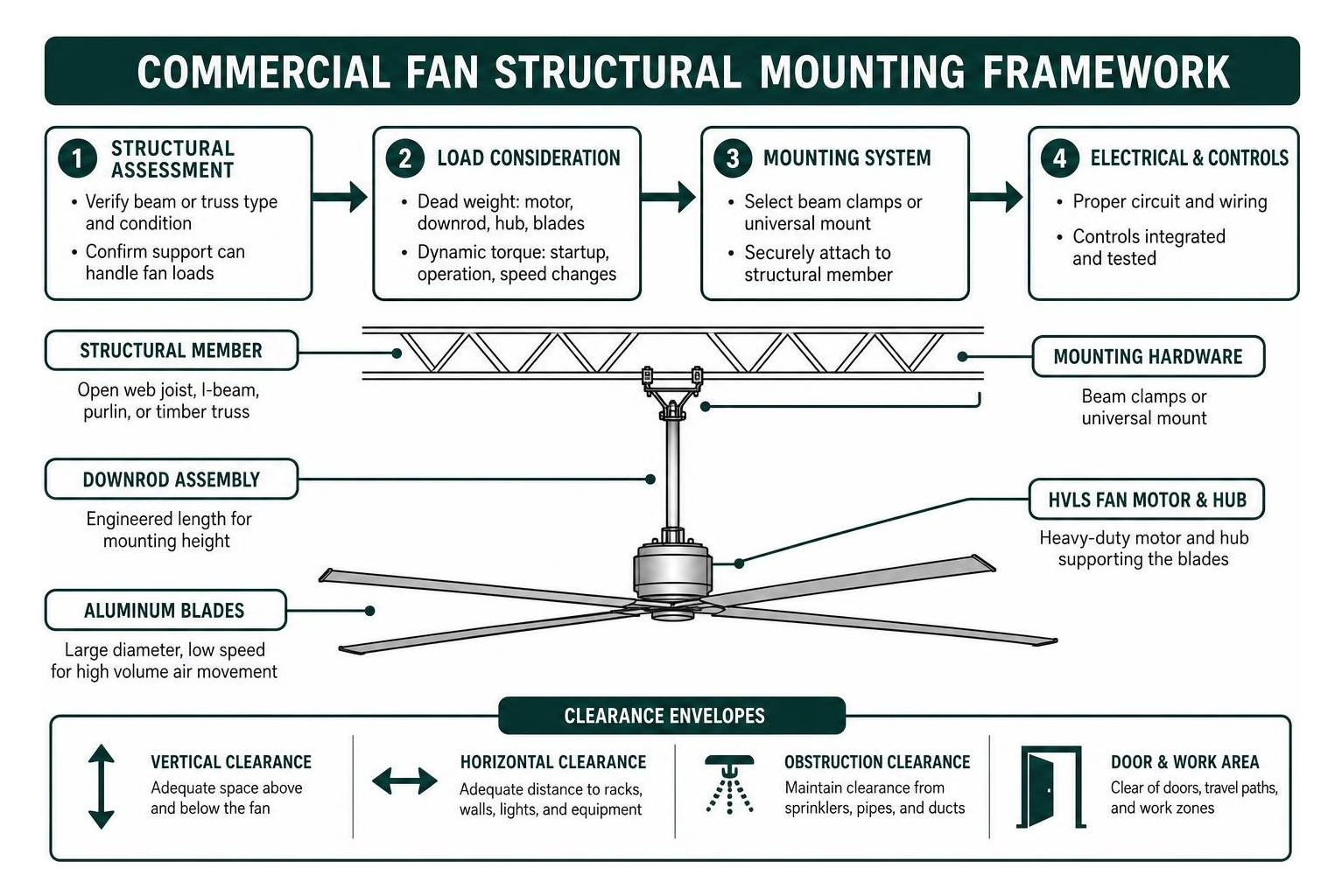
Mounting high-volume, low-speed (HVLS) fans in high-bay commercial properties is a precision engineering task. Unlike standard residential fixtures that hang from a single junction box, industrial fans span anywhere from 7 to 24 feet in diameter and present significant dynamic loads. Managing these forces requires an in-depth understanding of structural mechanics, beam attachment methods, and vibration mitigation.
Every facility possesses a unique roof structure, whether it features open web steel joists, solid I-beams, purlins, or heavy timber trusses. Selecting the correct beam clamps and universal mounting hardware is critical. Installers must account for the mechanical stresses that occur during startup, continuous operation, and directional shifts. When our team assesses a high-ceiling project, we review the ceiling architecture thoroughly, ensuring your facility benefits from proper structural planning for high ceiling fans.
Structural Integrity, Load Distribution, and Clearance Guidelines
The structural integrity of your mounting location involves two distinct forces: dead weight and dynamic torque. Dead weight is the static downward force of the motor, downrod, hub, and aluminum blades, which can exceed several hundred pounds. Dynamic torque represents the rotational twisting force exerted on the ceiling structure when the heavy-duty motor starts up, accelerates, or adjusts speed.
To handle these forces safely, installers must maintain strict clearance envelopes:
- Floor Clearance: Fan blades must maintain a minimum clearance of 10 feet above the finished floor to prevent accidental contact with equipment or personnel.
- Roof and Obstruction Clearance: The blade tips must maintain adequate spacing from ceiling beams, lighting fixtures, overhead conduits, and storage racks to prevent buffeting and turbulence.
- Sprinkler Interruption: Fans must be installed so they do not obstruct or alter the water distribution pattern of overhead fire suppression systems.
- Secondary Safety Cables: Every industrial fan must be secured with high-tensile aircraft-grade steel safety cables looped around the main building structure, providing redundant fail-safe protection.
Dedicated Electrical Infrastructure and Controls Integration
Large commercial ceiling fans require robust, dedicated electrical infrastructure. Most high-bay fans run on three-phase power (208V, 240V, or 480V) or dedicated 120V/240V single-phase circuits, depending on the motor design and variable frequency drive (VFD) requirements. Connecting these high-capacity units directly into existing lighting circuits will cause immediate overloads and nuisance tripping.
Our certified technicians establish dedicated breaker lines, run industrial-grade conduit, and configure the motor controls. We also integrate low-voltage control wiring for wall-mounted touchscreens, building automation systems, and emergency fire alarm interlocks. When planning new installations, facilities rely on experienced commercial electrical contractors to assess the main distribution panels, prevent service panel overloads, and complete adding dedicated power for ceiling installations according to strict safety protocols.
How HVLS Fans Optimize Efficiency and Comfort in Commercial Spaces
Industrial and high-bay facilities frequently battle massive interior temperature gradients. Because warm air naturally rises, the temperature near the ceiling of a 30-foot warehouse can be 15 to 20 degrees warmer than at floor level. HVLS ceiling fans address this issue by continuously moving massive columns of air down to the floor, spreading it outward in all directions, and circulating it back up the walls.
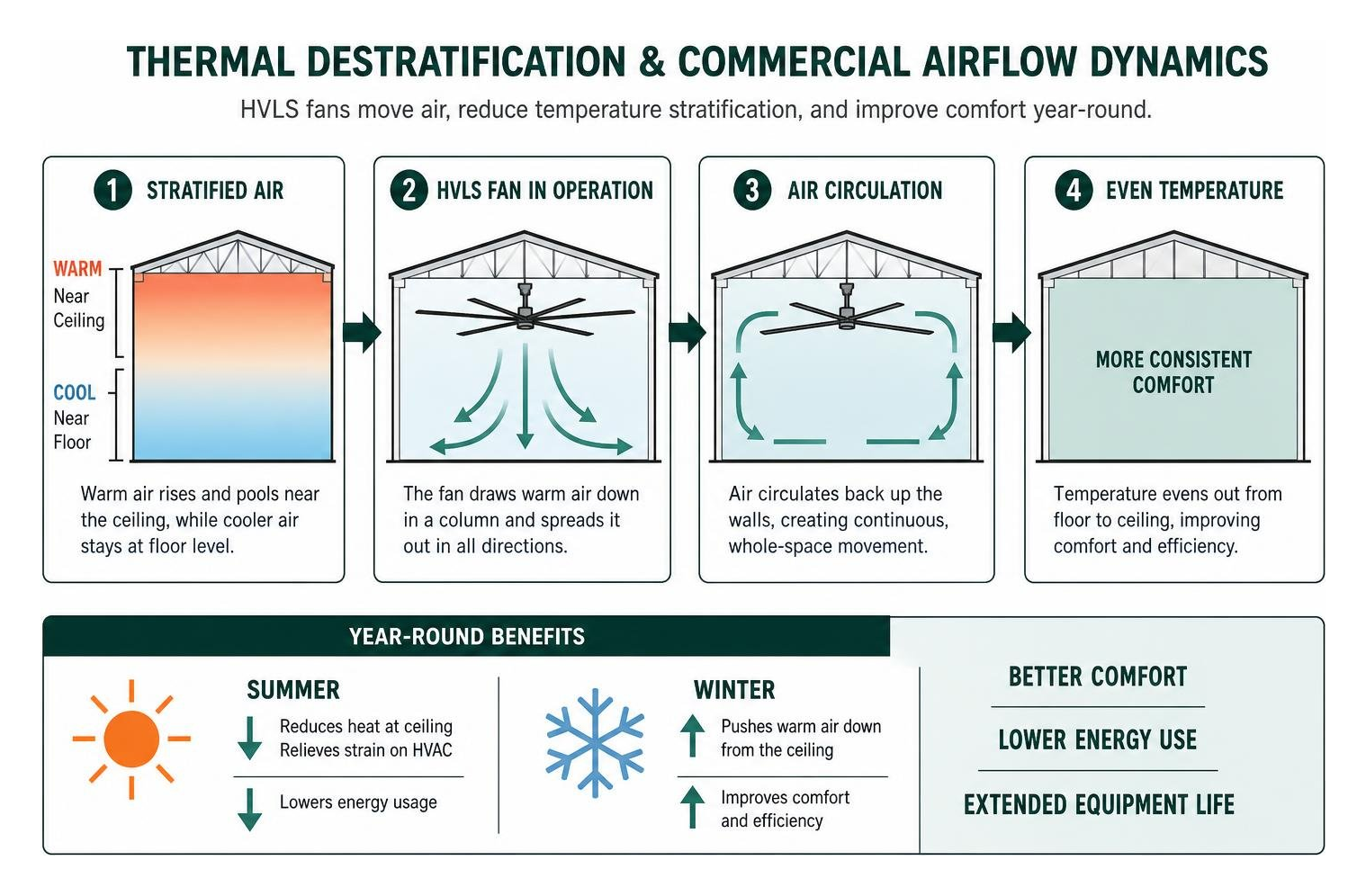
By optimizing your building’s airflow dynamics, you enhance comfort while taking substantial strain off your rooftop HVAC units. Pairing energy-efficient fan systems with our expert commercial electrical services helps commercial property owners in Greenwood, Mooresville, and Franklin lower operational costs and extend mechanical equipment lifespans.
Year-Round Thermal Destratification and Energy Savings
HVLS fans provide dual-season benefits by operating efficiently during both summer and winter:
- Summer Cooling Effect: During warm weather, the gentle, non-disruptive breeze produced by an HVLS fan passes over workers’ skin, creating an evaporative cooling sensation that makes the space feel up to 8 to 10 degrees cooler. This allows you to raise your air conditioning setpoints without sacrificing employee comfort.
- Winter Thermal Destratification: During cold Midwest winters, warm air generated by heating systems gets trapped at the roofline. By running fans in reverse or at low forward speeds, the trapped heat is pushed down into the occupied workspace. This eliminates hot ceiling pockets, stabilizes floor-level temperatures, and can reduce heating energy consumption by up to 30%.
Improved Indoor Air Quality, Employee Comfort, and Safety
Beyond temperature regulation, consistent air movement solves several hidden warehouse hazards. In unconditioned or partially conditioned facilities across central Indiana, humid spring storms and humid summer air frequently cause “sweating slab syndrome.” This occurs when warm, moist air condenses on cold concrete floors, creating slick, dangerous surfaces for forklift operators and foot traffic.
Continuous, low-velocity air circulation keeps concrete slab temperatures closer to the ambient air temperature, preventing condensation buildup. Additionally, HVLS fans dilute airborne particulates, disperse stagnant exhaust or manufacturing fumes, and eliminate damp, musty pockets. Operating at sound levels typically under 35 to 40 dBA, these fans provide powerful ventilation quietly, ensuring your facility remains compliant, productive, and safe.
Key Criteria for Vetting Commercial Ceiling Fan Installers
Choosing the right partner for high-bay fan installations is a matter of facility safety, liability management, and code adherence. Attempting to mount multi-blade industrial fans with internal maintenance staff or uncertified handymen exposes your business to structural damage, electrical fires, and OSHA violations.
| Evaluation Factor | Grounded Solutions Commercial Electricians | General Handymen / Uncertified Crews |
|---|---|---|
| Trade Licensing | Fully licensed Master/Journeyman Electricians | Unlicensed or basic home improvement license |
| Insurance Coverage | Full Commercial Liability, Workers’ Comp, Bonded | Minimal or personal liability coverage |
| Code Compliance | Strict adherence to National Electrical Code (NEC) & local codes | Frequent code violations and improper wire sizing |
| Aerial Lift Certification | OSHA-certified scissor and boom lift operators | Uncertified operation, creating fall and crash risks |
| Structural Anchoring | Engineered torque specs, beam clamps, safety cables | Improper fasteners, lag bolts, or unrated hardware |
| Smart Controls & VFDs | Caséta and RadioRA 3 Certified, VFD and BMS integration | Limited understanding of digital control networks |
| Permitting Support | Handles local municipal permits and final inspections | Unable or unwilling to pull commercial permits |
Partnering with a qualified commercial electrician near me at Grounded Solutions ensures your project benefits from deep experience with commercial distribution panels, high-voltage disconnects, and smart control integration.
Why Certified Commercial Ceiling Fan Installers Ensure Safety and Code Compliance
Working at elevated heights over production lines, storage racking, and sensitive equipment demands rigorous safety protocols. Grounded Solutions operates under strict OSHA standards, utilizing personal fall arrest systems, certified scaffolding, and aerial scissor lifts.
From a regulatory standpoint, installations must comply with the National Electrical Code (NEC). This includes sizing branch circuits correctly, installing local motor disconnect switches within sight of the equipment, grounding metallic raceways, and ensuring adequate overcurrent protection. Professional installers also balance the physical fan blades dynamically to prevent excessive vibration that could loosen mounting hardware over years of operation.
Turnkey Services Provided by Commercial Ceiling Fan Installers
Professional electrical installers deliver a seamless, turnkey experience that takes your project from initial design through final commissioning:
- Airflow and Facility Modeling: Evaluating floor plans, shelving layouts, ceiling heights, and occupancy zones to select the ideal fan diameters and quantities.
- Structural Assessment and Rigging: Inspecting I-beams, bar joists, and trusses to engineer safe mounting brackets, drop lengths, and secondary retention cables.
- Electrical Infrastructure Installation: Installing dedicated circuits, panel breakers, industrial conduits, disconnects, and variable frequency drives.
- Control Integration and Testing: Wiring wall controllers, integrating building management systems, connecting Lutron smart controls, and setting up fire alarm emergency shutdown relays.
- Ongoing Maintenance and Diagnostics: Providing scheduled inspections, balancing, and ceiling fan repair and maintenance to keep equipment operating smoothly.
The Professional Installation Process: From Site Assessment to Commissioning
Executing a commercial fan installation in an active warehouse or commercial facility requires precise scheduling and minimal disruption to your daily operations.
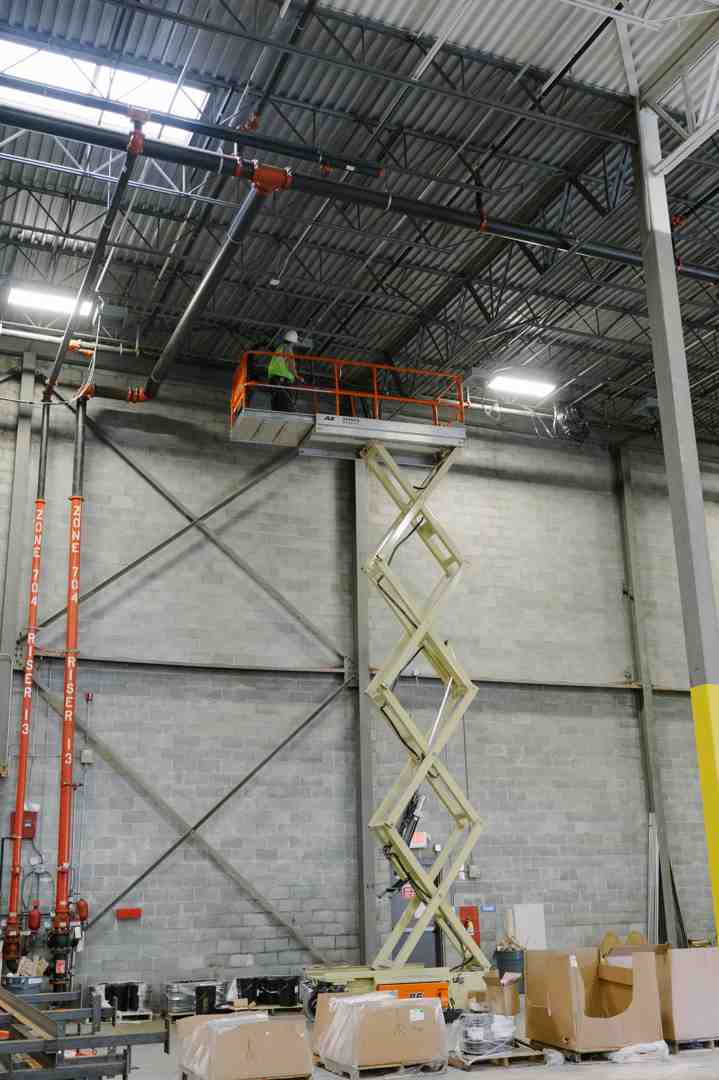
Phase 1: Site Evaluation, Airflow Modeling, and Structural Engineering
Every successful project begins with an on-site technical survey. Our electricians visit your facility in Indianapolis, Whiteland, Southport, or surrounding areas to document key physical variables:
- Measuring Clearances: We calculate ceiling height, beam spacing, lighting grid layouts, and overhead door paths.
- Obstruction Mapping: We identify potential airflow blockages, such as tall pallet racking, overhead cranes, HVAC ducting, and radiant heaters.
- Electrical Capacity Audit: We inspect your main electrical distribution panels to verify available breaker space, panel capacity, and voltage configurations.
- Drop Length Engineering: We calculate the optimal downrod length to place the fan blades in clean air while maintaining the required 10-foot floor clearance.
Phase 2: Electrical Integration, Mounting, and System Testing
Once the engineering plan is established, our licensed crew coordinates the installation phases:
- Rigging and Structural Mounting: Using aerial lifts, our technicians secure heavy-gauge steel mounting assemblies to the primary roof structure using rated beam clamps, torque-calibrated hardware, and safety retention cables.
- Conduit and Power Routing: We install rigid or EMT conduit runs from the electrical distribution panel to the motor location, installing dedicated disconnect switches and protective motor starters.
- Drive and Controller Configuration: We wire the variable frequency drive (VFD) and wall-mounted control interface, configuring speed settings, forward/reverse modes, and automated schedules.
- Fire Alarm Interlock Verification: We wire the fan controls into the building’s central fire alarm control panel. In the event of a fire alarm trigger, the relay immediately cuts power to the fan to prevent it from fanning flames or disrupting water patterns from fire sprinklers.
- Dynamic Balancing and Commissioning: We power up the system, test all speed increments, verify amperage draws, and perform dynamic balancing to eliminate any trace of wobble or vibration.
For businesses seeking complete peace of mind, choosing professional ceiling fan installation in Indianapolis ensures every step meets the highest technical standards.
Frequently Asked Questions About Commercial Fan Installation
What is an HVLS ceiling fan, and what facility types need them most?
An HVLS (High-Volume, Low-Speed) ceiling fan is a large-diameter industrial air circulator, typically ranging from 7 to 24 feet across. Unlike traditional high-speed fans that create narrow, turbulent air jets, HVLS fans move massive volumes of air slowly and continuously using aerodynamically shaped blades.
HVLS fans are ideal for:
- Commercial warehouses and logistics distribution hubs
- Manufacturing and fabrication plants
- Automotive repair centers and dealerships
- Commercial gyms, fitness centers, and athletic complexes
- Agricultural facilities, barns, and riding arenas
- Retail superstores, garden centers, and open-plan offices
How much clearance is required between fan blades and the floor?
Under standard safety codes and manufacturer engineering guidelines, commercial ceiling fan blades must maintain a minimum clearance of 10 feet between the lowest point of the blade and the finished floor. In industrial facilities with heavy forklift traffic, clearance is often increased to 12 to 15 feet to provide ample buffer over tall machinery. Additionally, fan blade tips should maintain at least 2 to 3 feet of horizontal clearance from roof trusses, lighting fixtures, and sprinkler heads.
Can commercial HVLS fans be integrated into existing building automation systems?
Yes. Modern commercial ceiling fans equipped with variable frequency drives (VFDs) feature built-in communication protocols such as Modbus, BACnet, or 0-10V analog inputs. This allows our electricians to integrate fan operation directly into your facility’s Building Management System (BMS). Through this integration, your facility can automate fan speeds based on indoor temperature sensors, synchronize airflow with your rooftop HVAC units, schedule operating hours, and link emergency shutdown relays directly to your master fire alarm panel.
Conclusion
Installing high-bay commercial ceiling fans is an investment that transforms workplace comfort, protects indoor air quality, and lowers utility bills year-round. However, the physical scale, electrical demands, and structural requirements of these massive units require the precision of licensed electrical professionals. From engineering the proper beam attachments to running dedicated circuits and programming building controls, professional installation protects your facility, your staff, and your equipment.
At Grounded Solutions, our licensed, bonded, and insured team brings decades of field experience to commercial and residential projects across central Indiana. Whether you are upgrading an existing distribution warehouse in Beech Grove, retrofitting an auto repair shop in Mooresville, or equipping a new facility in Franklin, Whiteland, or Southport, we deliver safe, transparent, and durable solutions.
Contact Grounded Solutions today to schedule your commercial fan site assessment and explore our comprehensive Indianapolis electrical service and repair solutions.